Discover Bhutan
The hidden
kingdom
One of the world’s most extraordinary places, best discovered slowly.
Bhutan
Where the earth
touches the sky
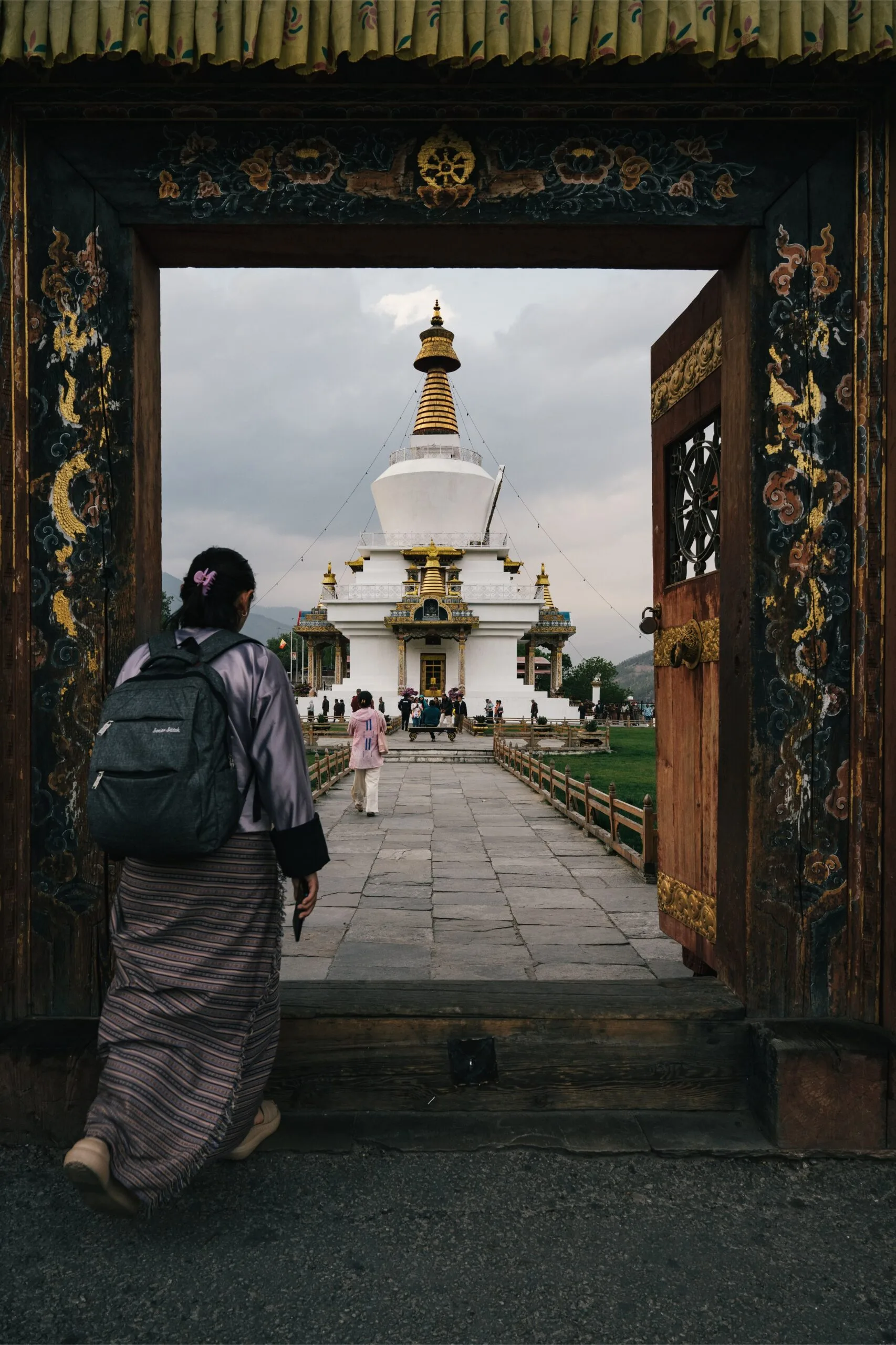
One of the world’s last untouched countries, Bhutan is a place where tradition, tranquillity and cultural integrity remain beautifully preserved.
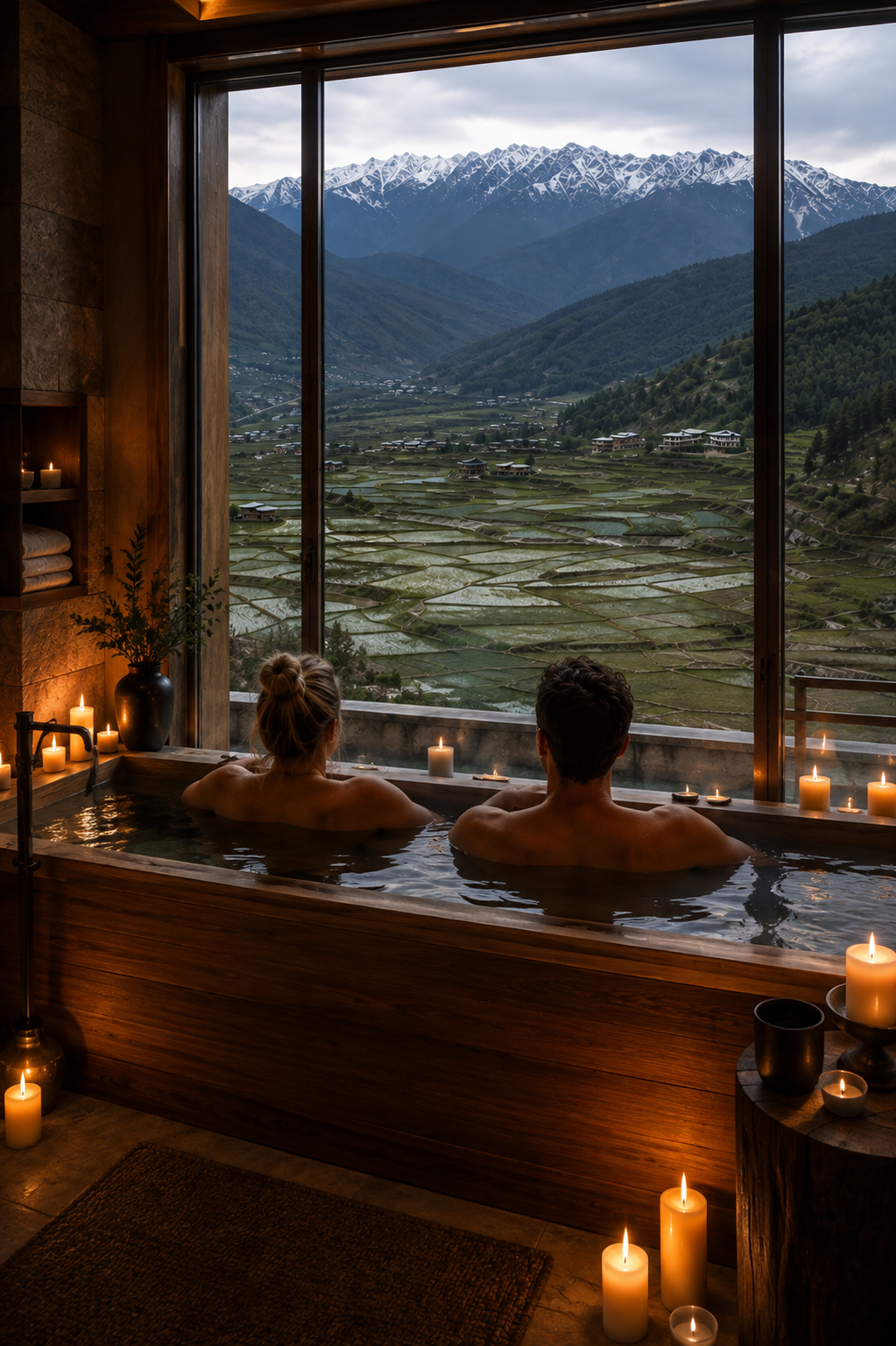
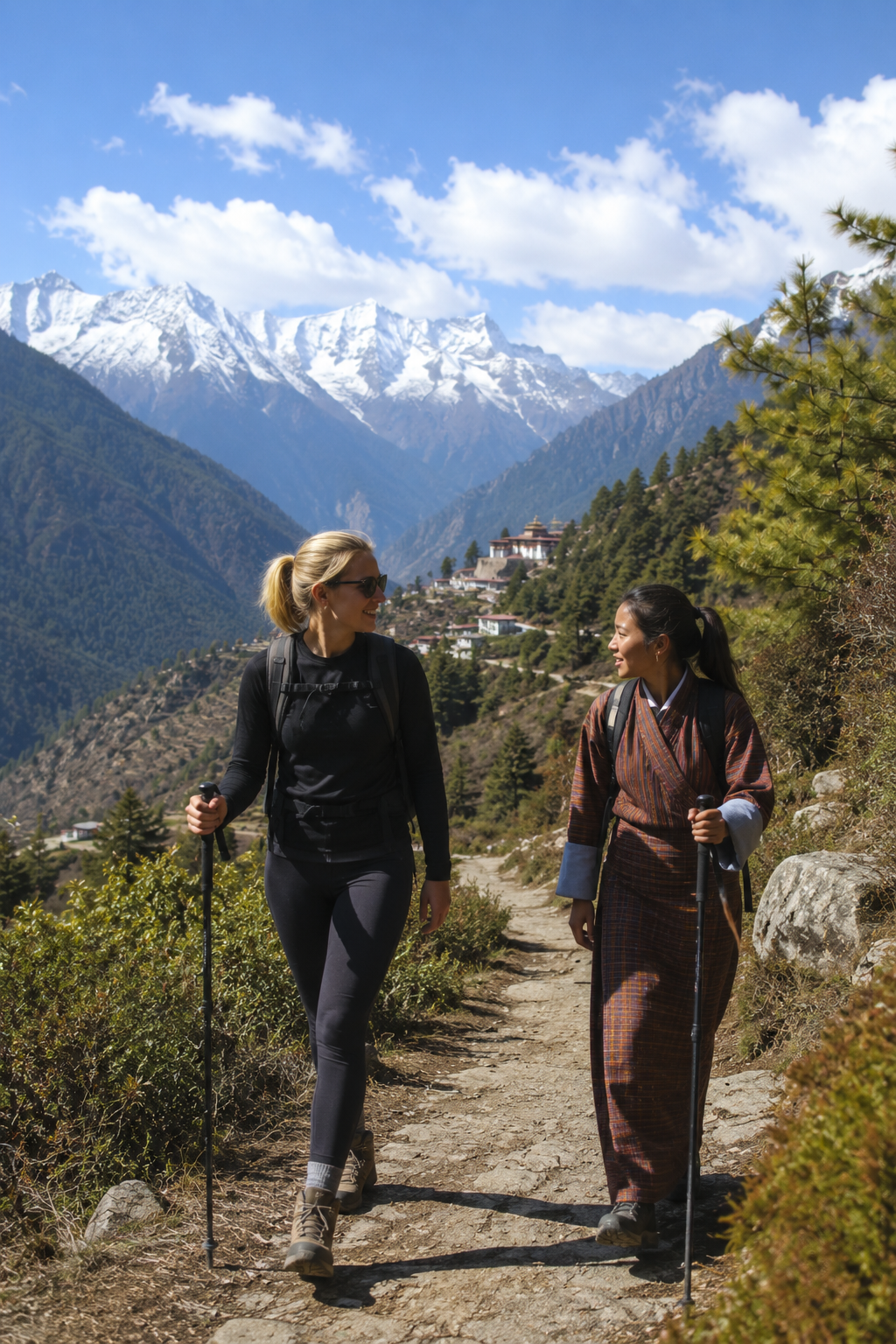
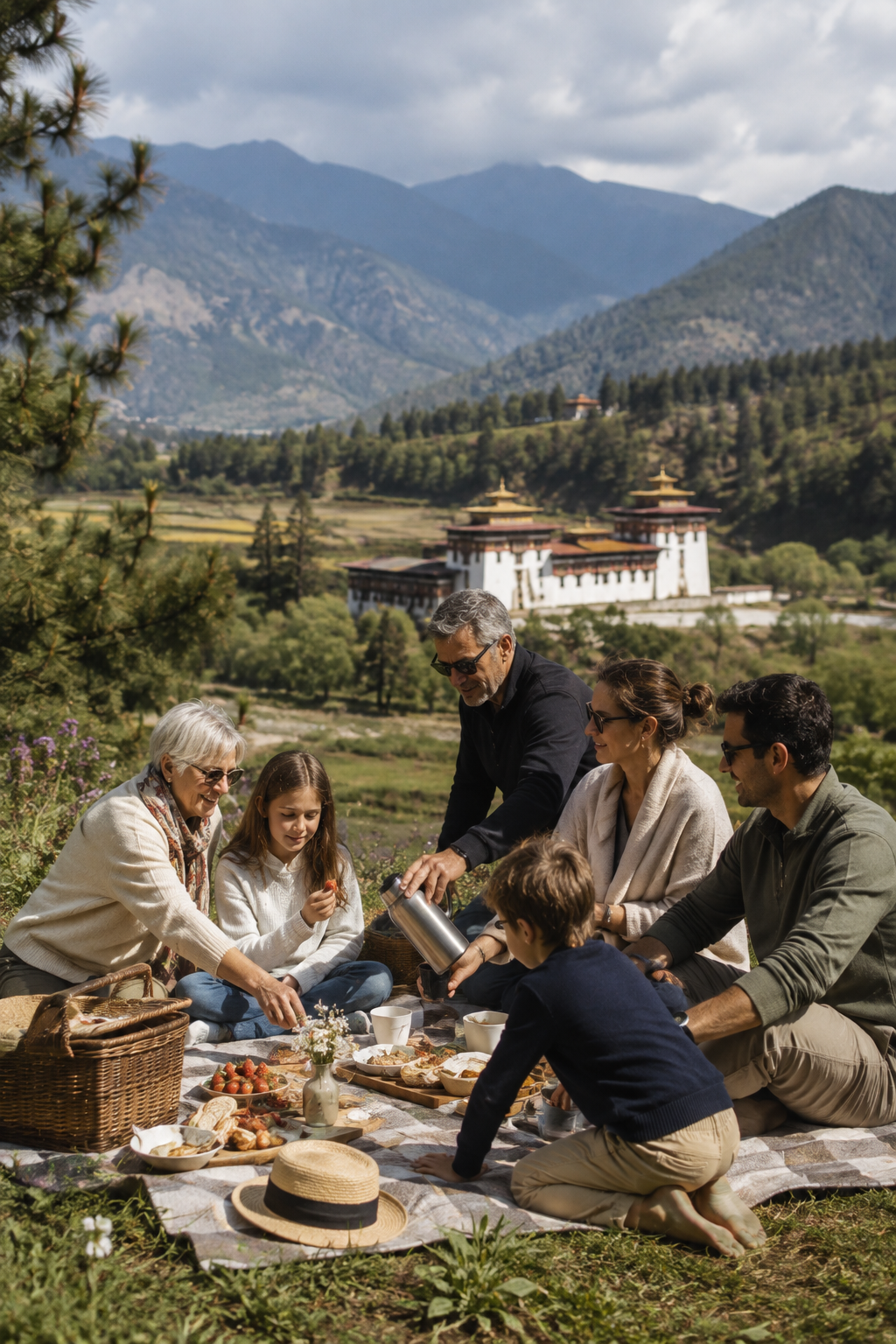
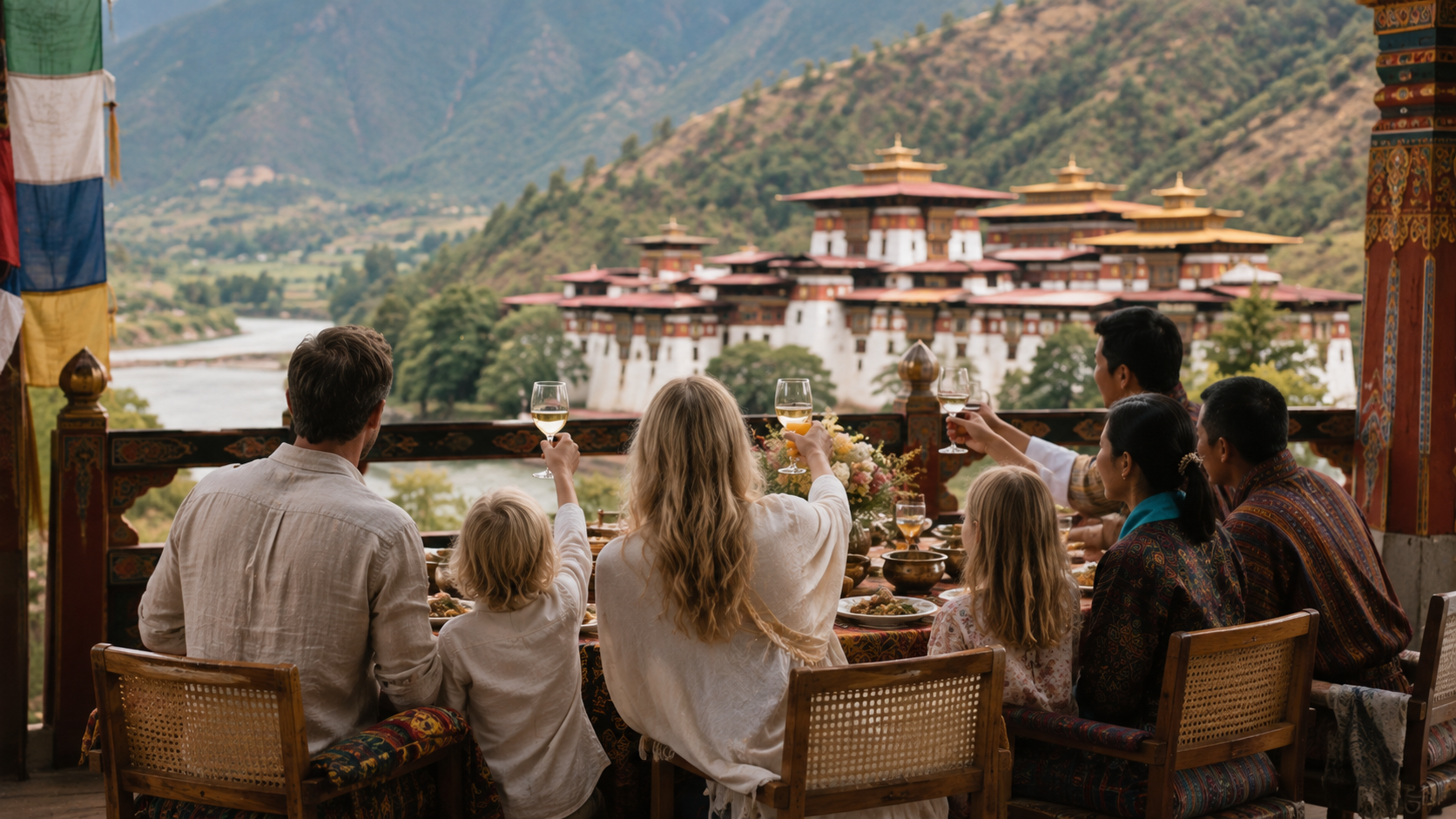
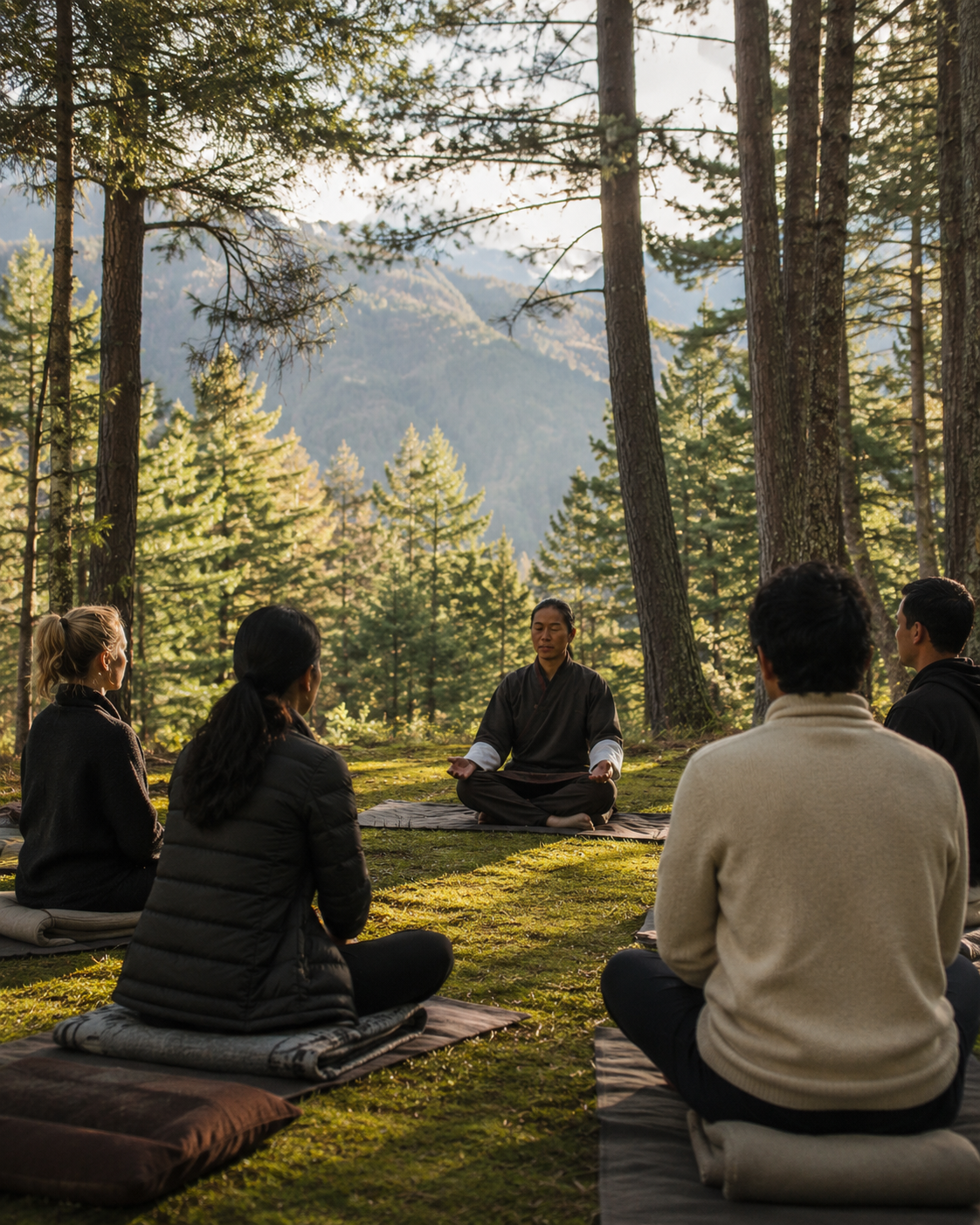
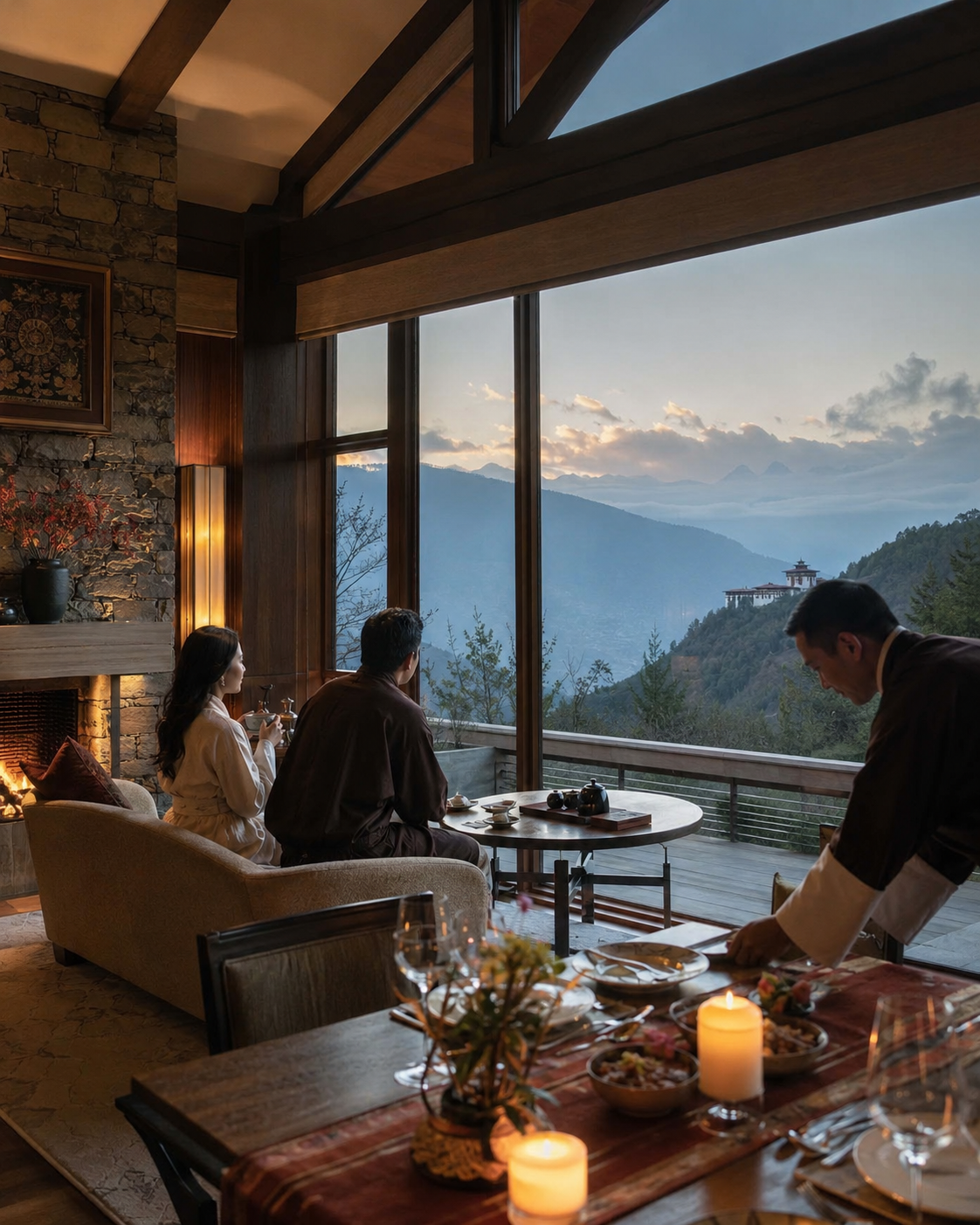
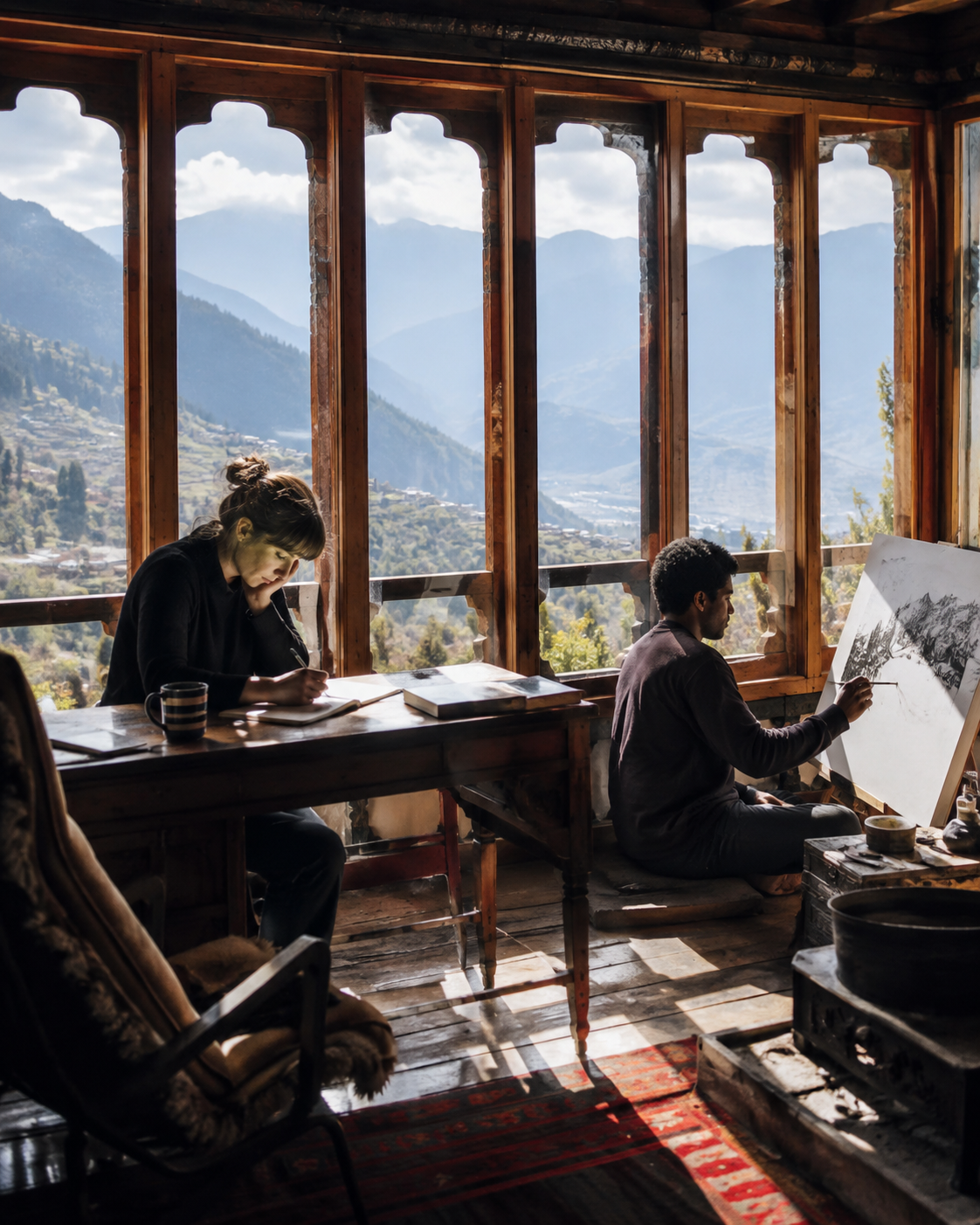
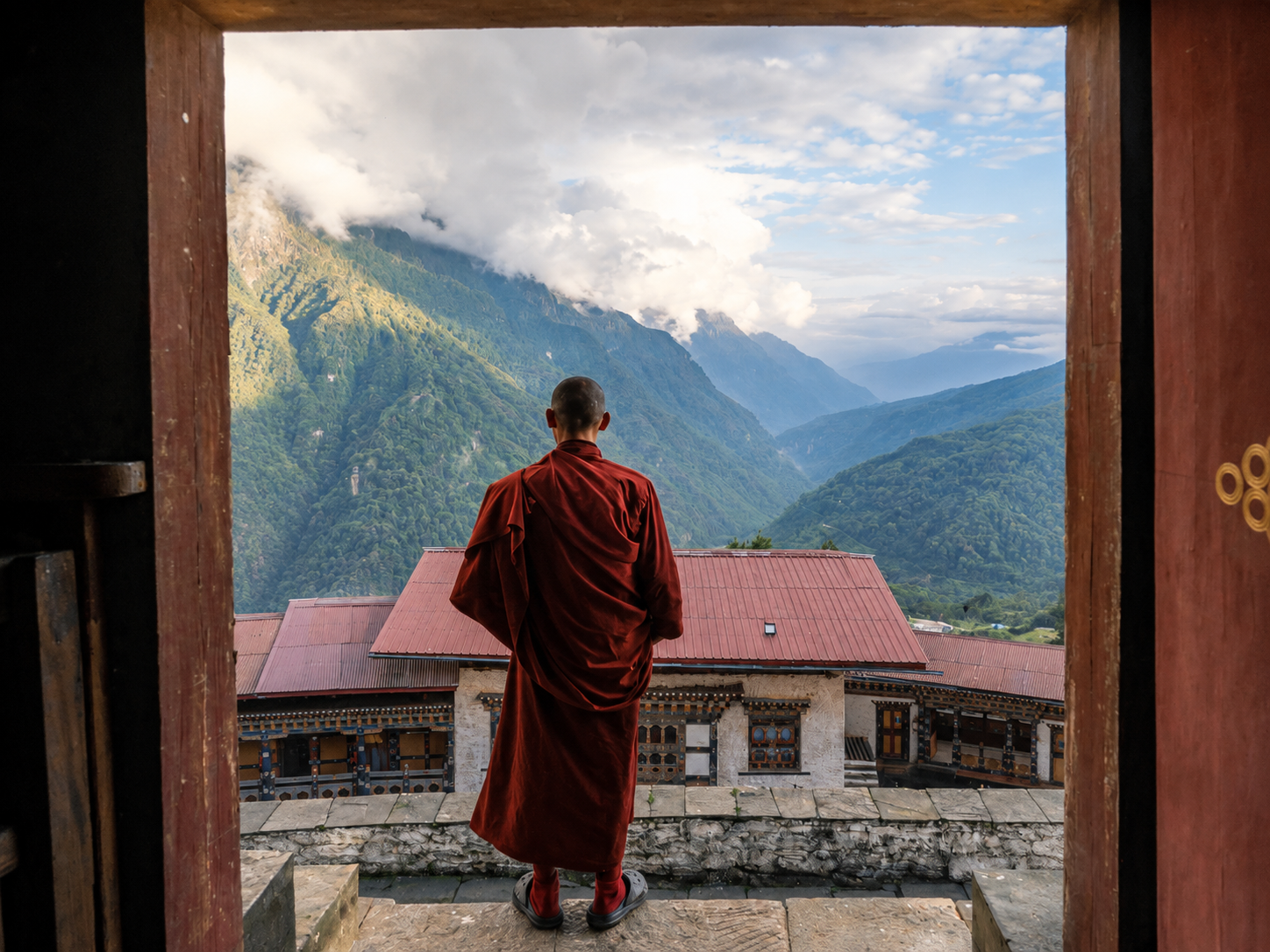
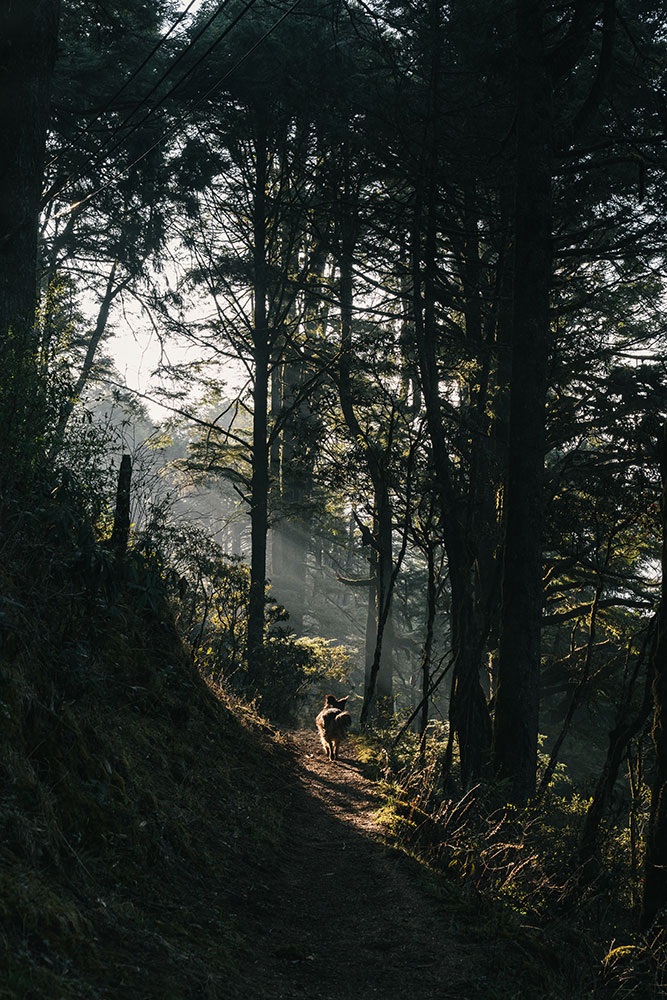
Here, luxury is quiet. Private audiences with monks, meditative walks along pine scented trails, forest lodges steeped in calm and riverside dinners beneath starlit skies. It is a rare encounter with a way of life that has resisted the rush of the modern world.
But do not be fooled by the stillness. There is another Bhutan.
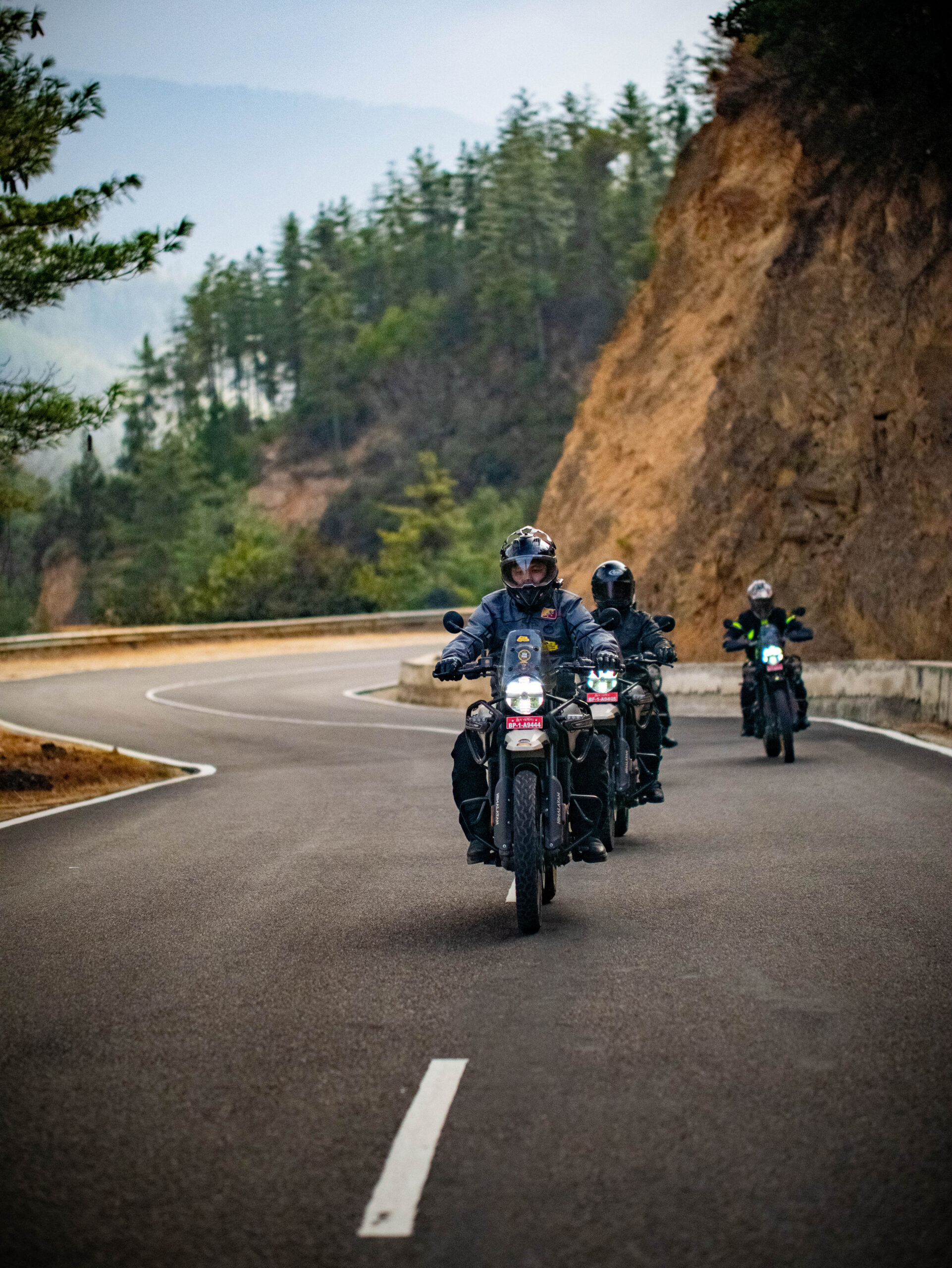
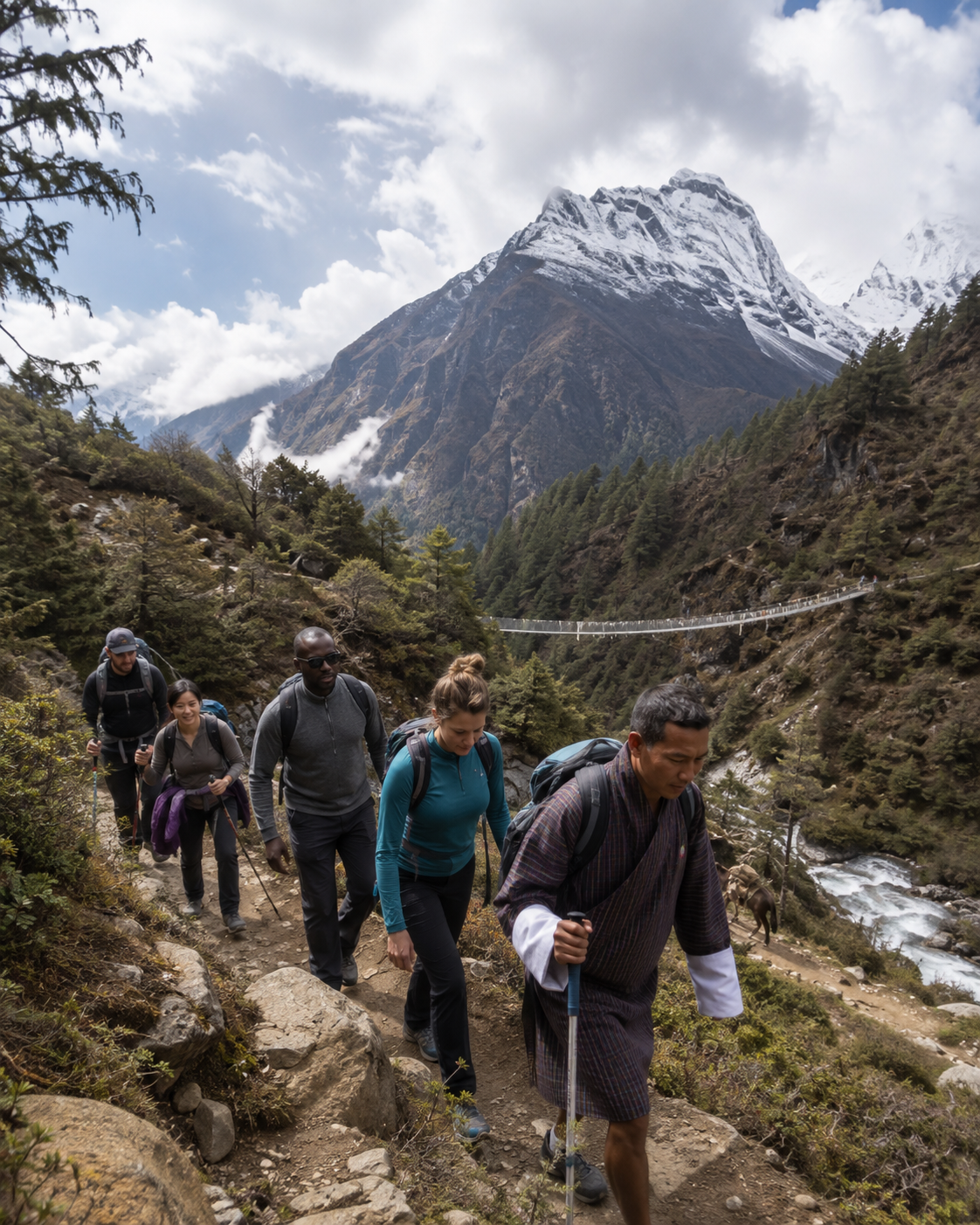
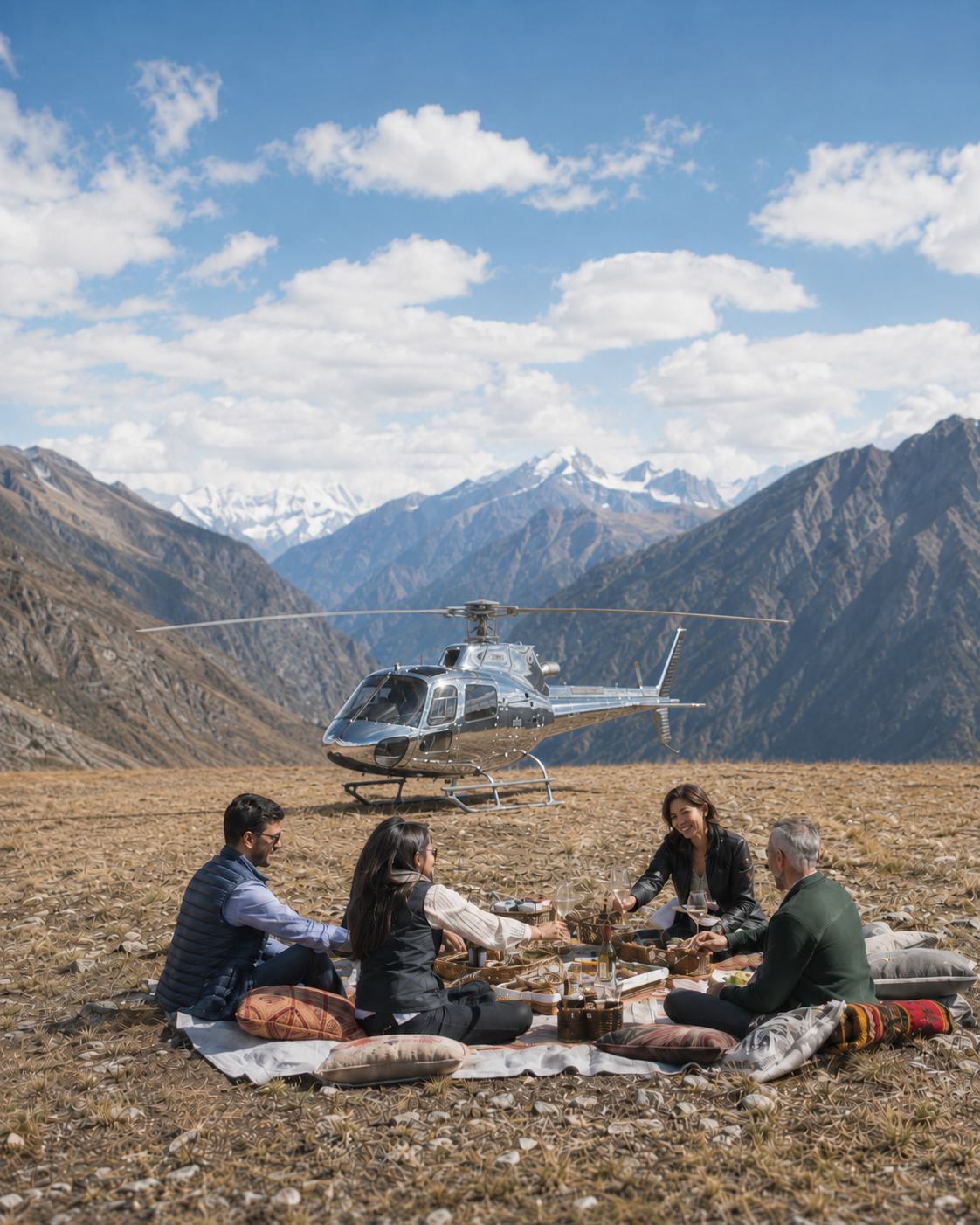
One of mountain bikes and white water, motorcycles winding across high passes, late nights in Thimphu, local bars, live music, festivals, unexpected encounters and adventures that rarely make it into the guidebooks.
We know both sides. The sacred and the spirited. The quiet and the wild.
The Bhutan people come looking for, and the Bhutan they never expected to find.
We know its stories, its people and its hidden places. And we would love to share them with you.
The Kingdom of Happiness
Why Bhutan?
There are hundreds of reasons. Here are six of our favourites. Hover over the card to flip it.
The Valleys
A world within every valley
Bhutan is not one place but many, each valley separated by mountain passes and shaped by its own traditions and character.
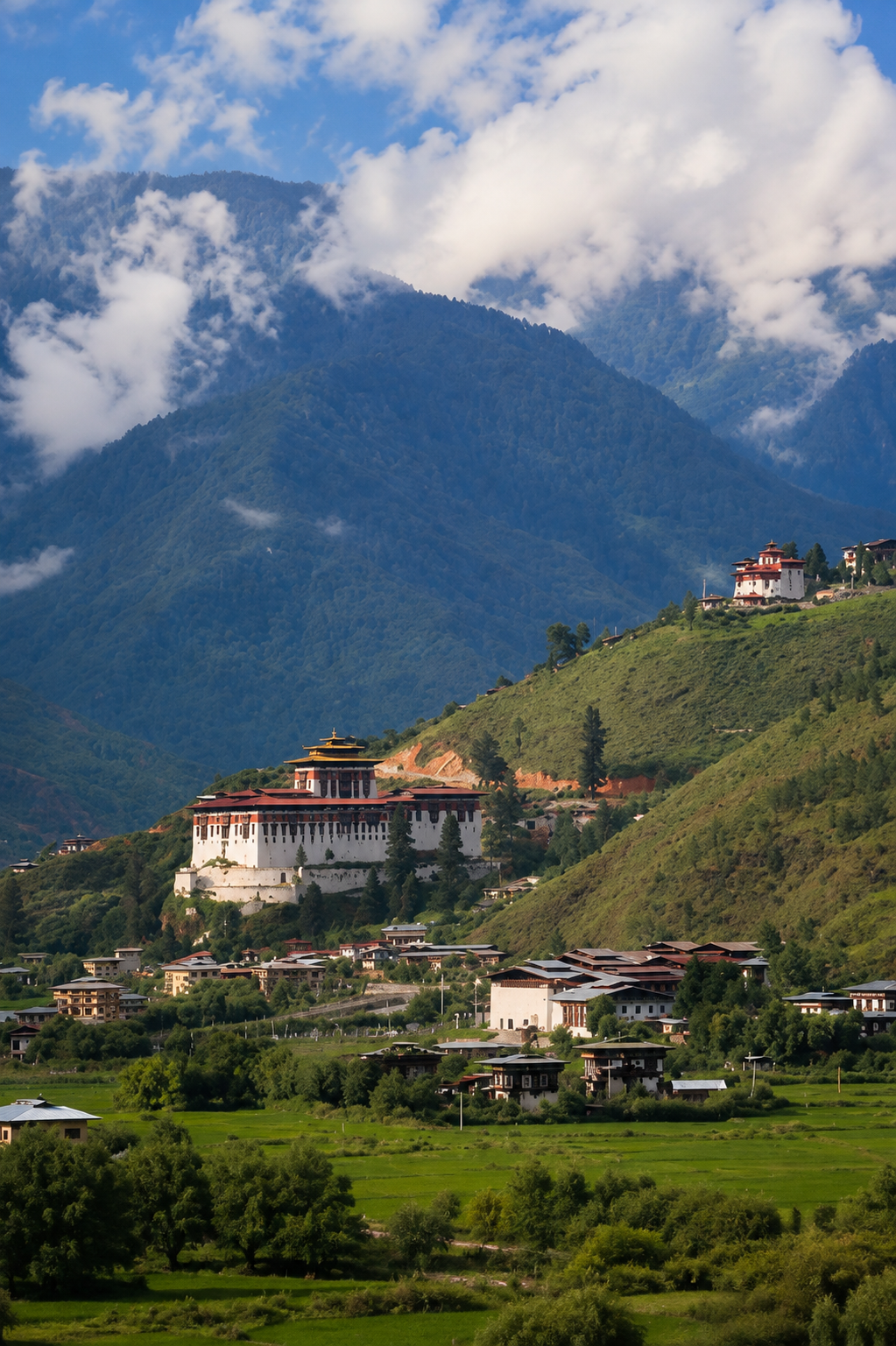 2,200 m
 Paro
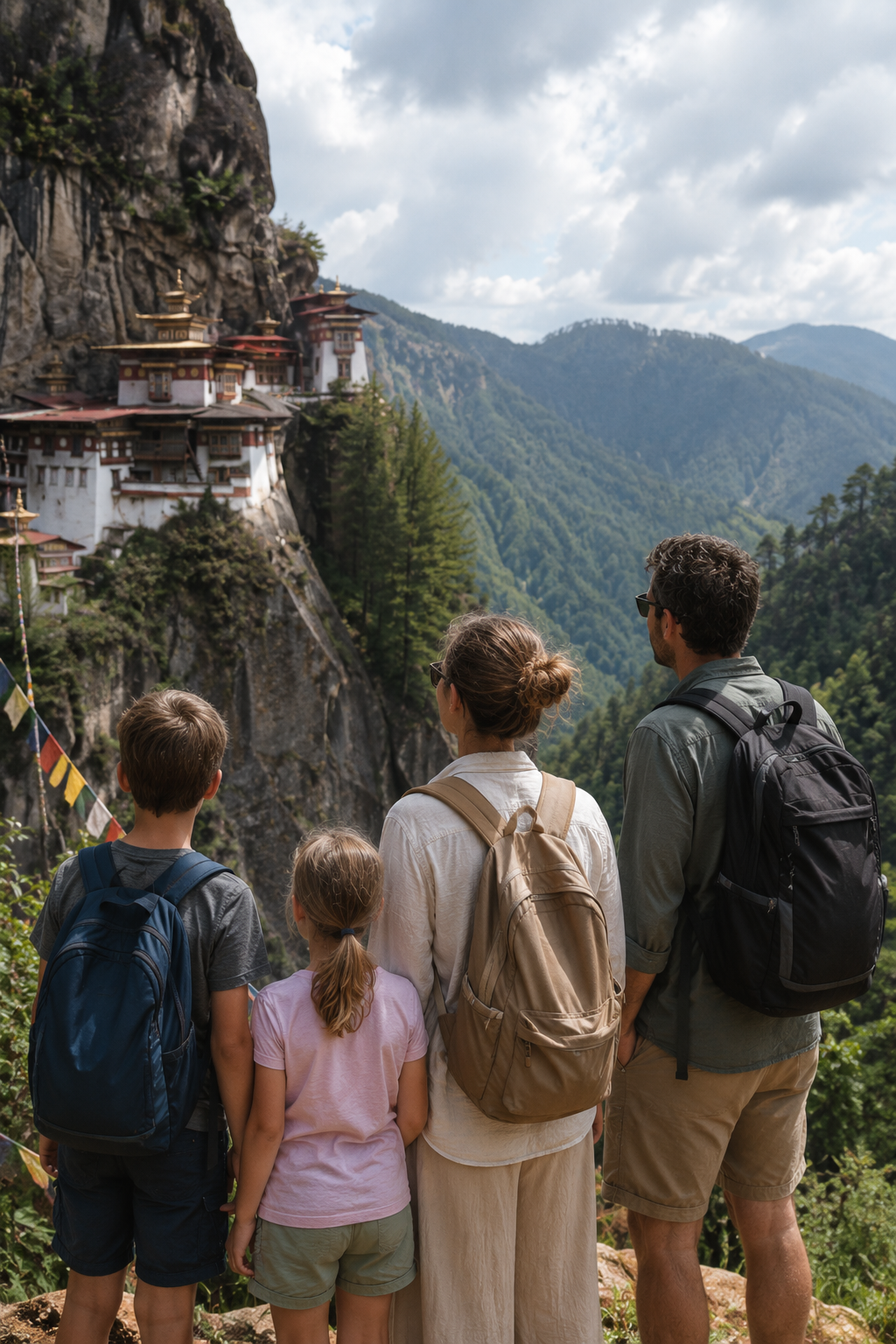
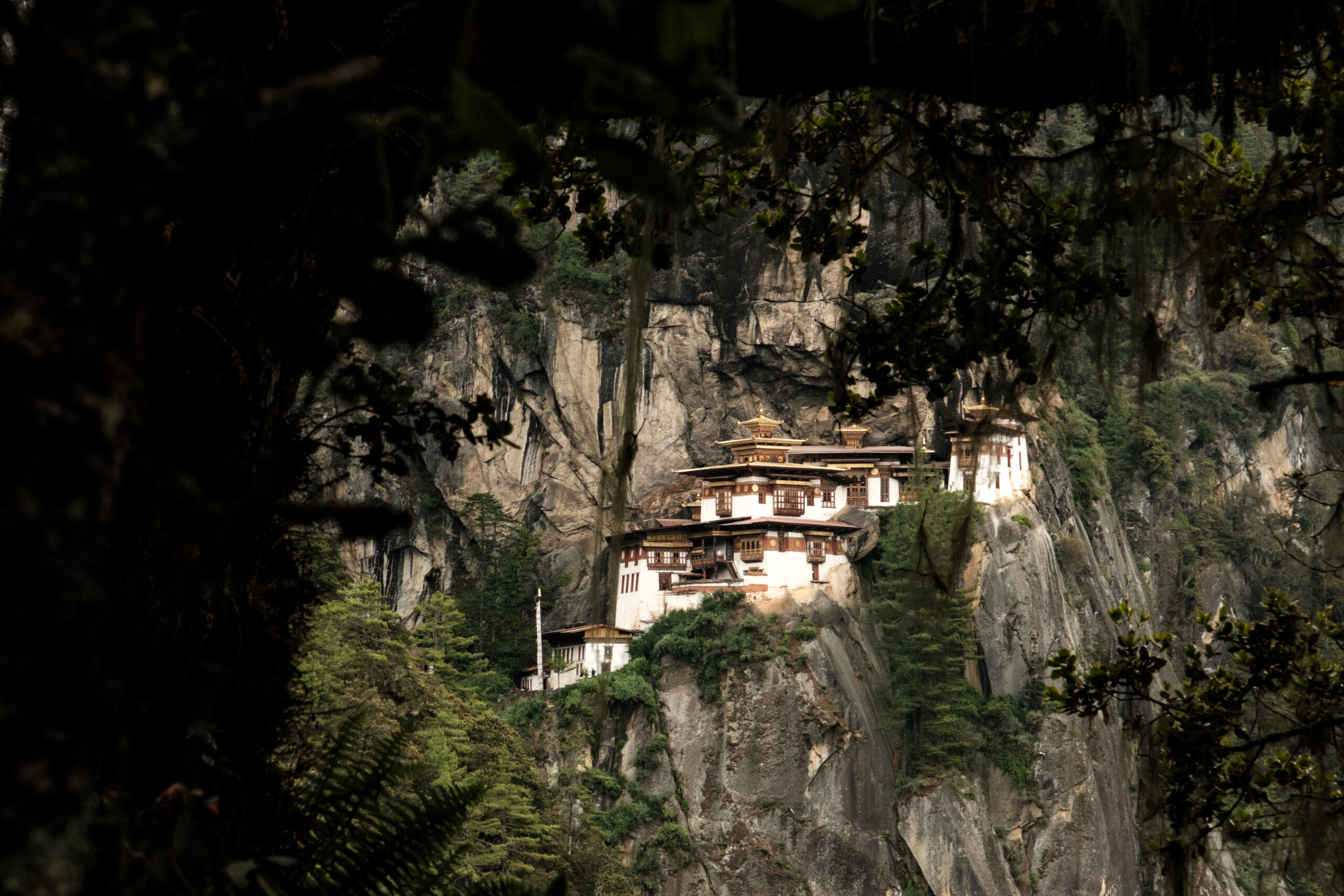
Bhutan’s gateway to the world. Rice fields, old farmhouses and sacred sites, with Tiger’s Nest clinging to the cliffs high above.
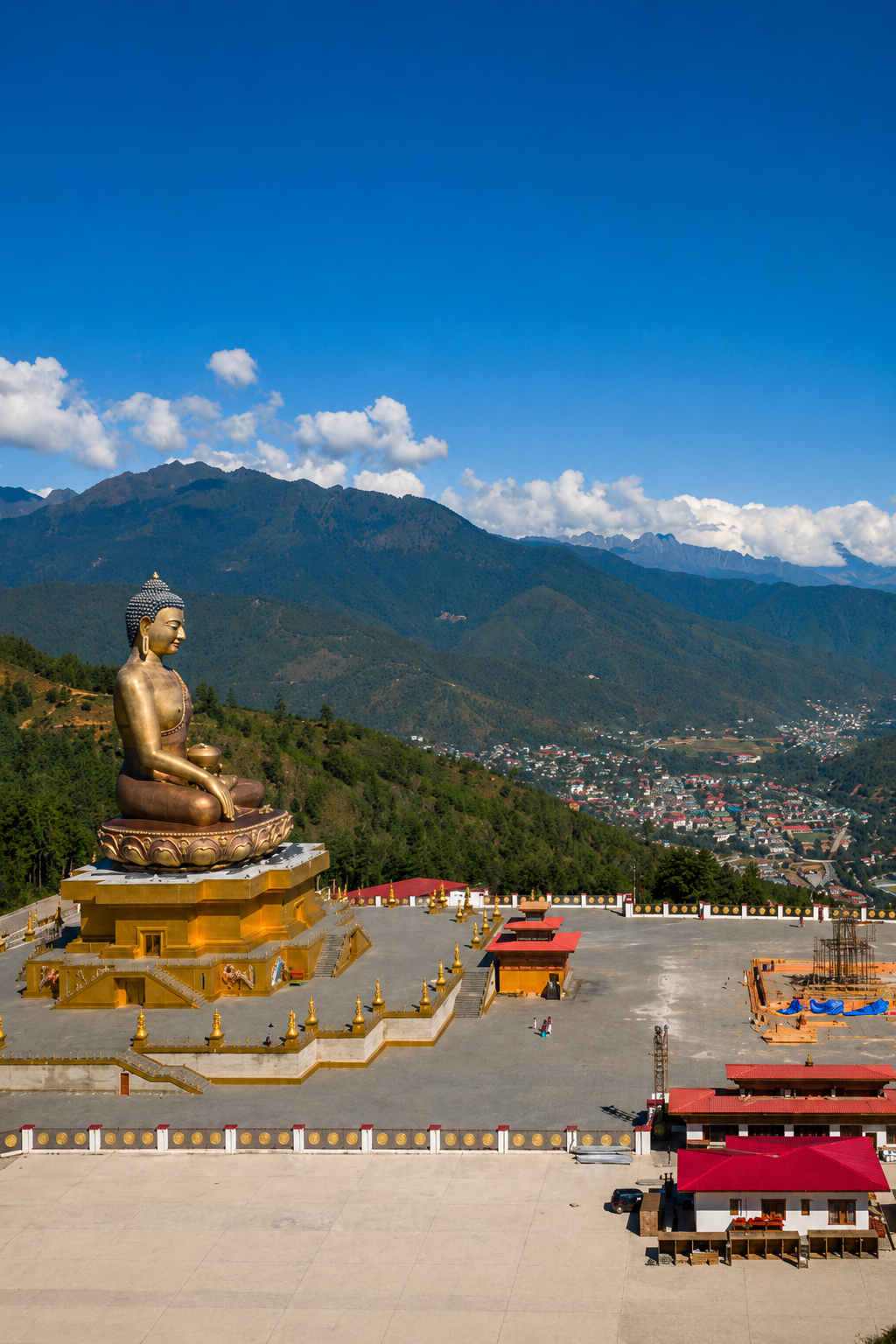 2,334 m
 Thimphu
Bhutan’s small, spirited capital. Markets, monasteries, contemporary art, late nights and mountain trails all within minutes of each other.
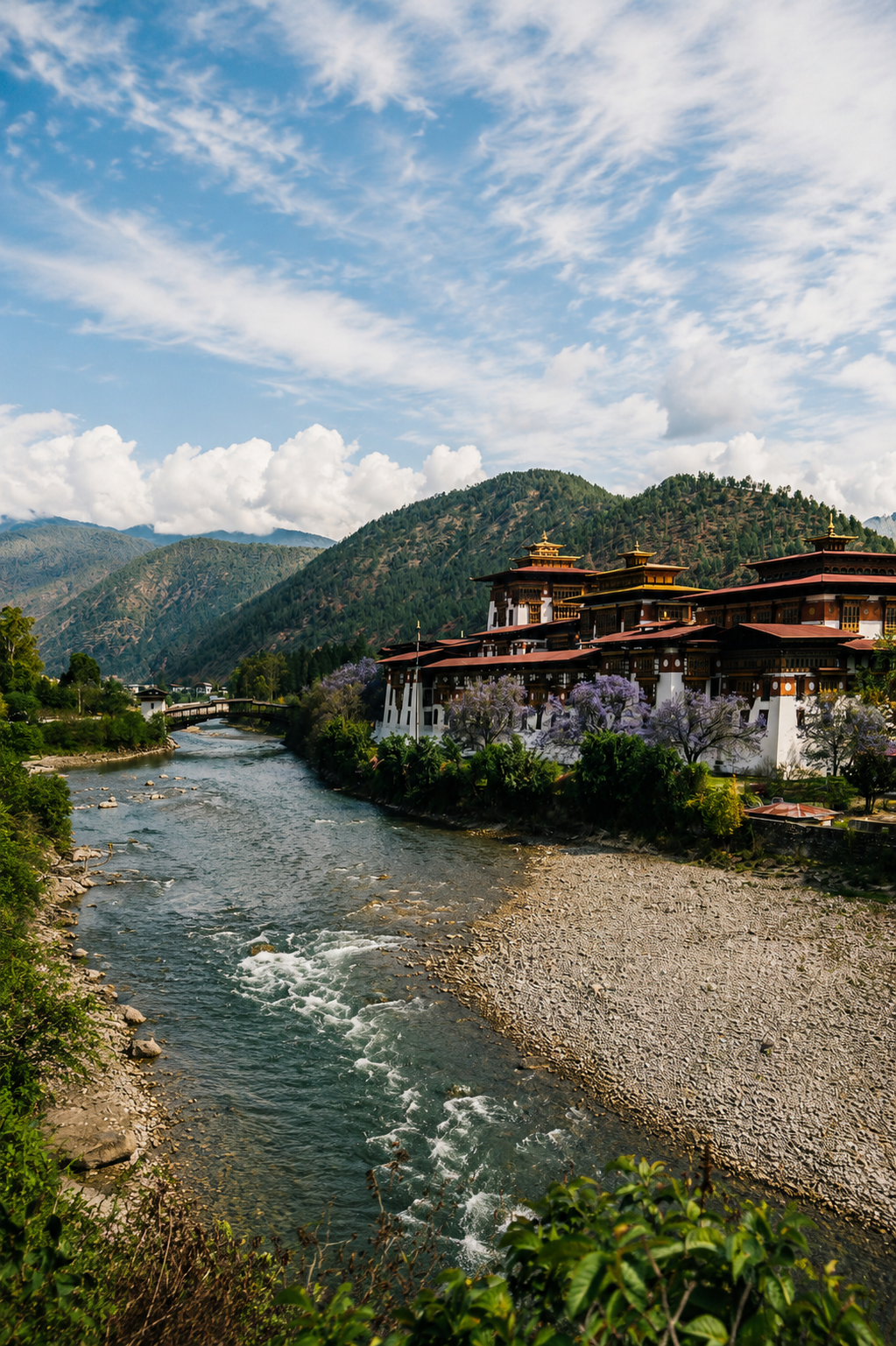 1,200 m
 Punakha
Warm, lush and impossibly beautiful. Rice terraces, rivers and one of Bhutan’s most magnificent dzongs.
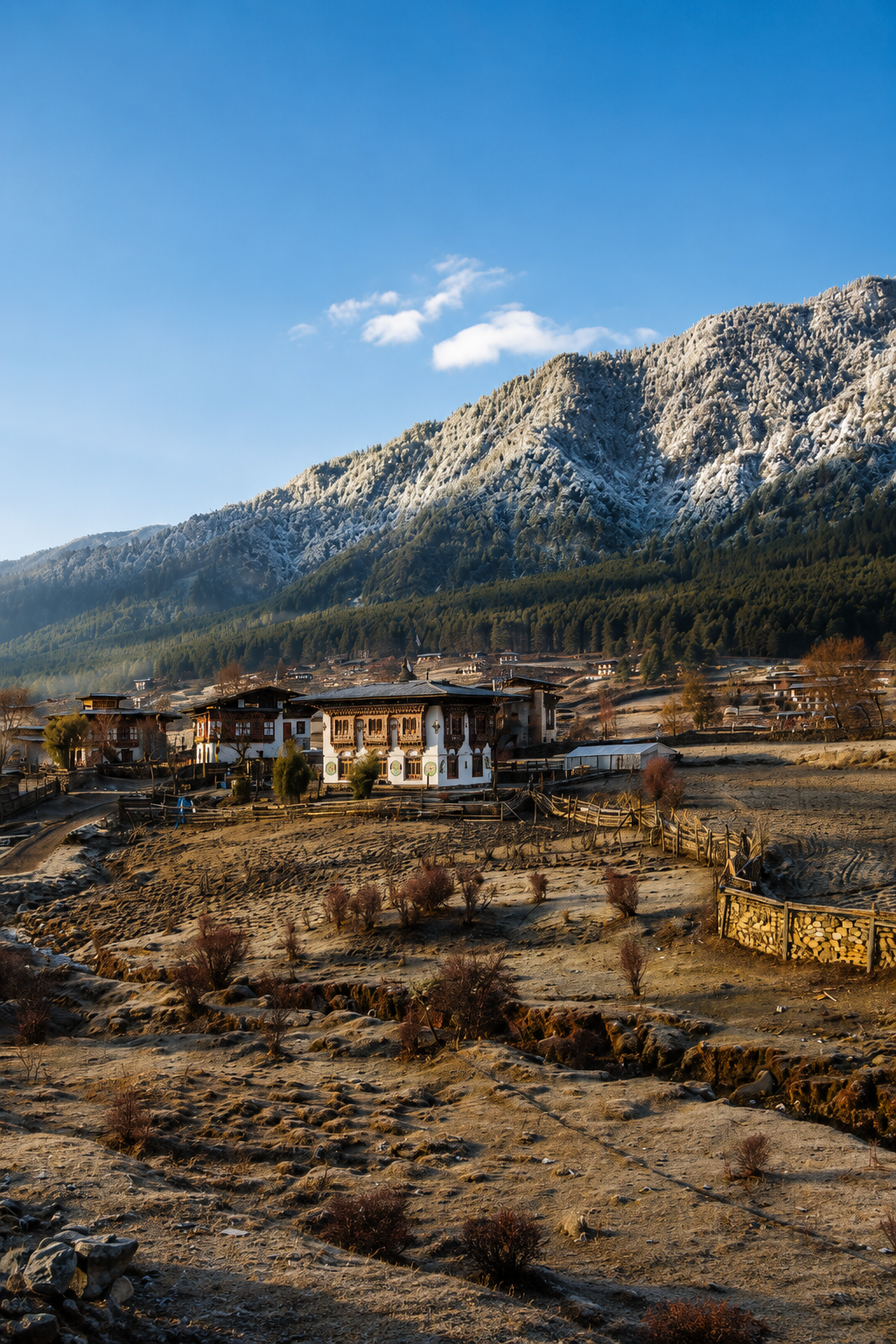 3,000 m
 Phobjikha
A vast glacial valley of wetlands, forests and traditional villages, where black necked cranes return each winter.
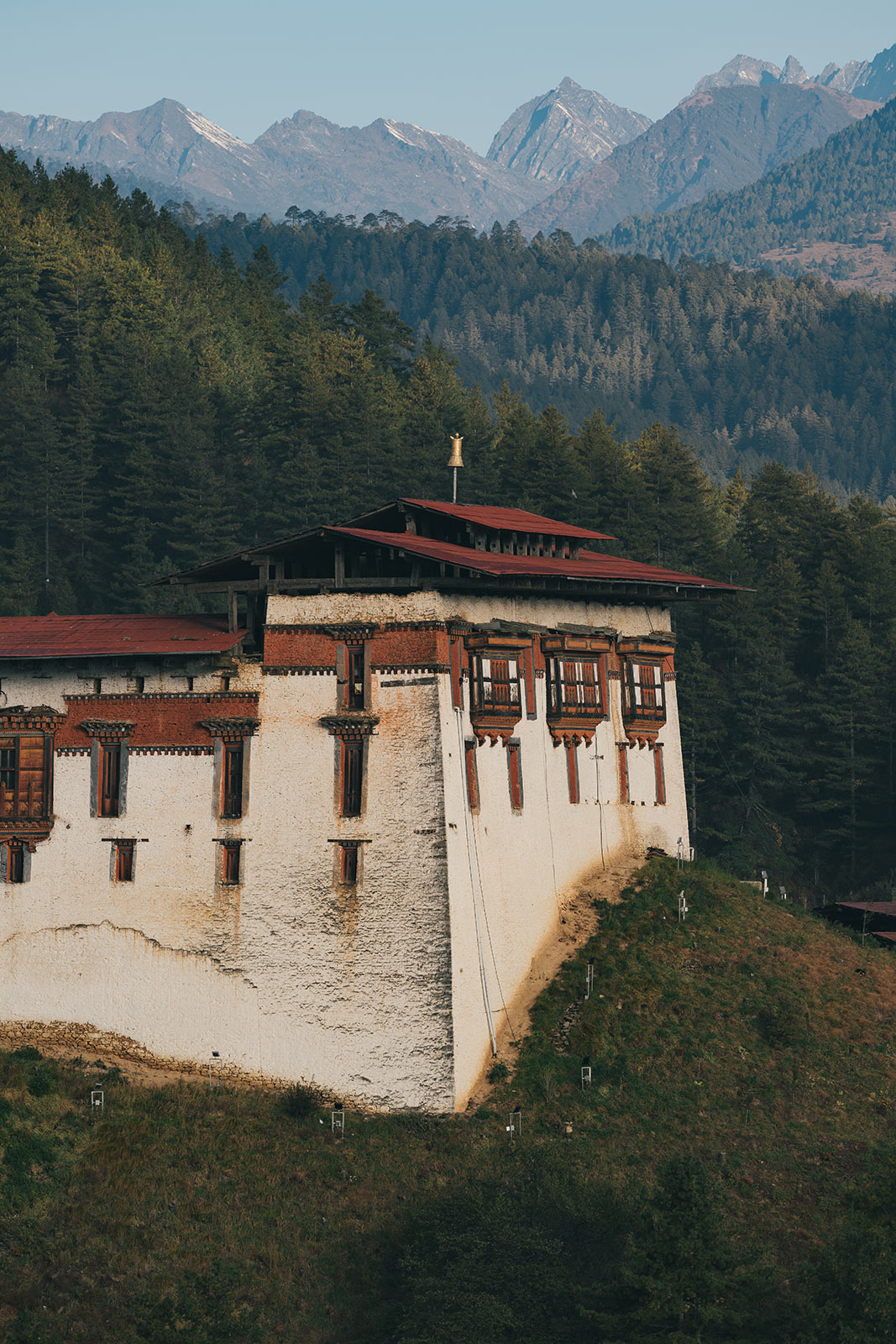 2,600 m
 Bumthang
Bhutan’s spiritual heartland. Ancient temples, quiet villages, buckwheat fields and stories that reach back centuries.
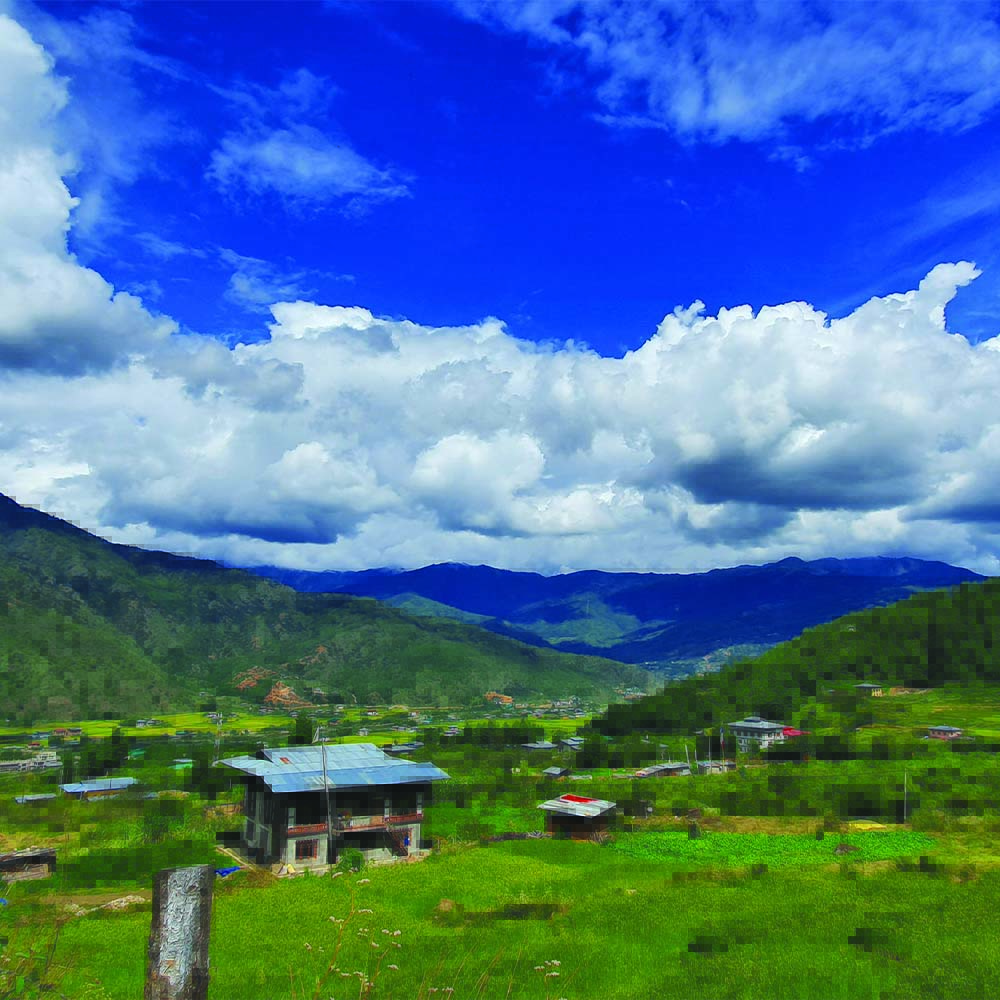 2,700 m
 Haa
Remote, untouched and rarely visited. Alpine meadows and living nomadic tradition.
Explore the Kingdom
Bhutan, layer by layer
From hidden valleys and sacred sites to wildlife, villages and the gateways between them. Explore the map and discover what lies beyond the obvious.
Where journeys into the kingdom begin — one international gateway, an overland border and the roads between.
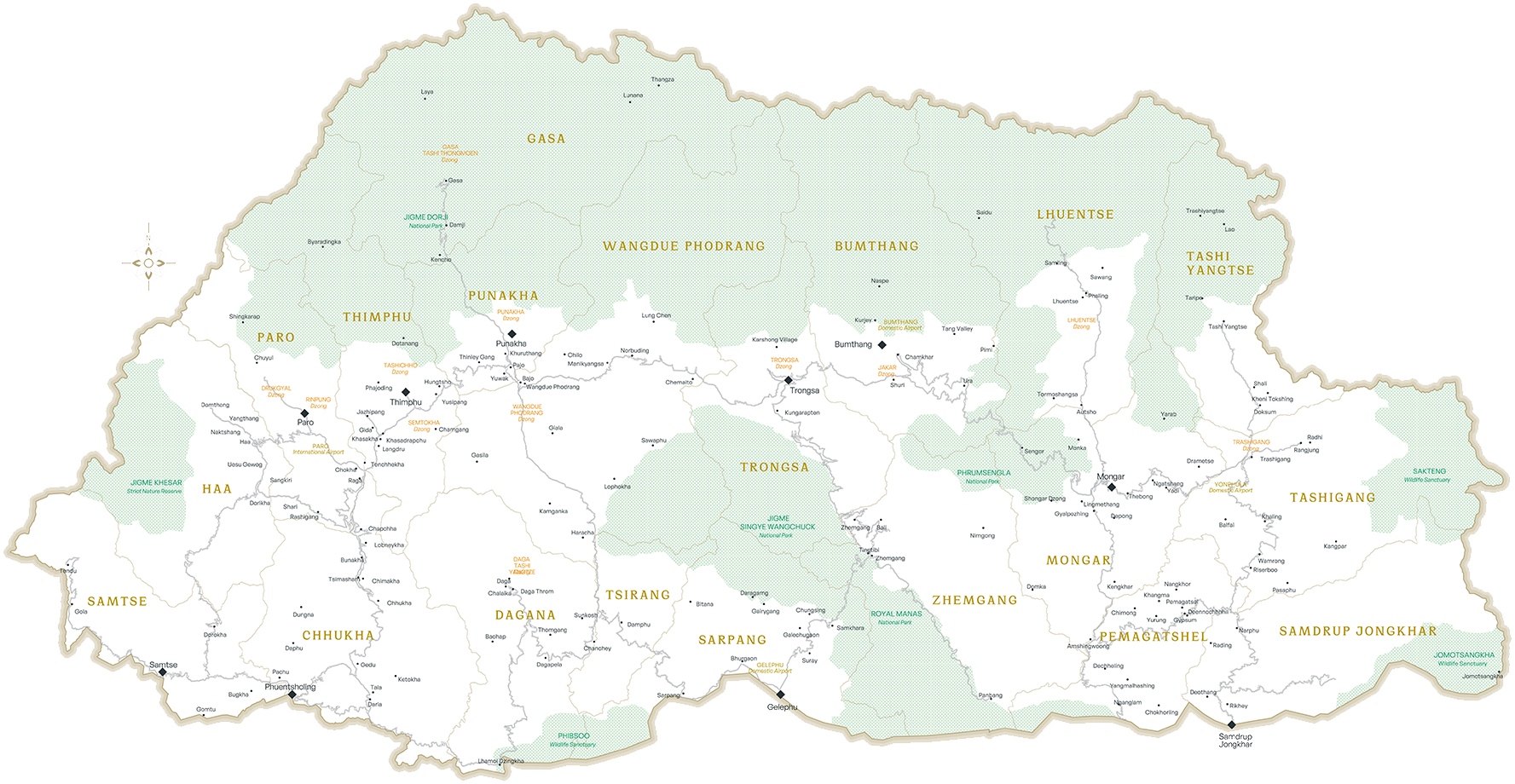
Tap a marker to see what waits there.
The People
The heart of the kingdom
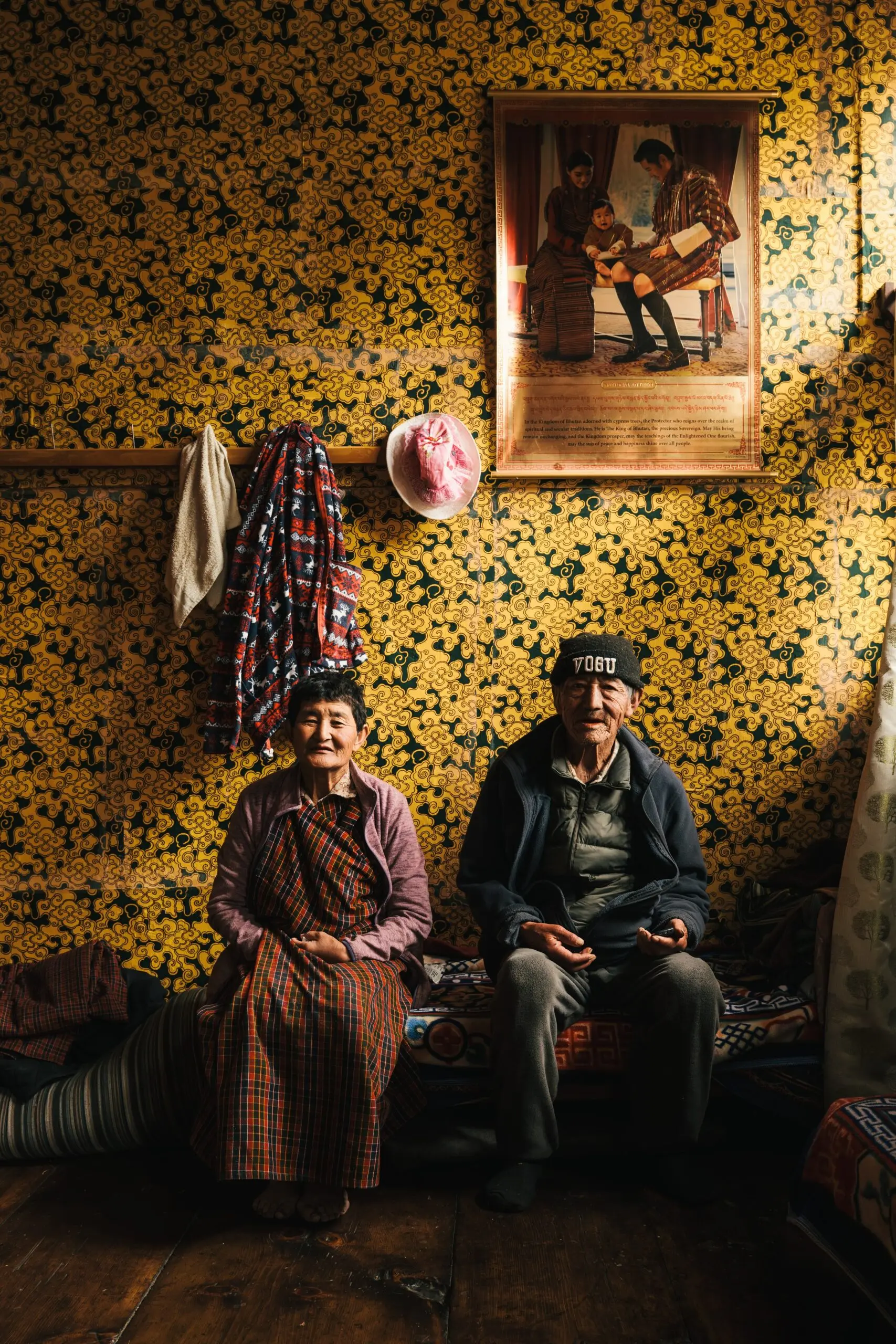
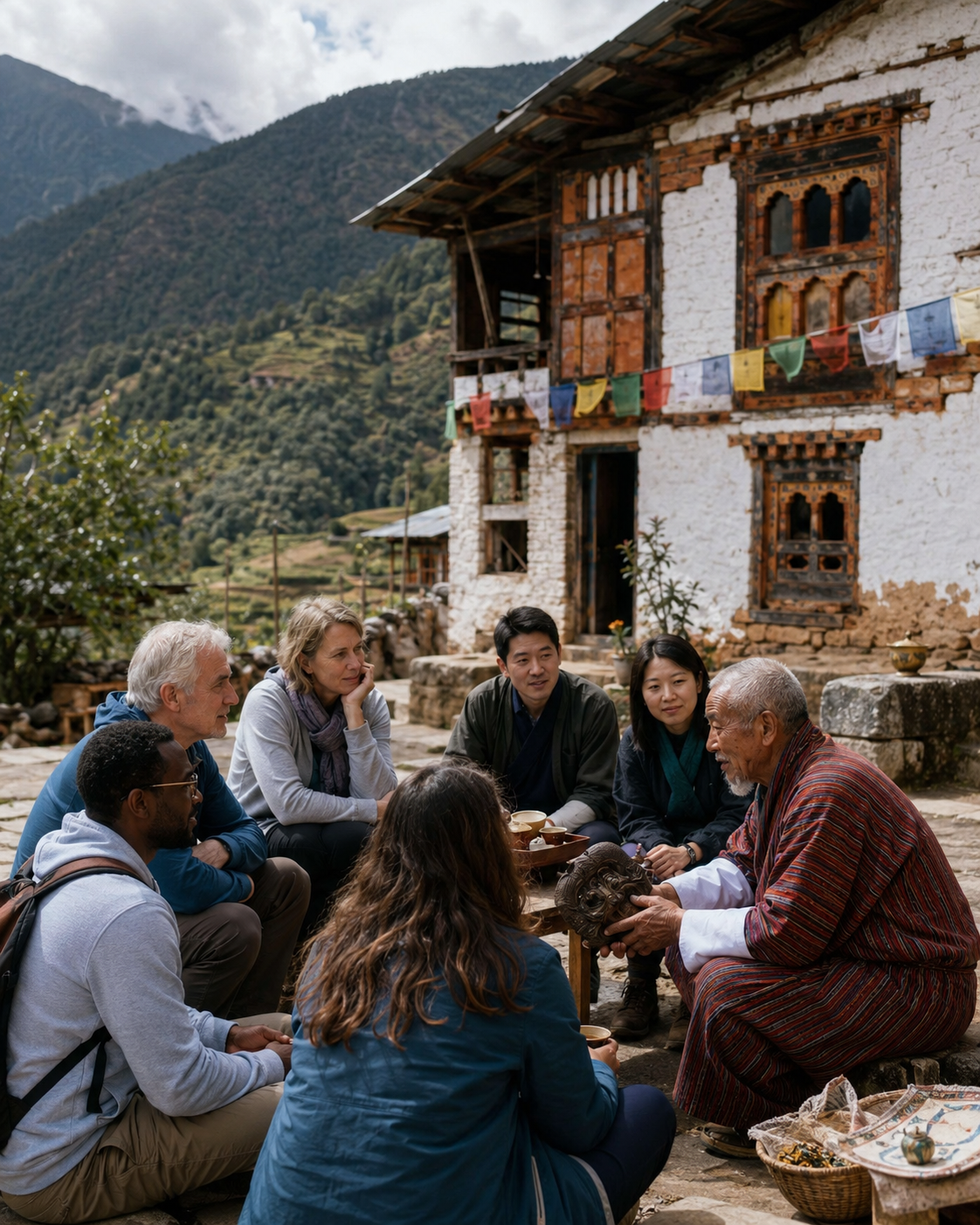
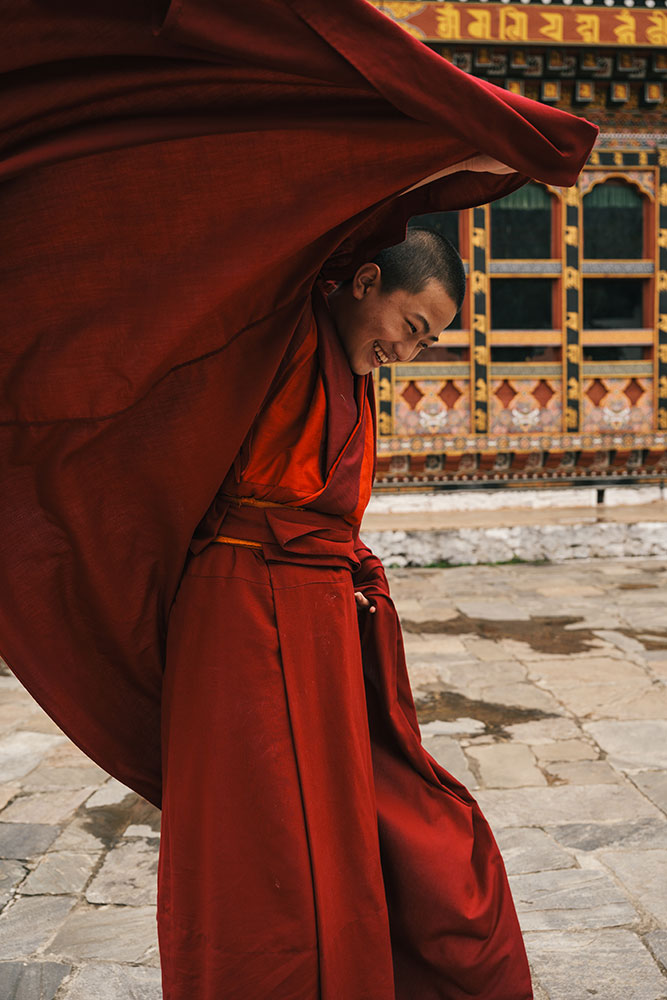
Come for the mountains, monasteries and extraordinary landscapes. It is often the people you remember most. Meet some of the Bhutanese people we are privileged to know, and hear their stories in their own words.
Voices of Bhutan
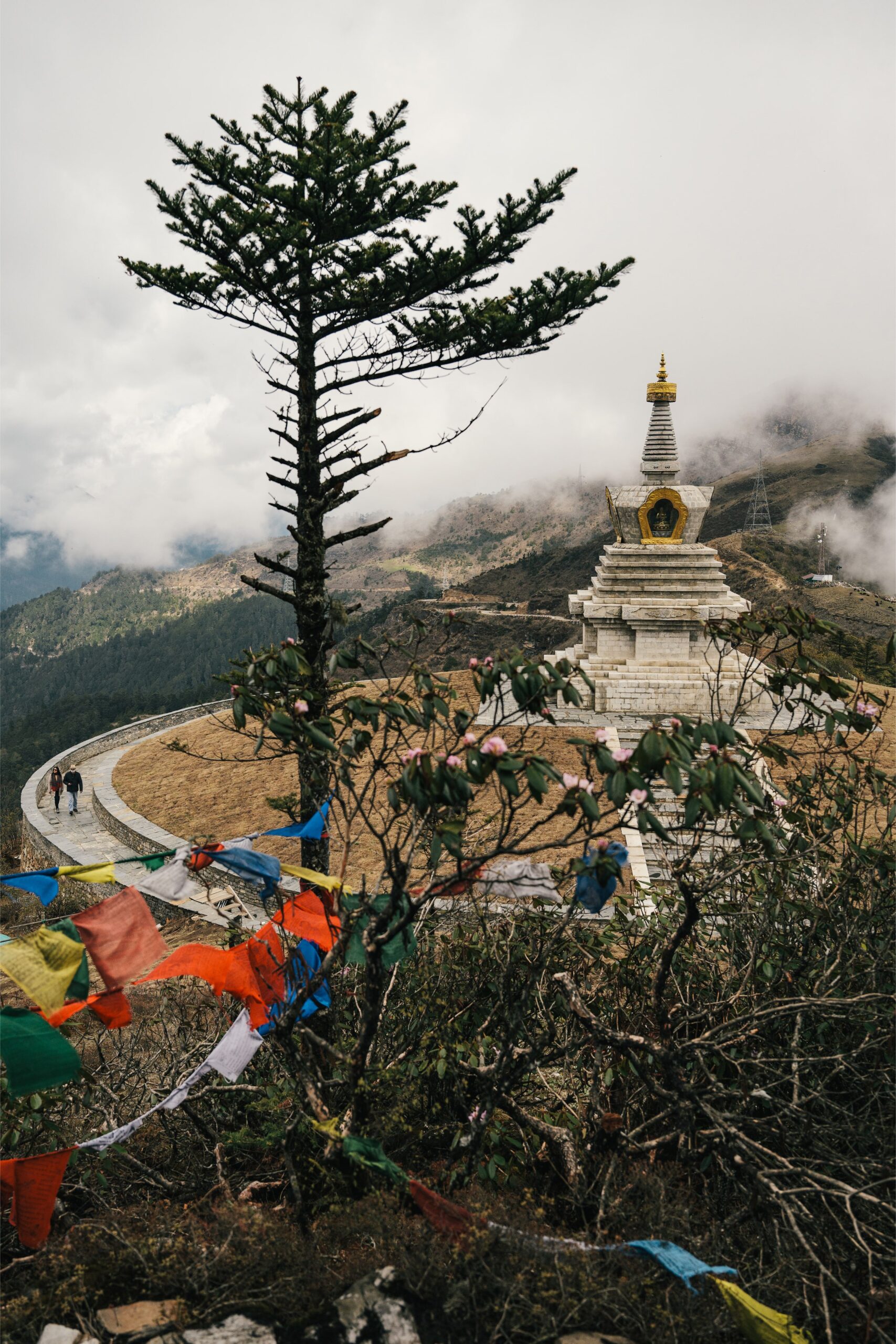
Culture & Tapestry
A year in Bhutan
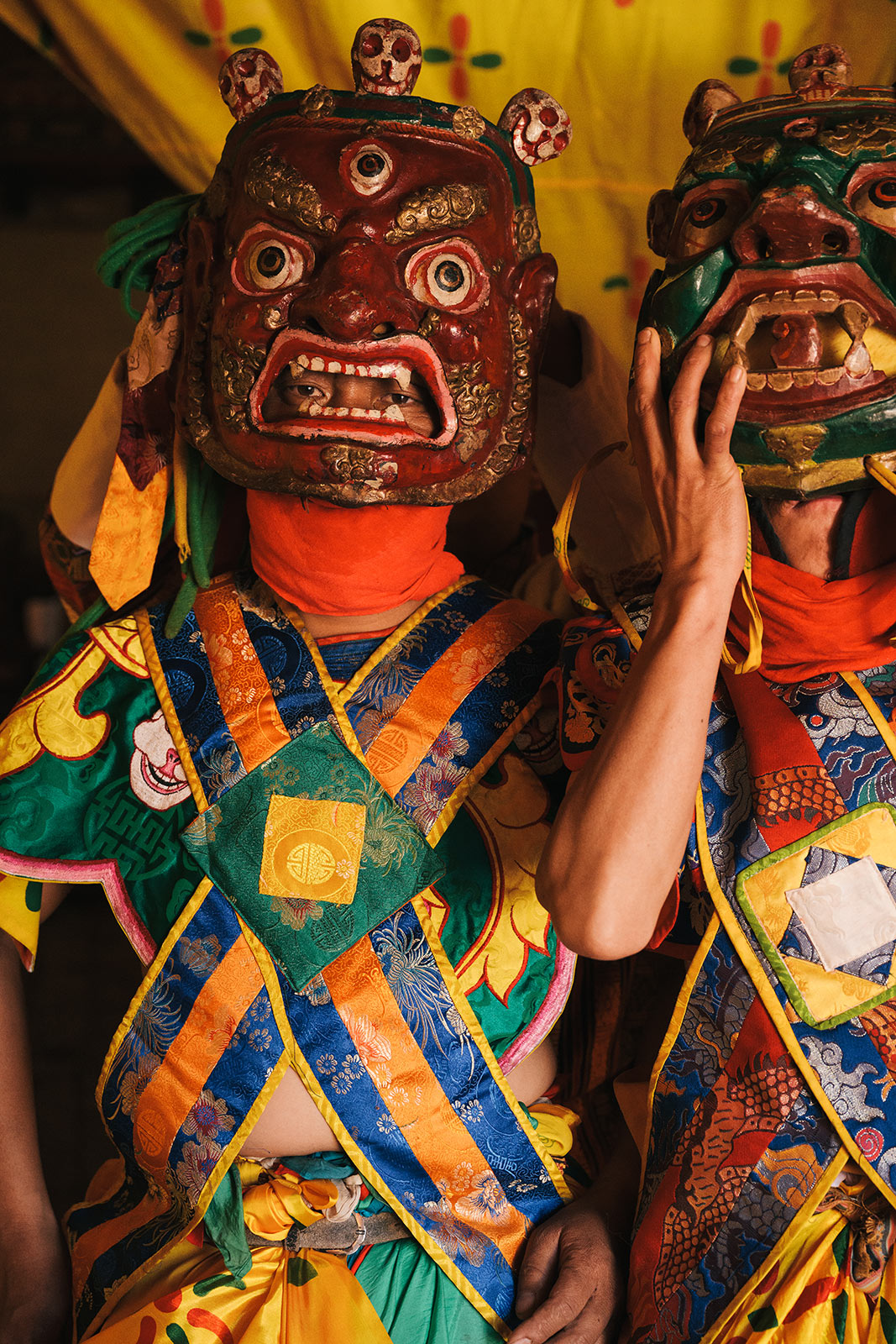
Every season brings a different Bhutan. Spring blossoms, summer greens, clear autumn skies and crisp winter days, punctuated throughout by sacred festivals, rituals and celebrations.
 March – May
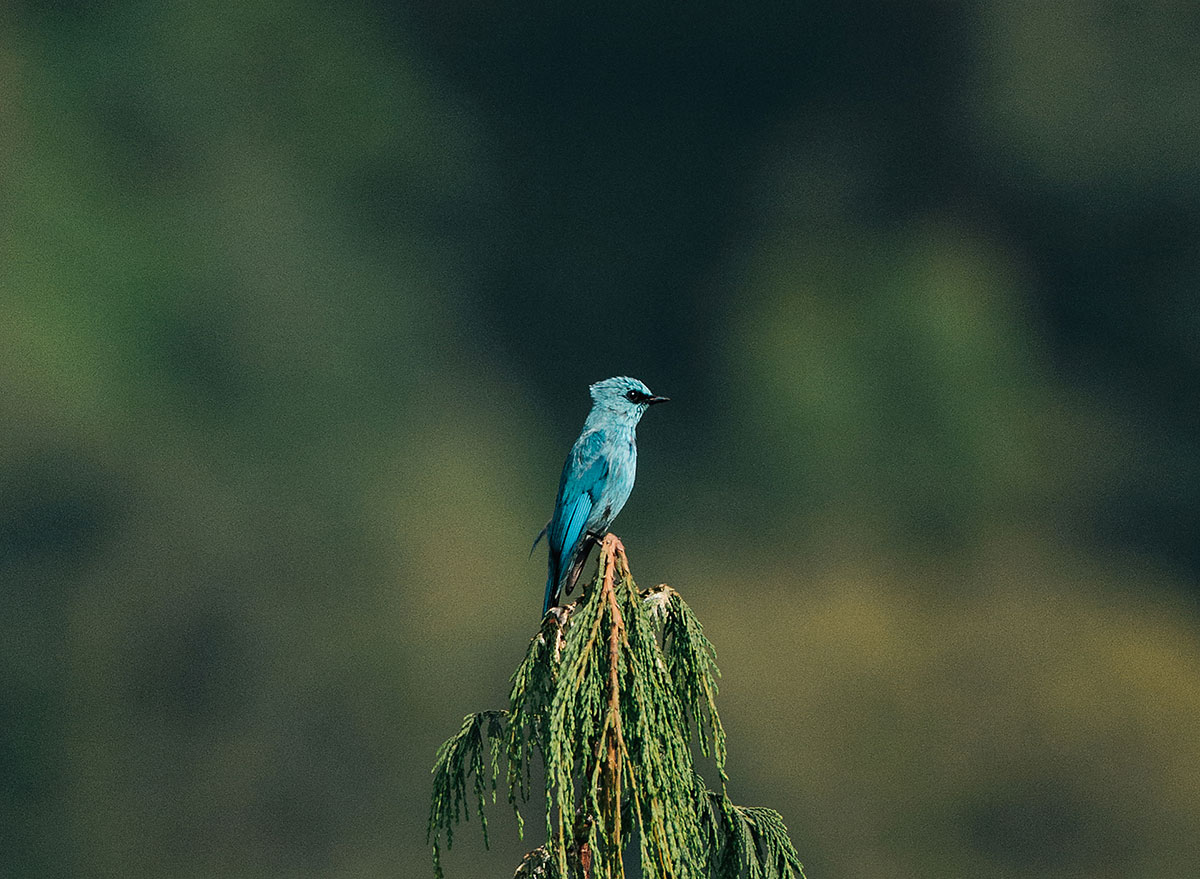
 Spring
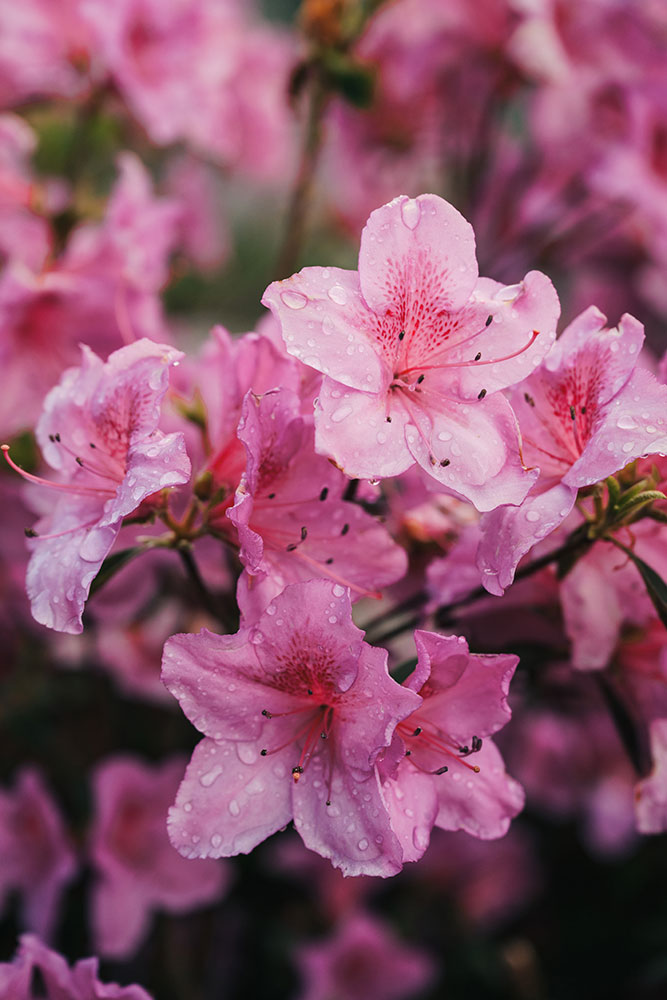
Valleys come alive with blooming rhododendrons, wildflowers and magnolias — the kingdom at its most colourful.
Temperature
15°C to 27°C
Rainfall
Mild rainfall begins late May.
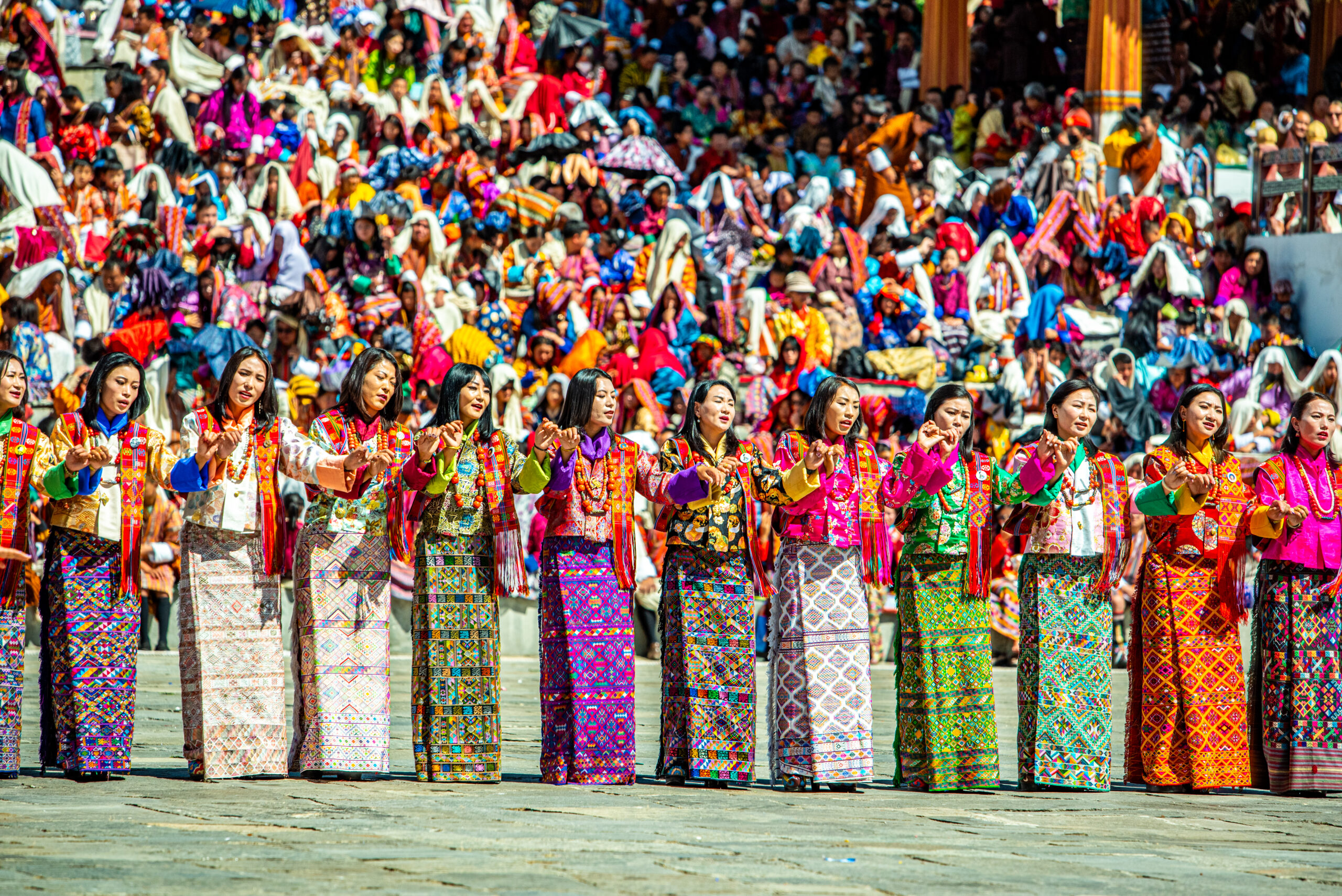
Punakha Tshechu
Punakha Dzong
February–March
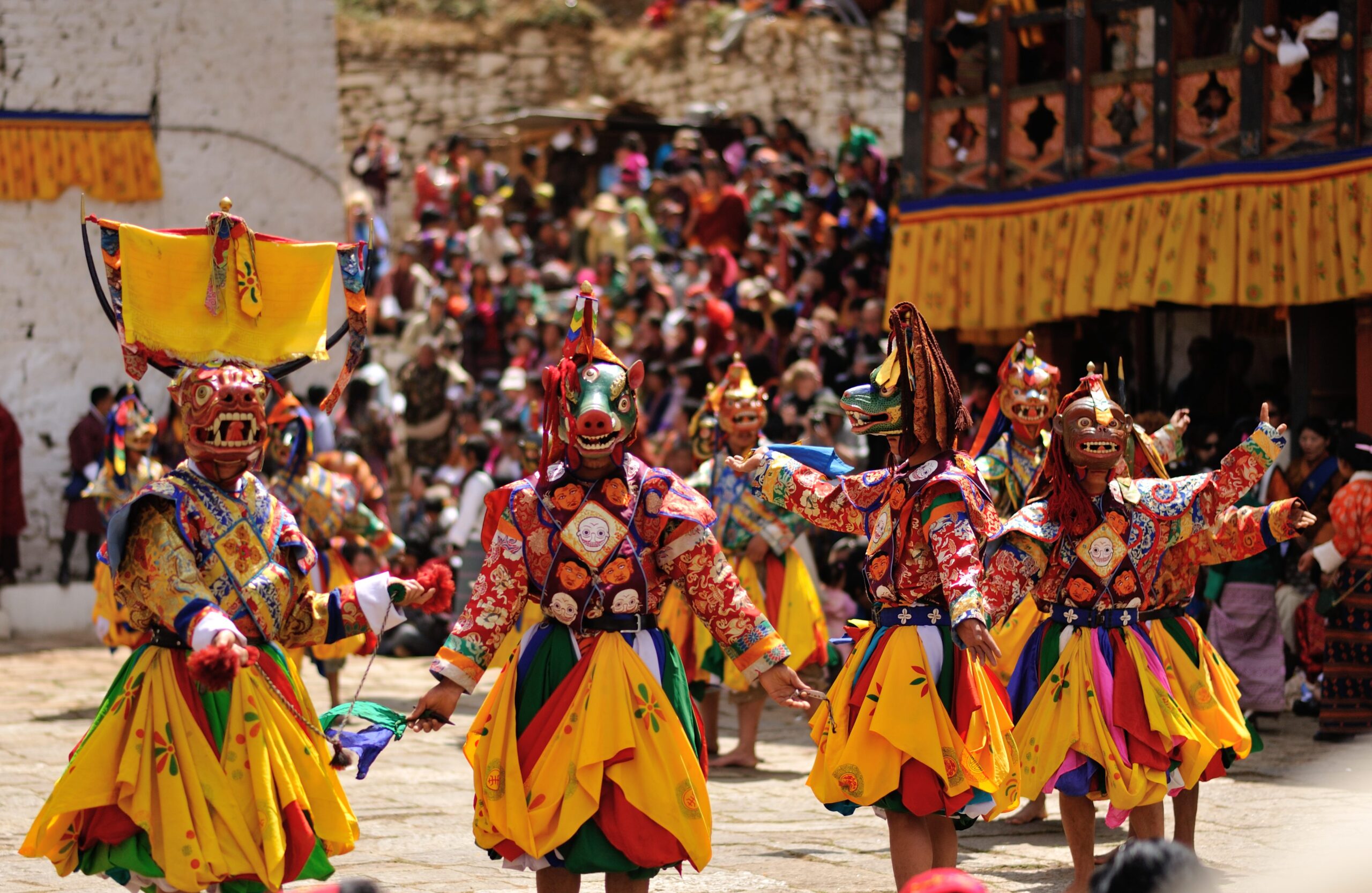
Paro Tshechu
Paro Dzong
March–April
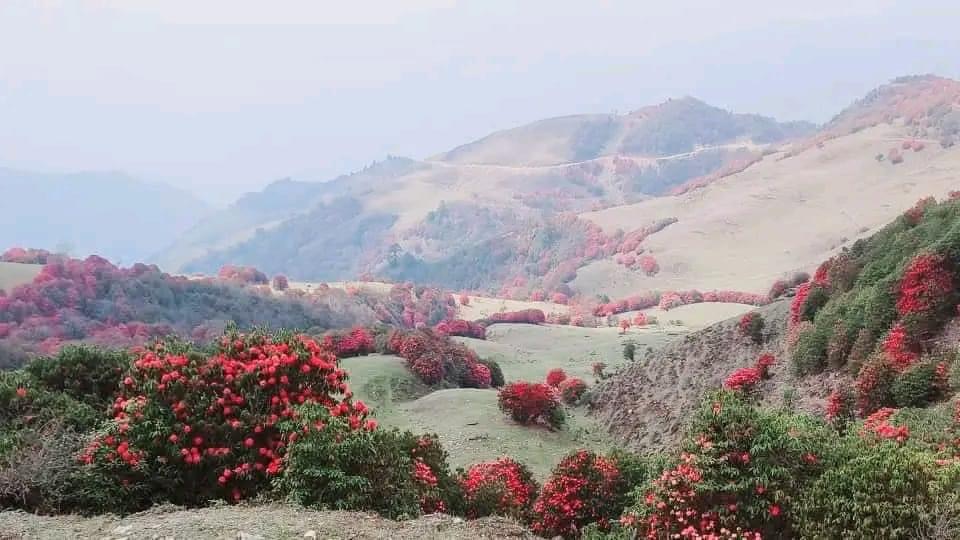
Rhododendron Festival
Lamperi, Dochula
April
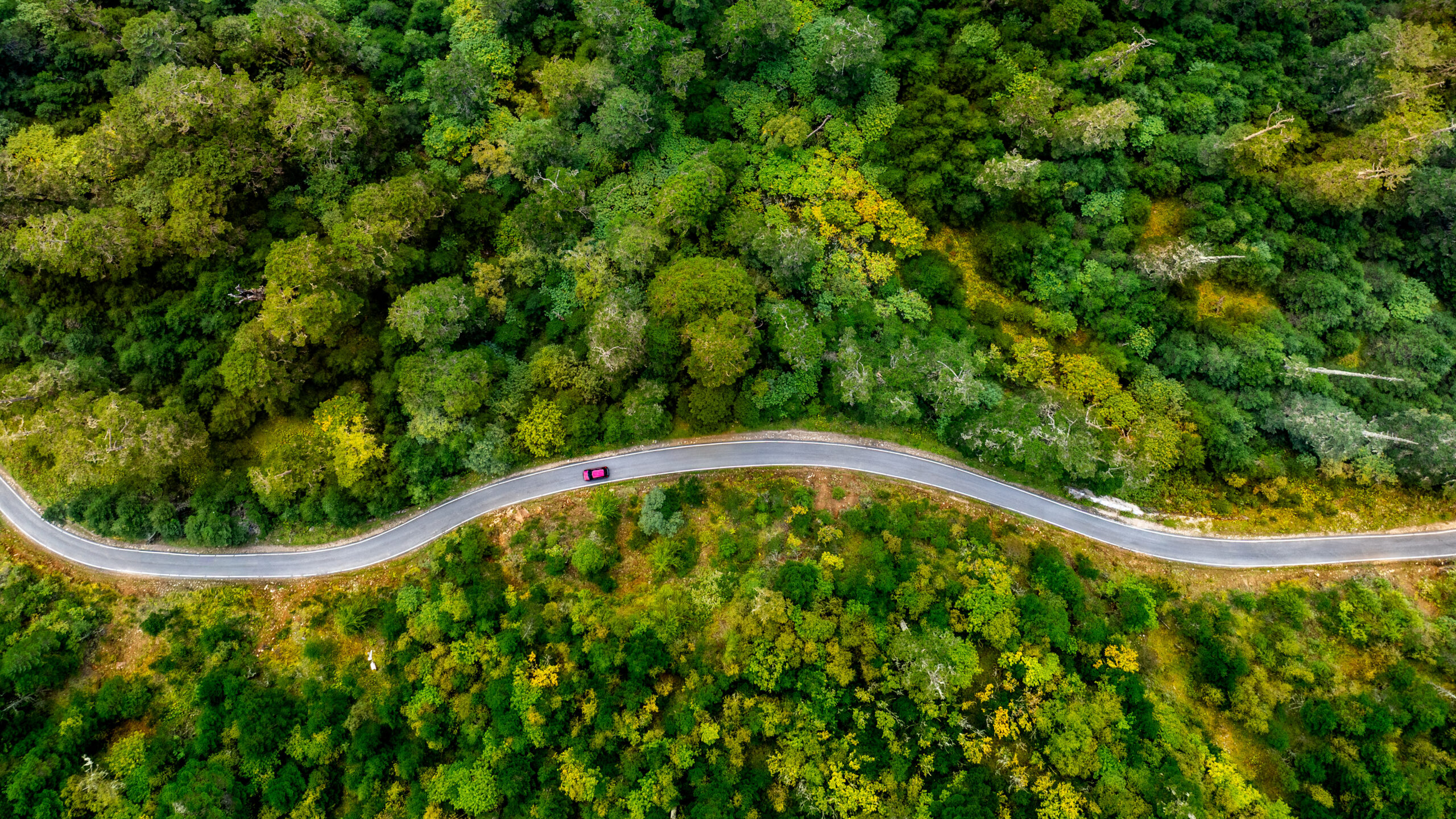 June – August
 Summer
Rain-kissed valleys, misty forests and dramatic skies. The greenest, prettiest season.
Temperature
10°C to 23°C
Rainfall
Light to moderate afternoon rainfall.
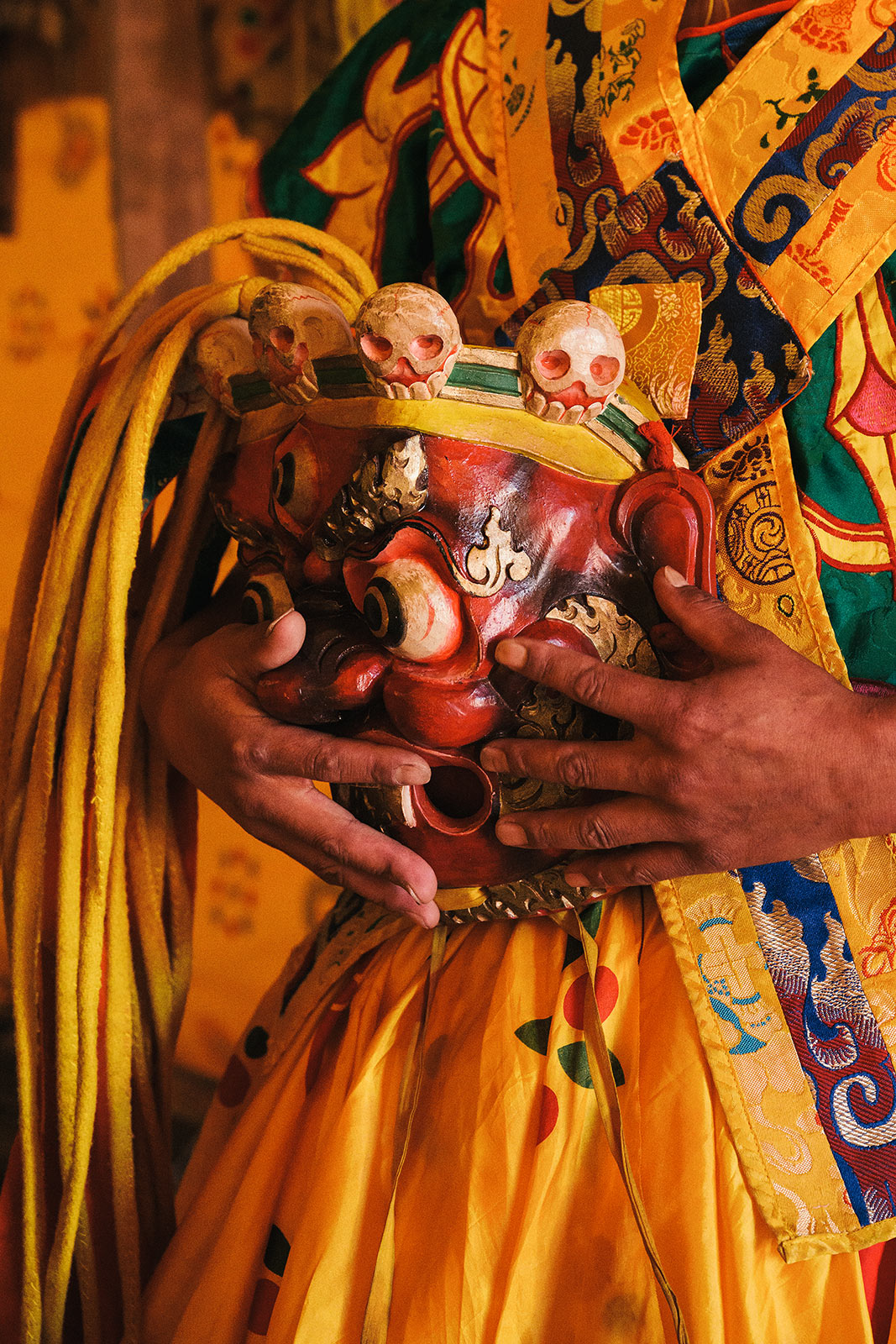
Kurjey Tshechu
Bumthang
June
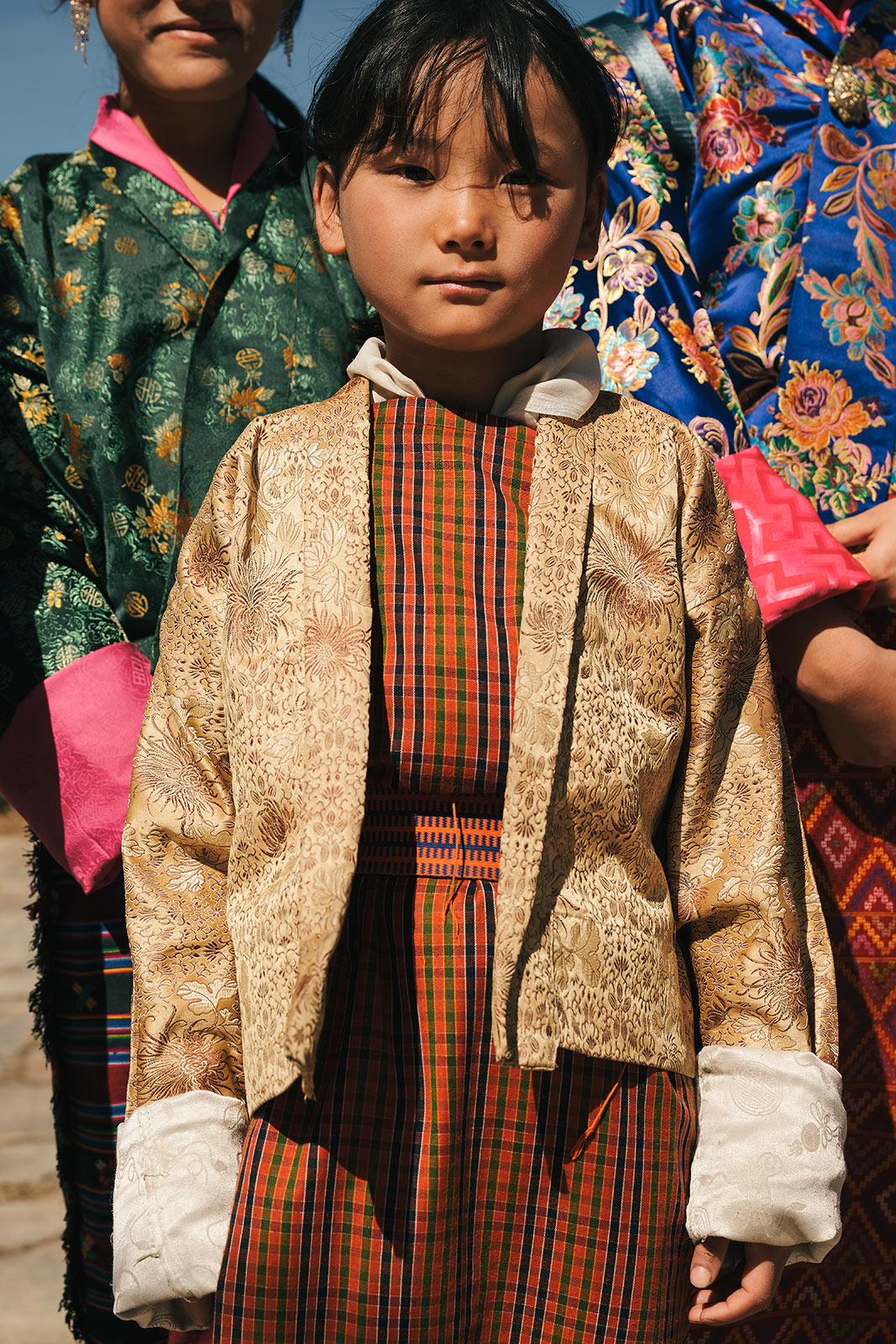
Nimalung Tshechu
Bumthang
June–July
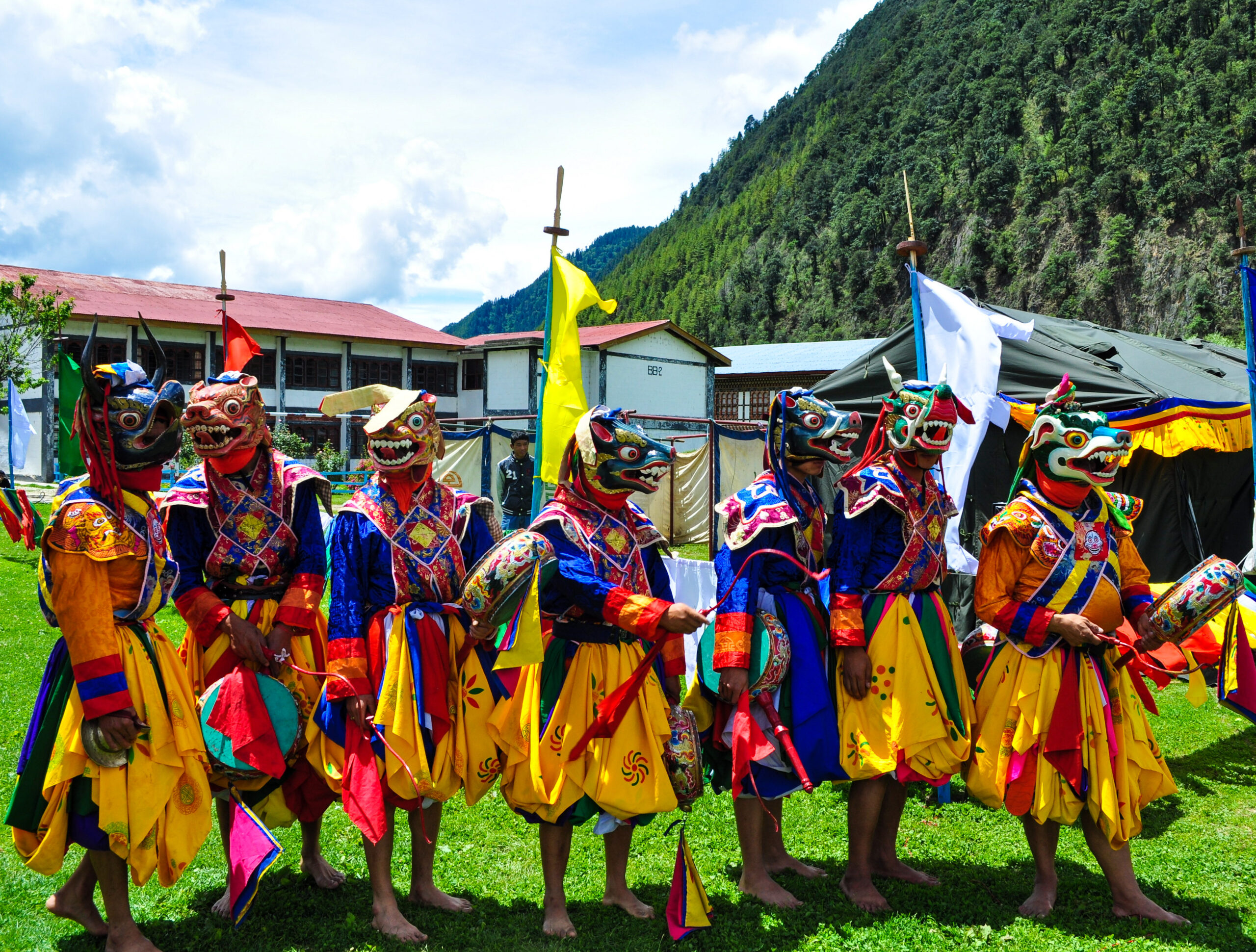
Haa Summer Festival
Haa Valley
July
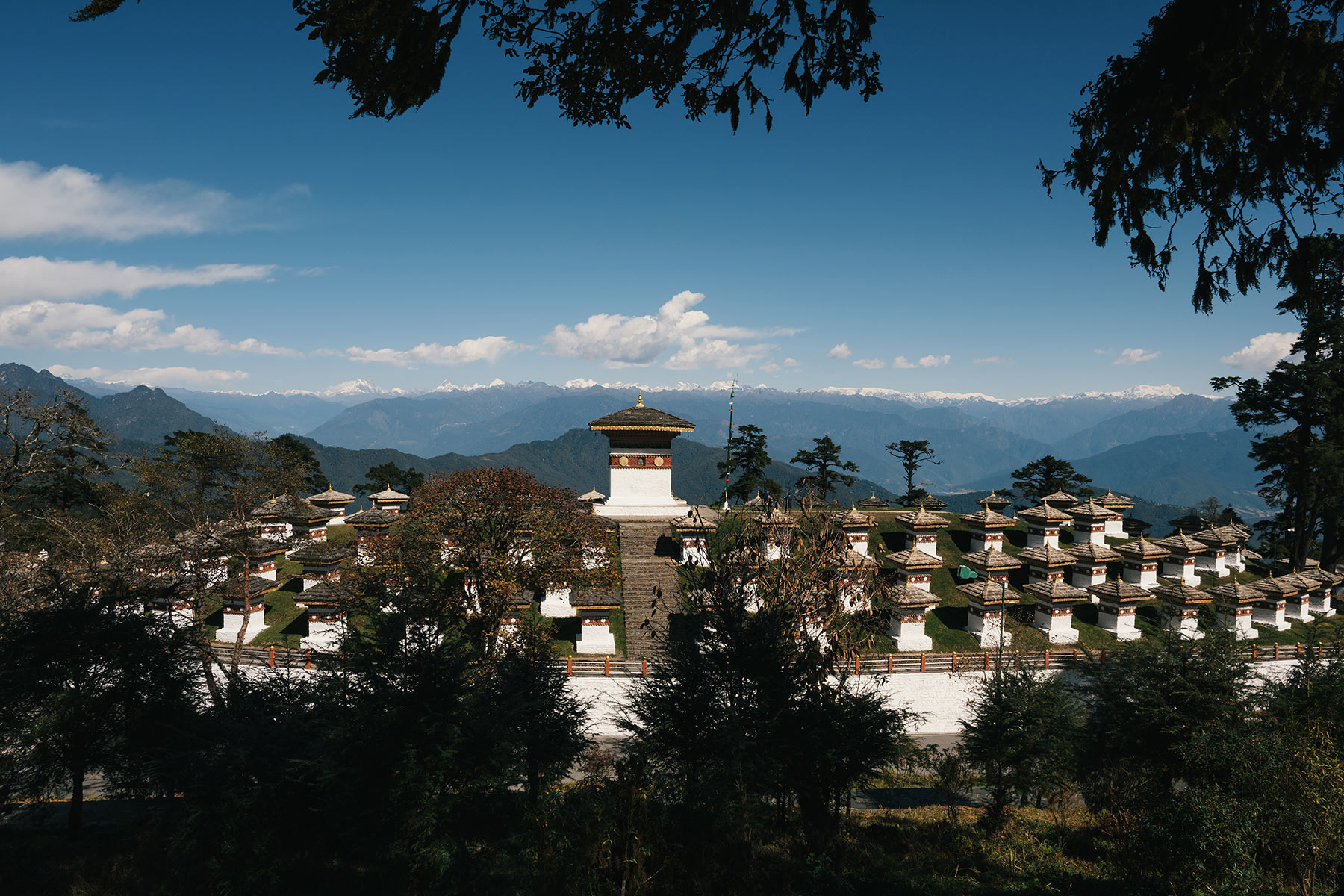 September – November
 Autumn
Clear skies, harvest landscapes and golden rice fields. The classic season for festivals and high trekking.
Temperature
12°C to 22°C
Rainfall
Dry and sunny.
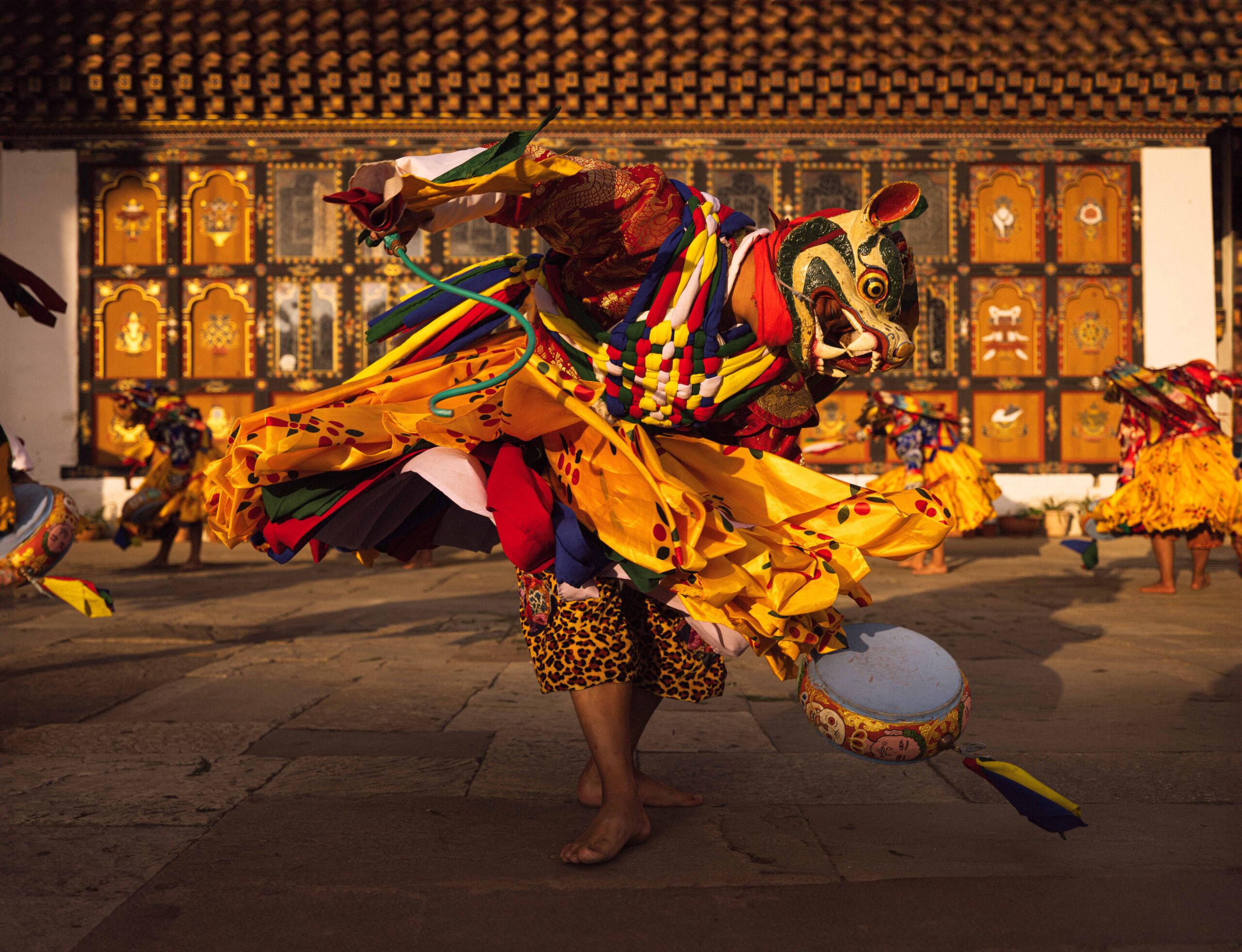
Thimphu Tshechu
Tashichho Dzong
September–October
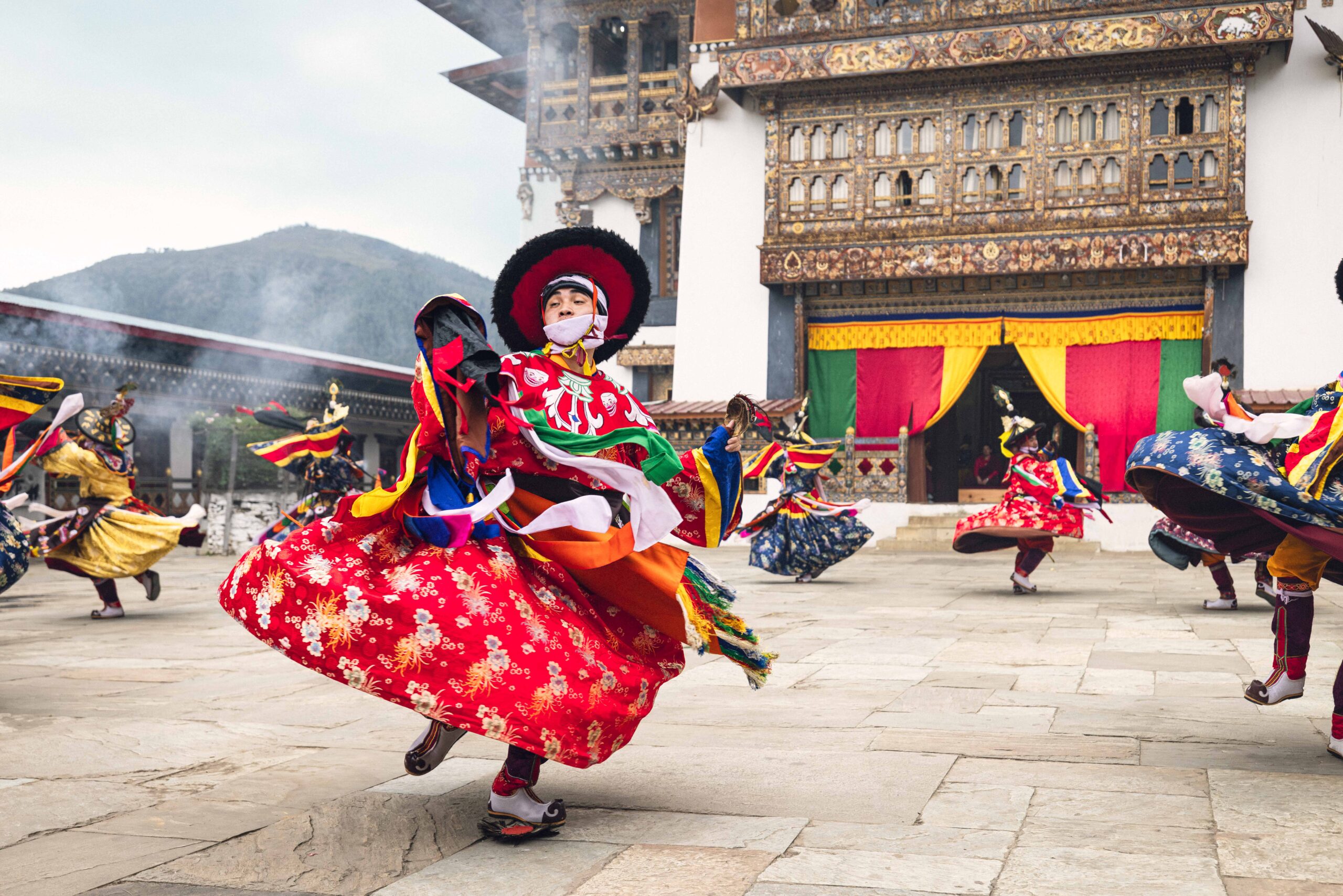
Jambay Lhakhang Drup
Bumthang
October–November
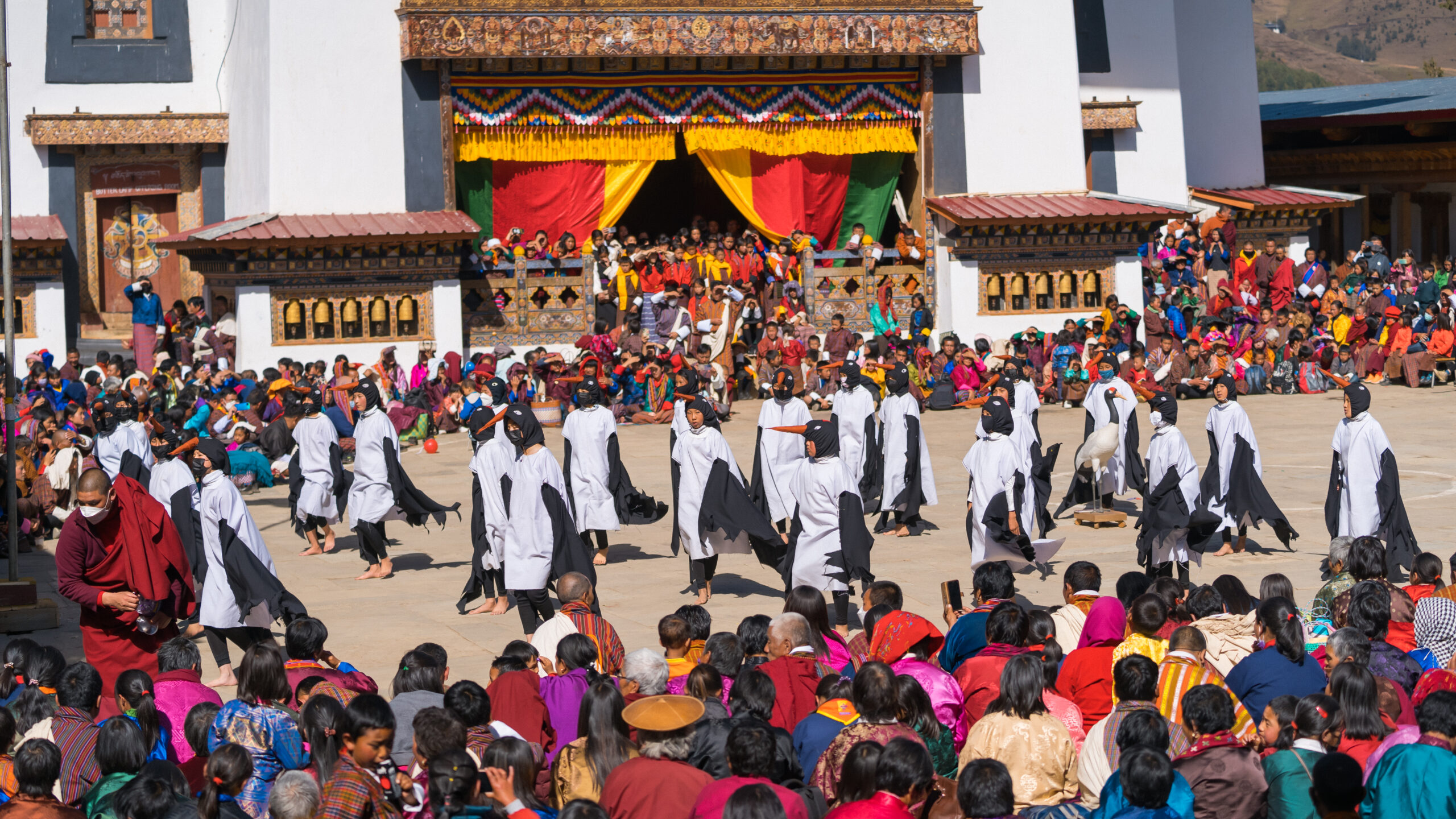
Crane Festival
Gangtey, Phobjikha
11 November
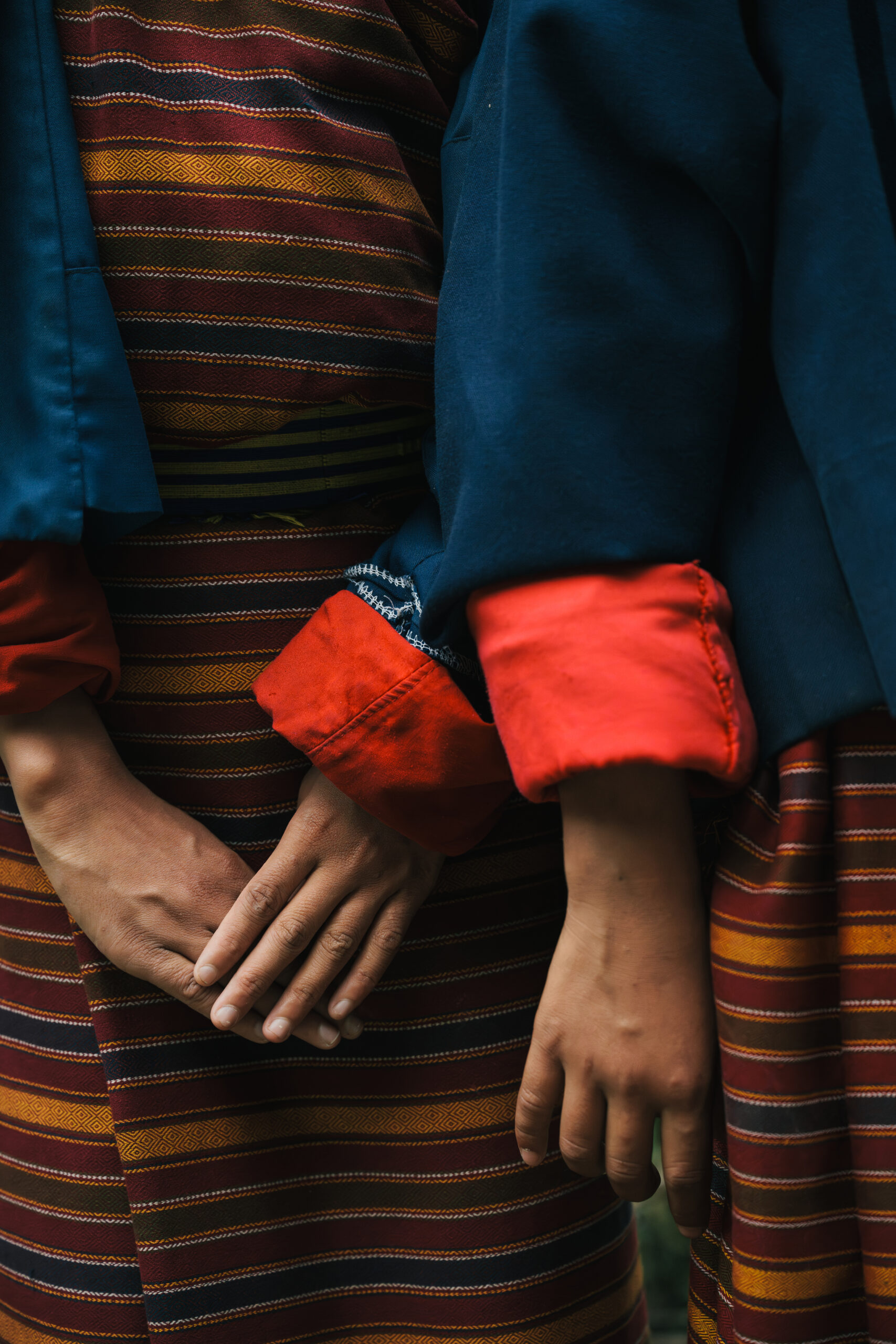 December – February
 Winter
Snow-dusted dzongs and crisp blue skies. Empty of crowds, warm in the subtropical south, deeply still.
Temperature
-2°C to 15°C
Rainfall
Dry and sunny in most regions.
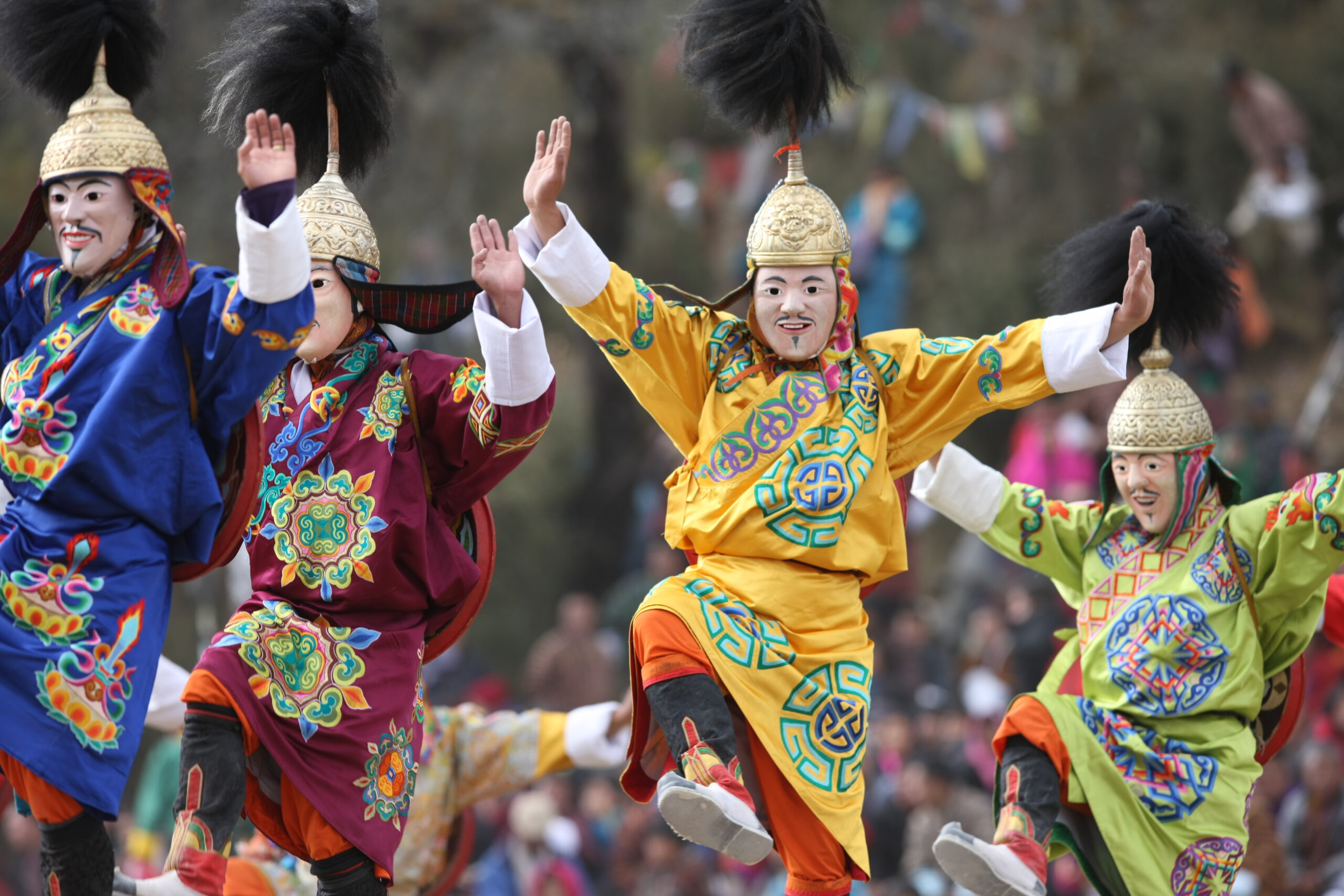
Druk Wangyel Tshechu
Dochula Pass
13 December
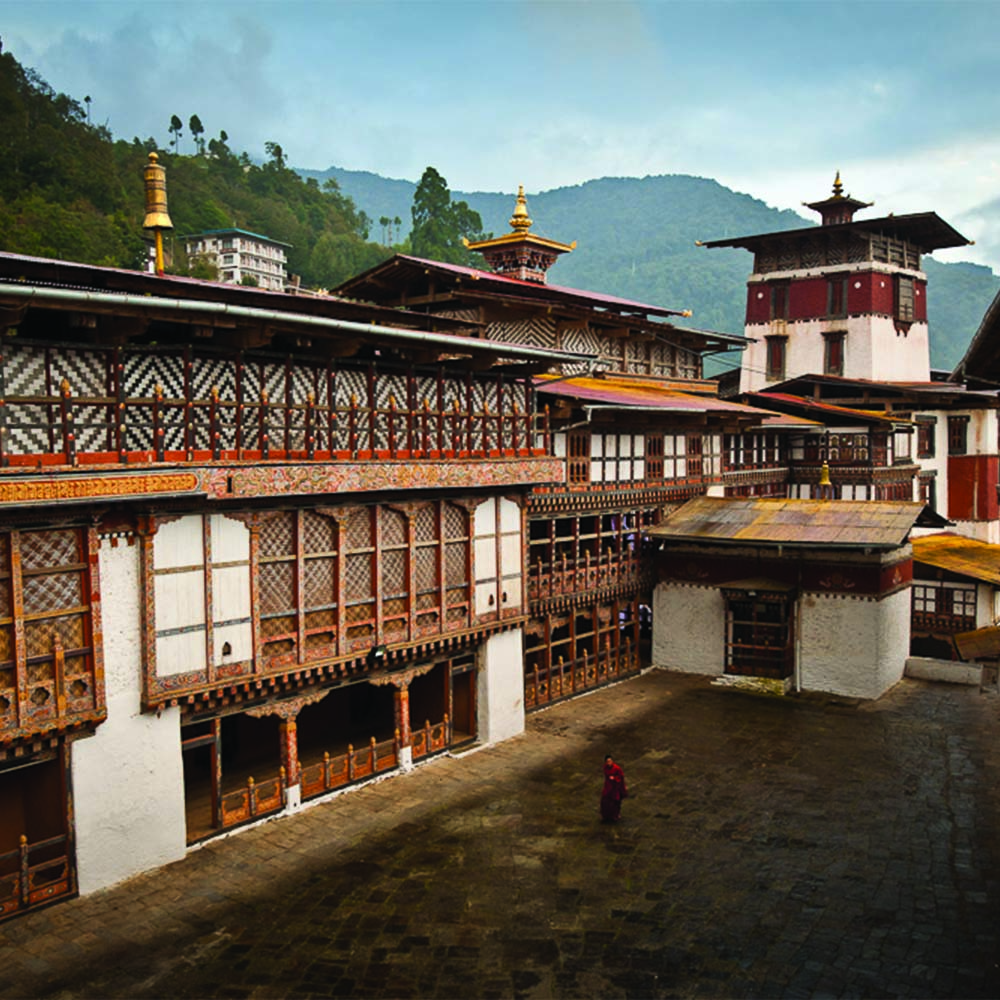
Trongsa Tshechu
Trongsa Dzong
December–January
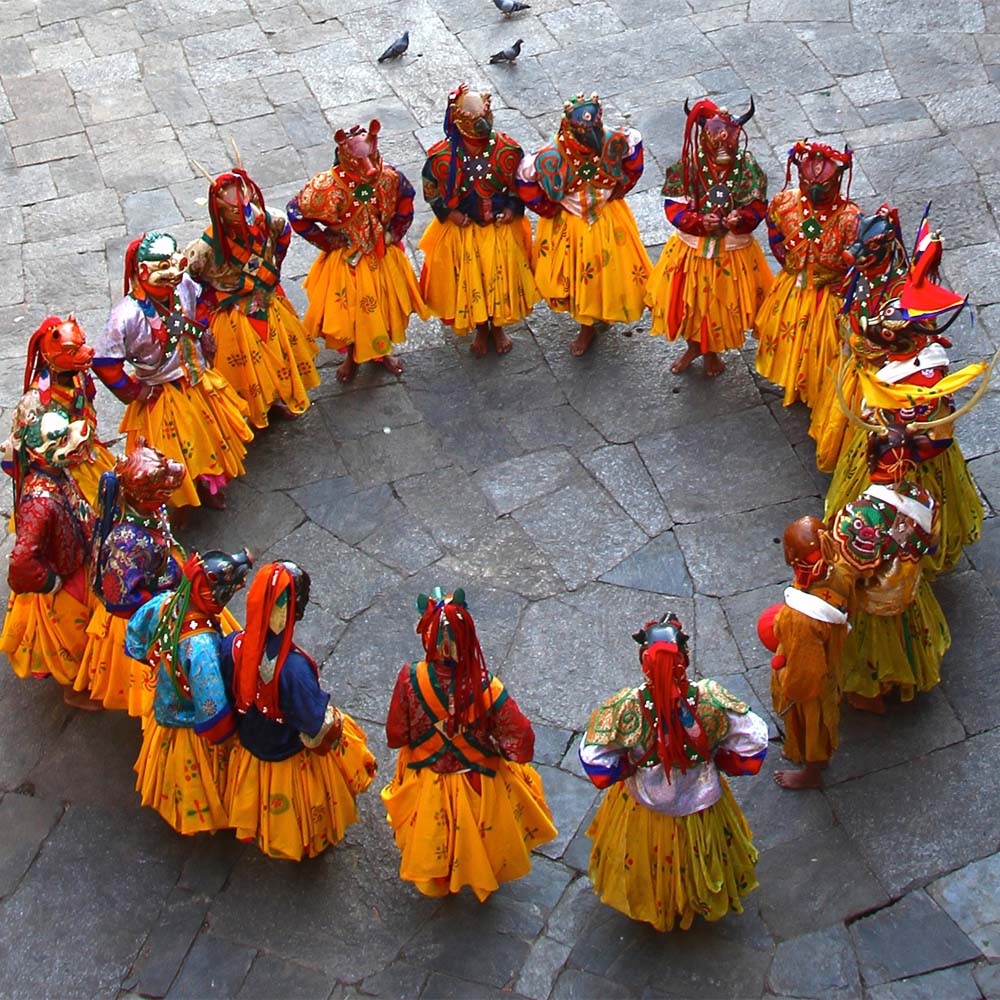
Nomad Festival
Bumthang
Late February
Gastronomy
Bold, comforting, unmistakably Bhutanese
Chillies are a vegetable here, not a spice, and cheese finds its way into almost everything. We arrange farmhouse dinners and a lesson in cooking ema datshi over a wood stove. Afterwards, a hot-stone bath drawn under the stars.
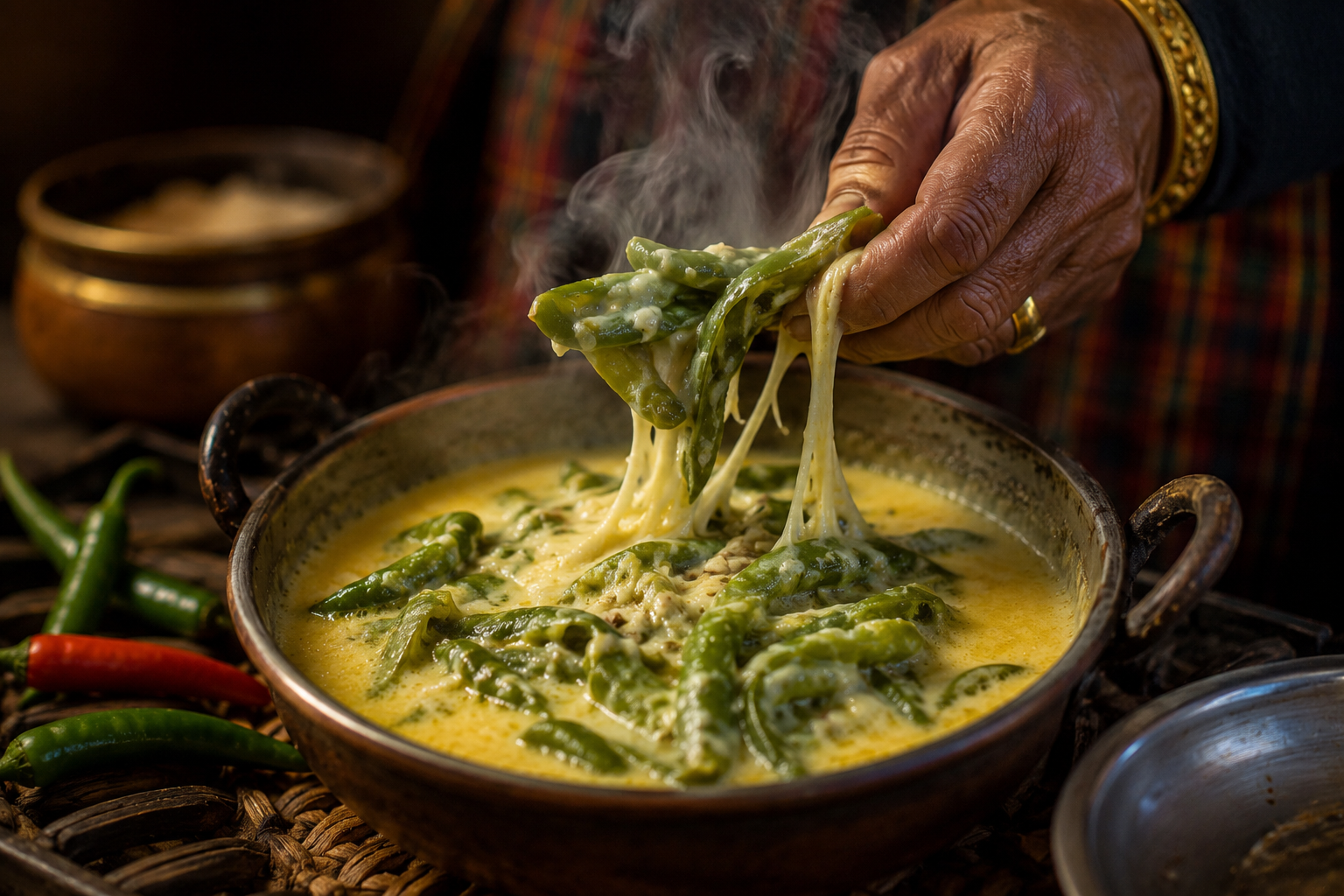
Ema datshi
Bhutan’s national dish of chillies simmered in rich, melted cheese
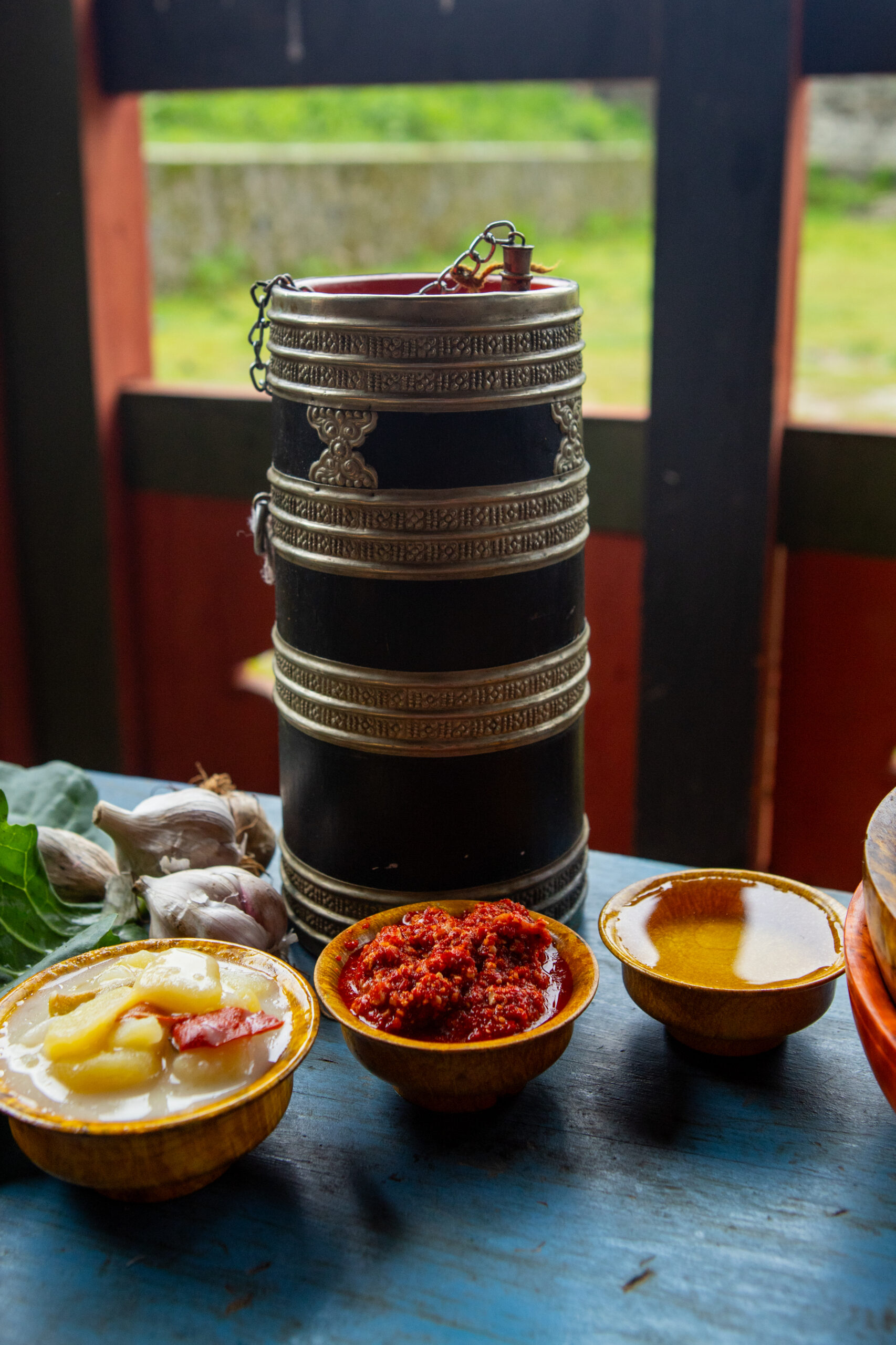
Kewa datshi
Potatoes cooked slowly with chillies and creamy Bhutanese cheese
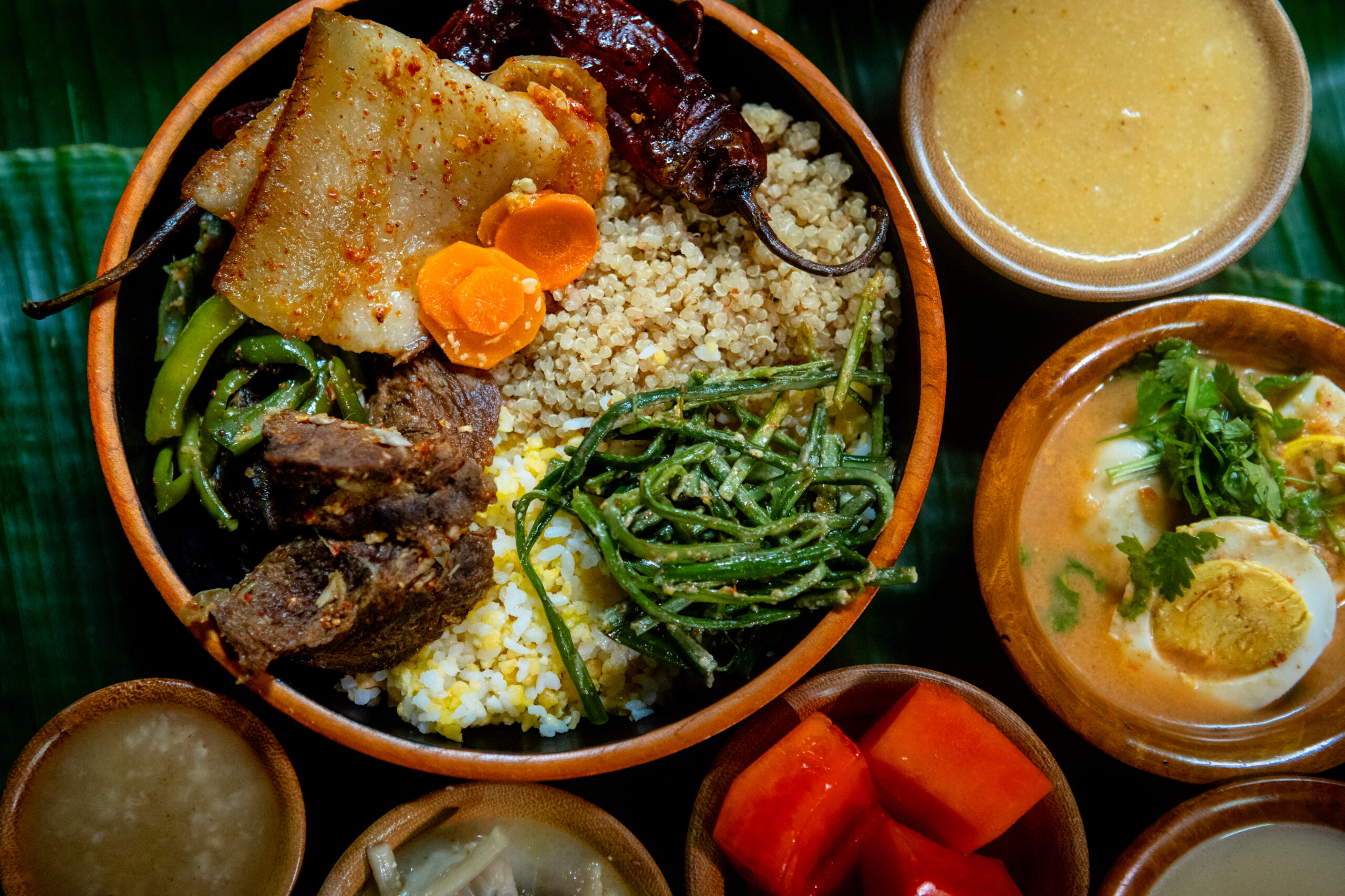
Phaksha paa
Pork cooked with radish and fiery dried chillies
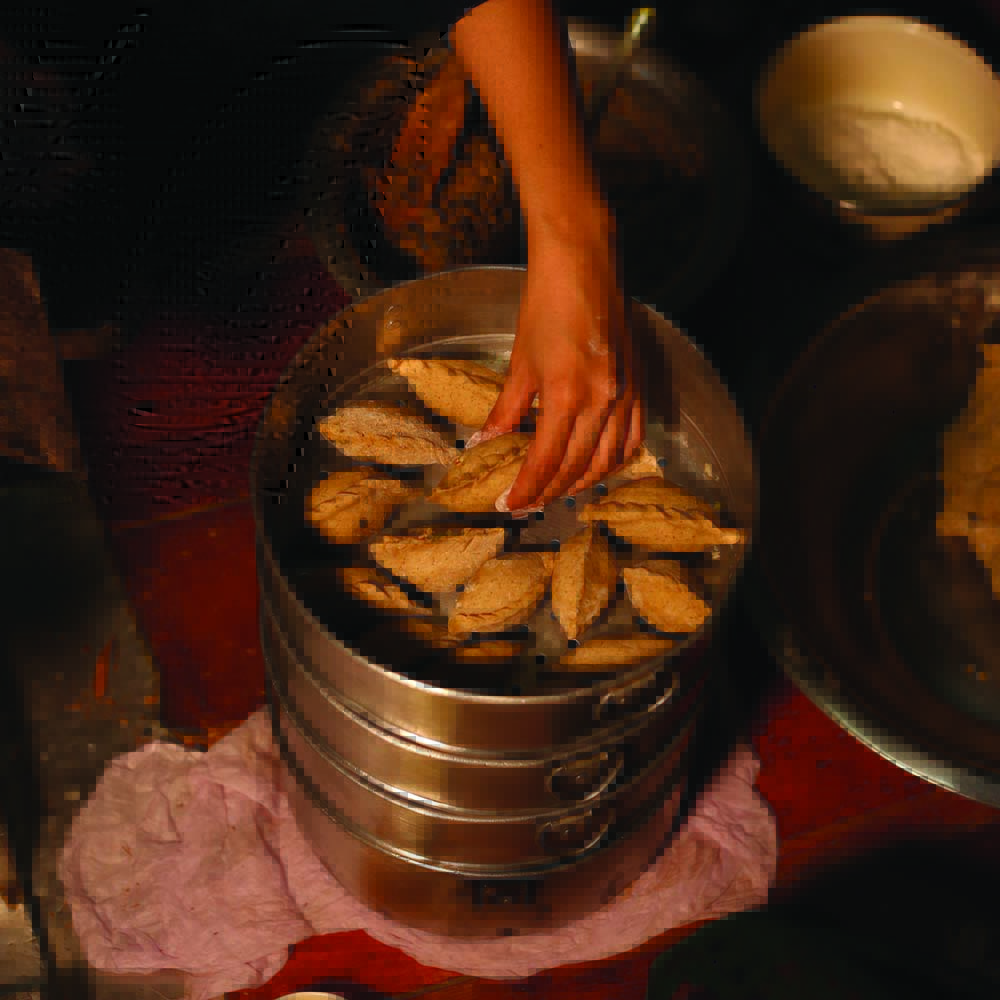
Hoentay
Buckwheat dumplings filled with greens and cheese, from the Haa Valley
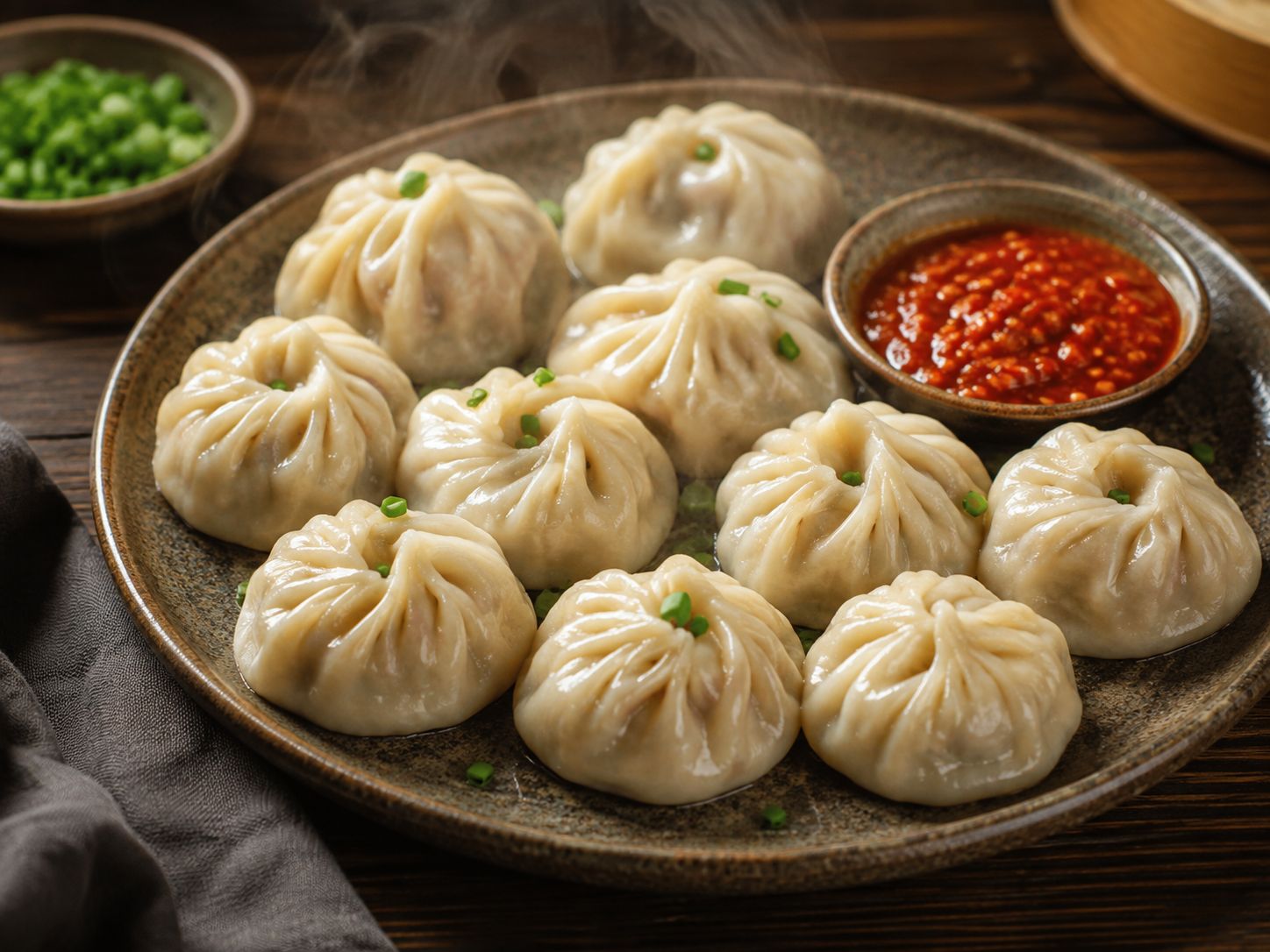
Momos
Steamed Himalayan dumplings, filled and folded by hand
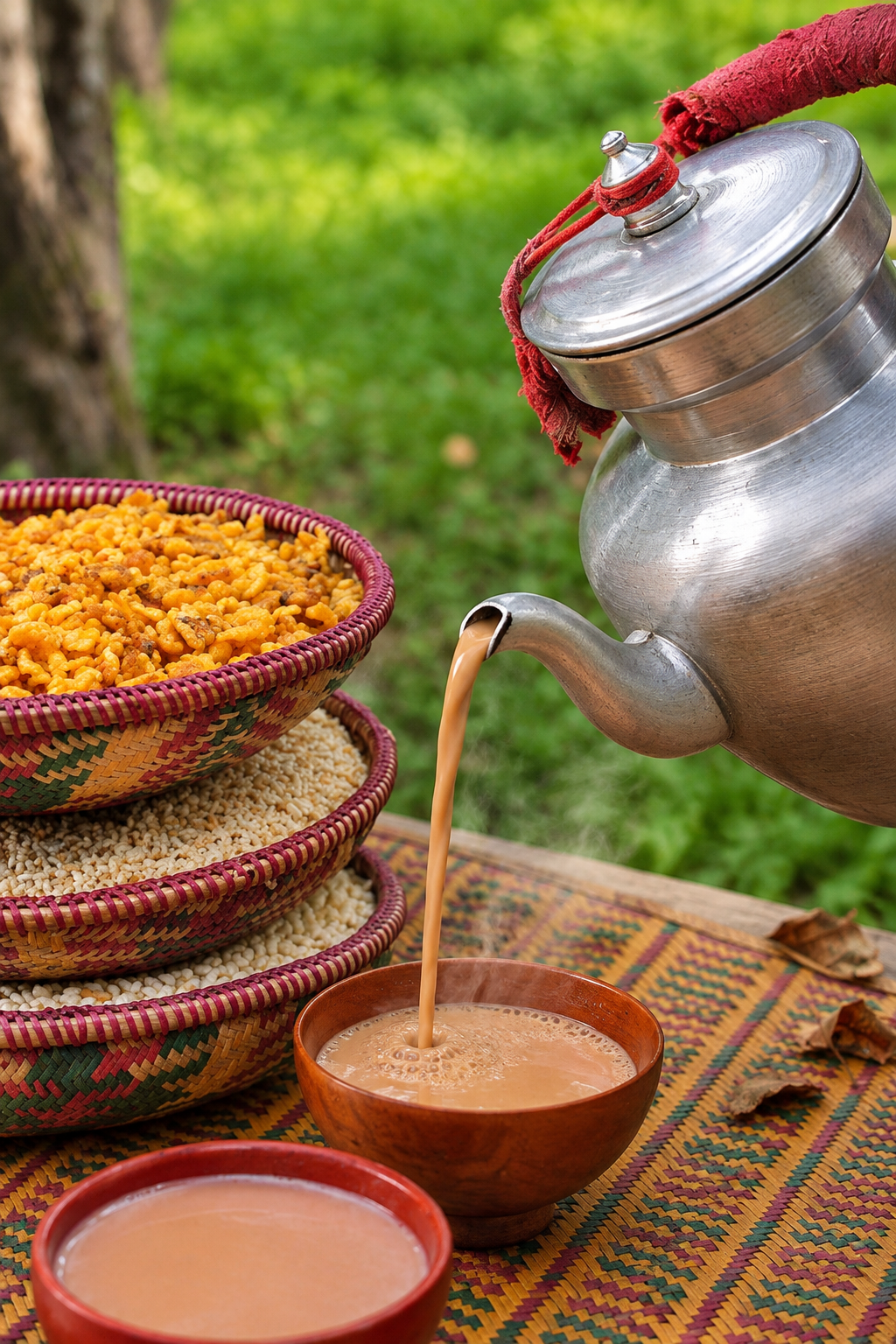
Suja
Traditional butter tea, salted, warming and distinctly Bhutanese
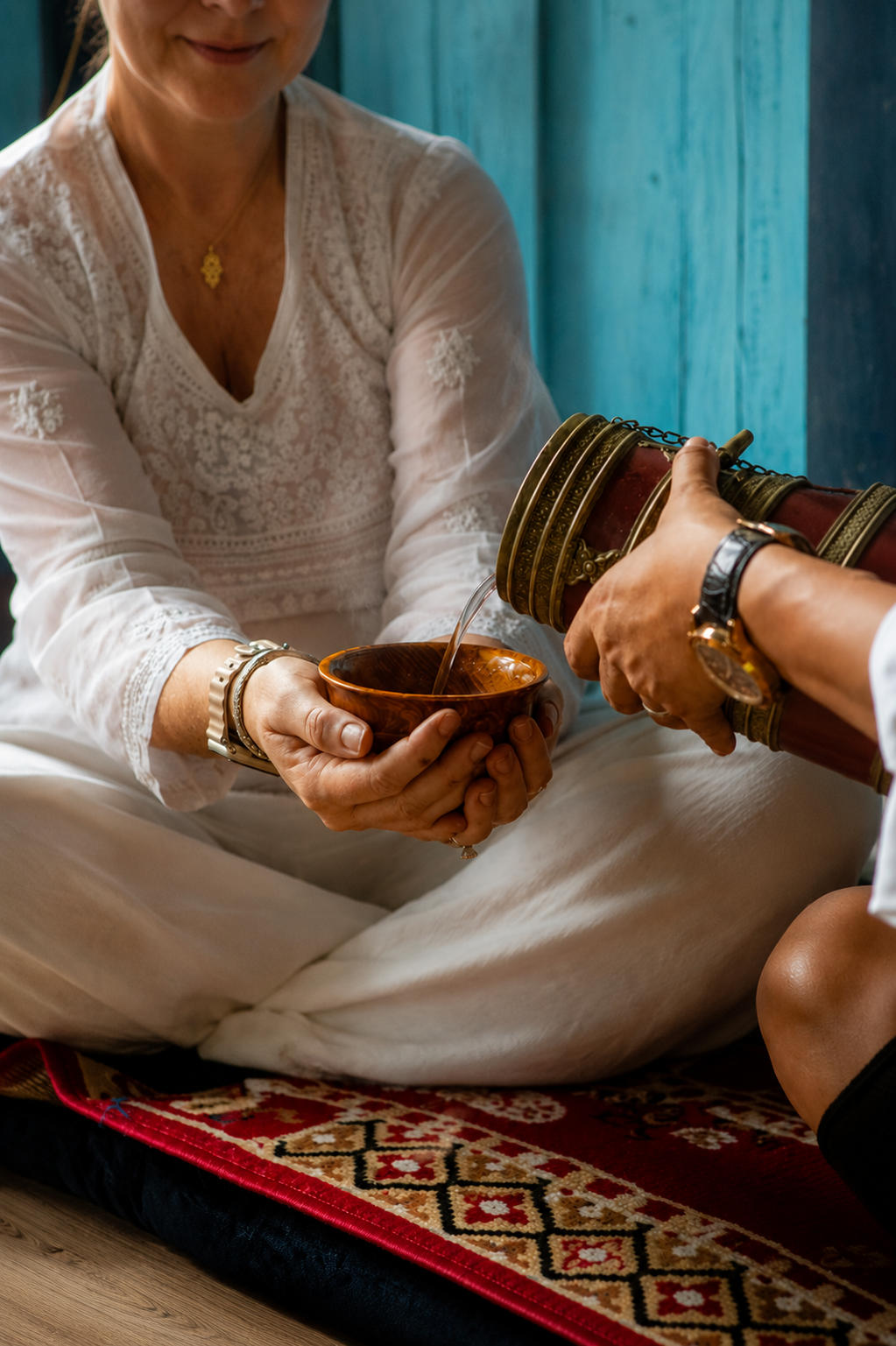
Ara
A traditional Bhutanese spirit, often served warm
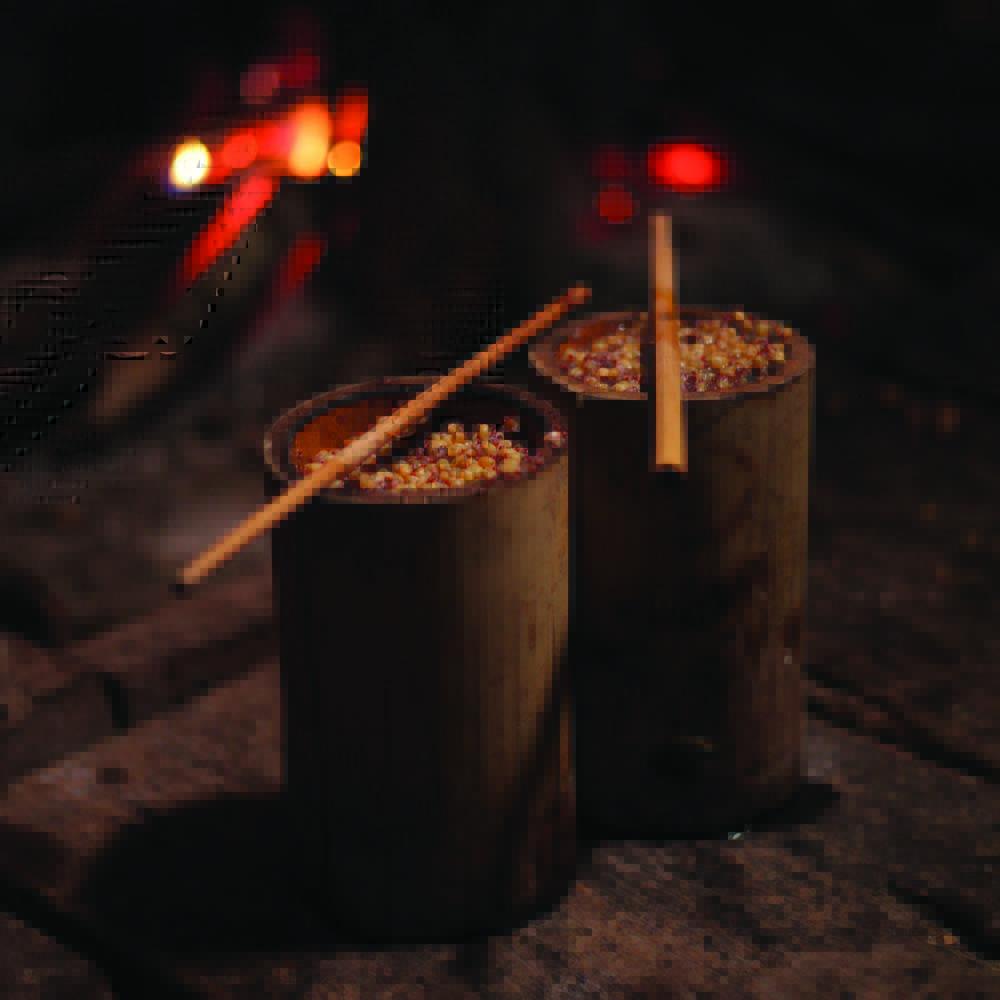
Tongba
A warming Himalayan drink brewed from fermented millet
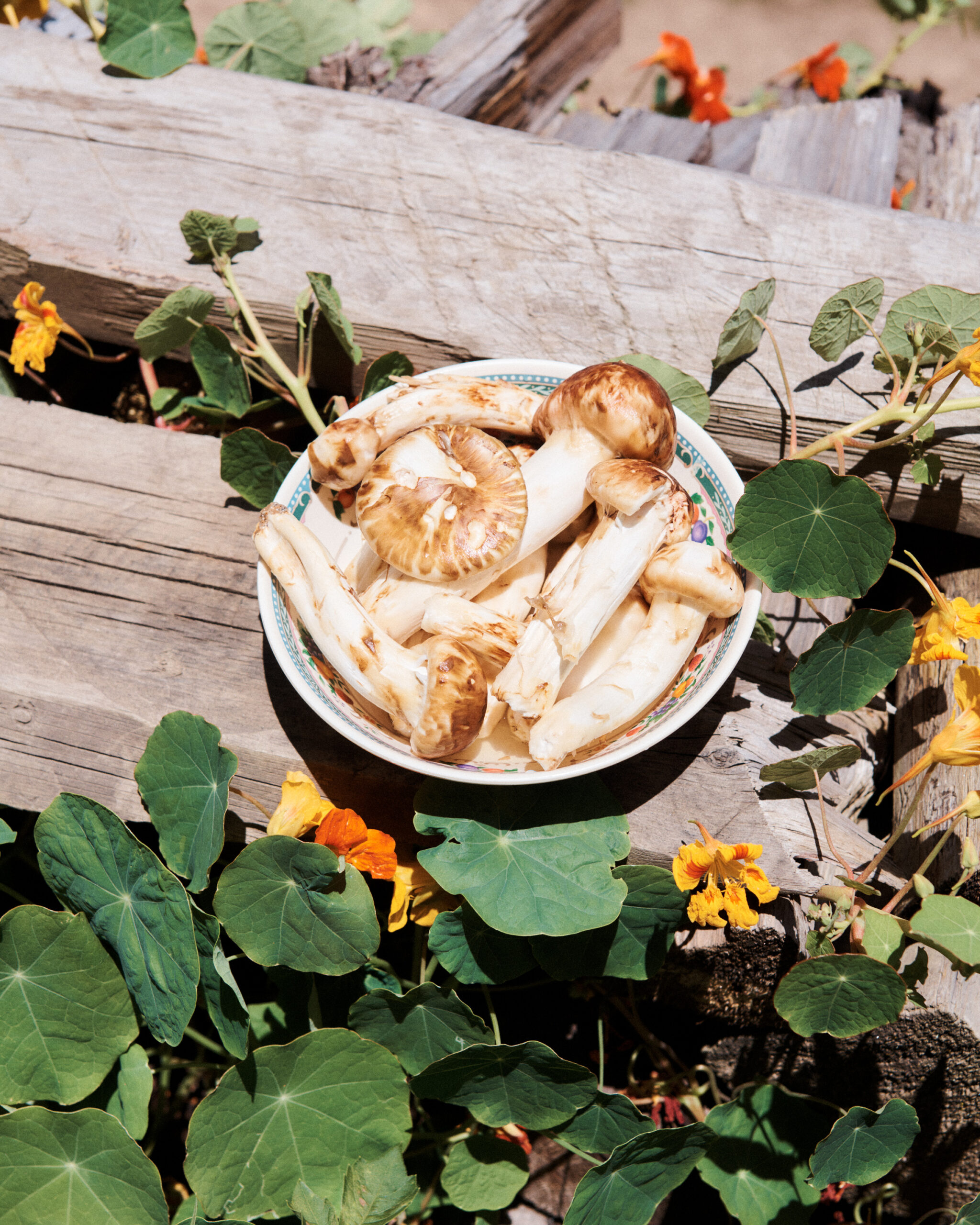
Matsutake mushrooms
Wild Himalayan mushrooms, prized for their delicate, earthy flavour
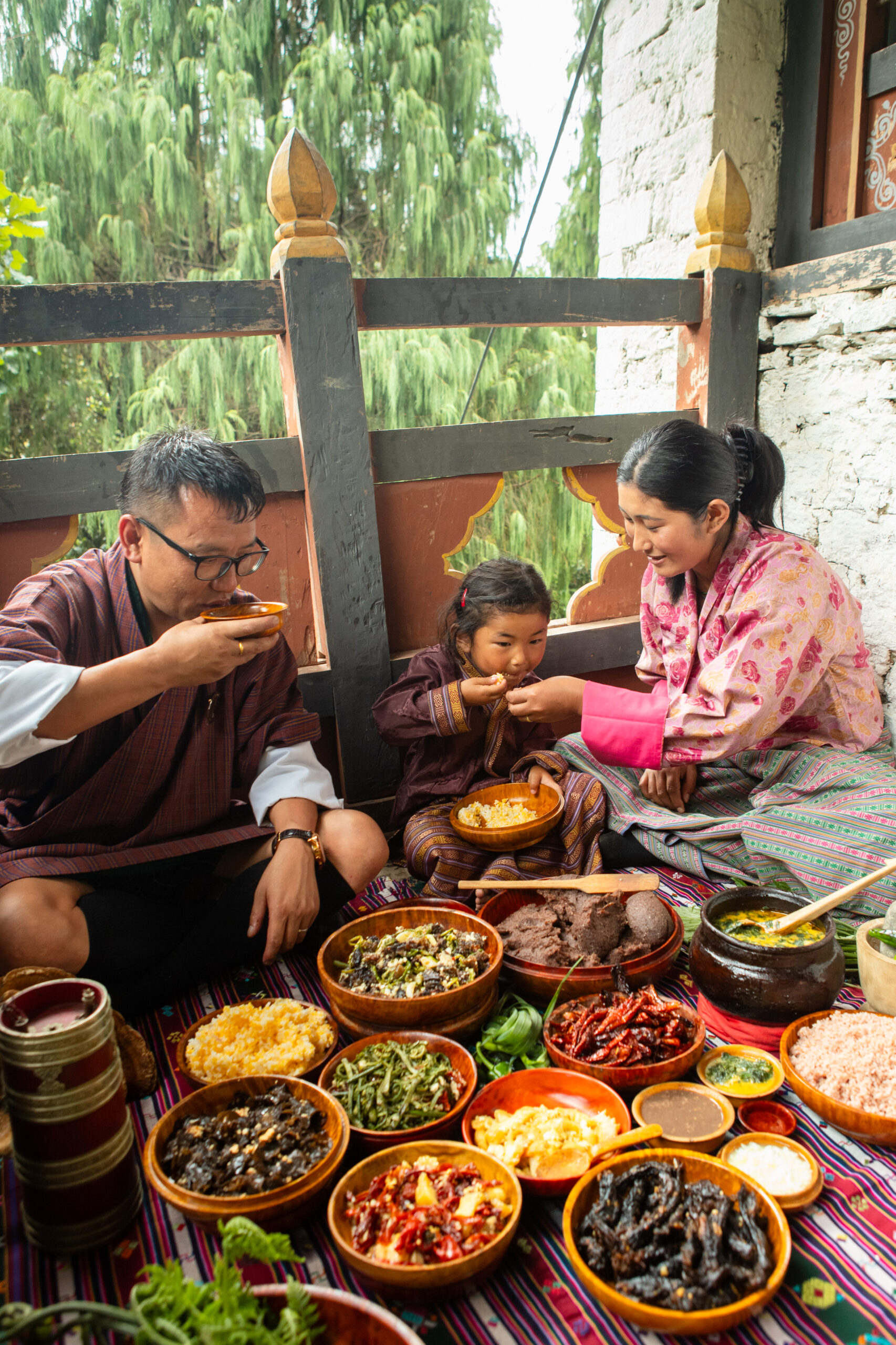
Farmhouse lunch
A home-cooked Bhutanese meal, shared around the family table
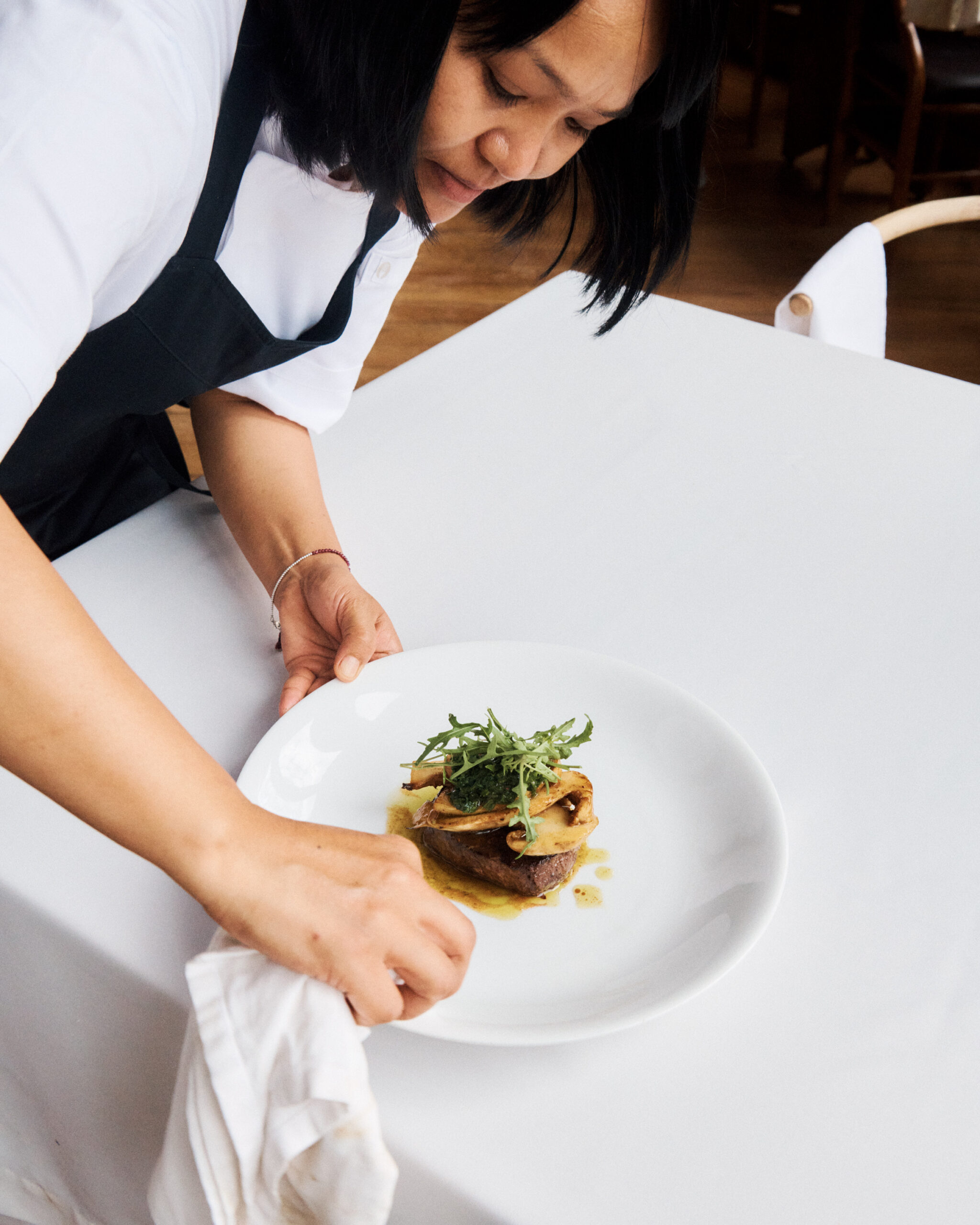
Fine dining in Bhutan
Bhutanese ingredients reimagined with a contemporary touch
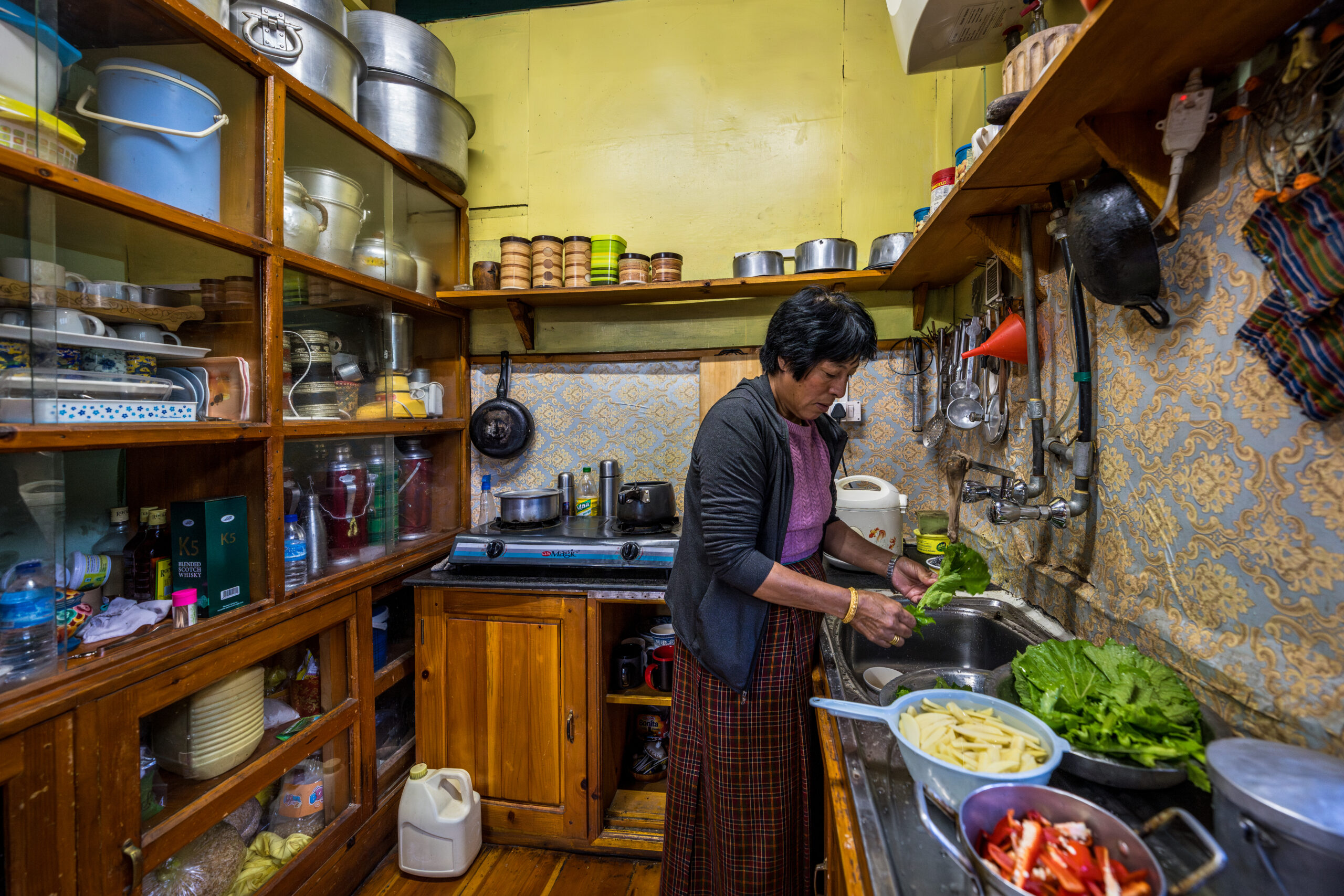
Home cooking
Step into a family kitchen and learn the dishes Bhutanese people love
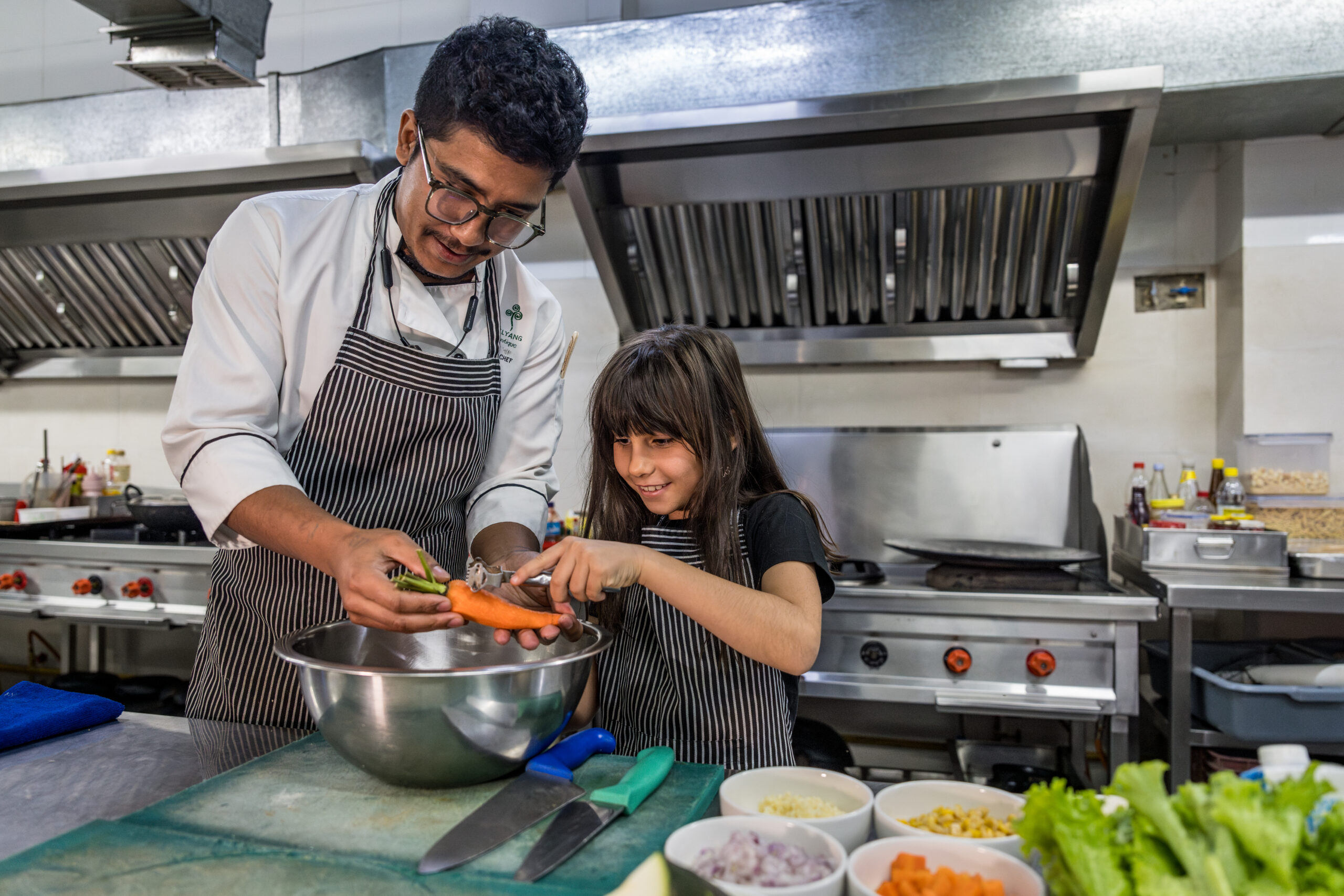
Cooking classes
Cook Bhutanese favourites alongside local chefs and home cooks
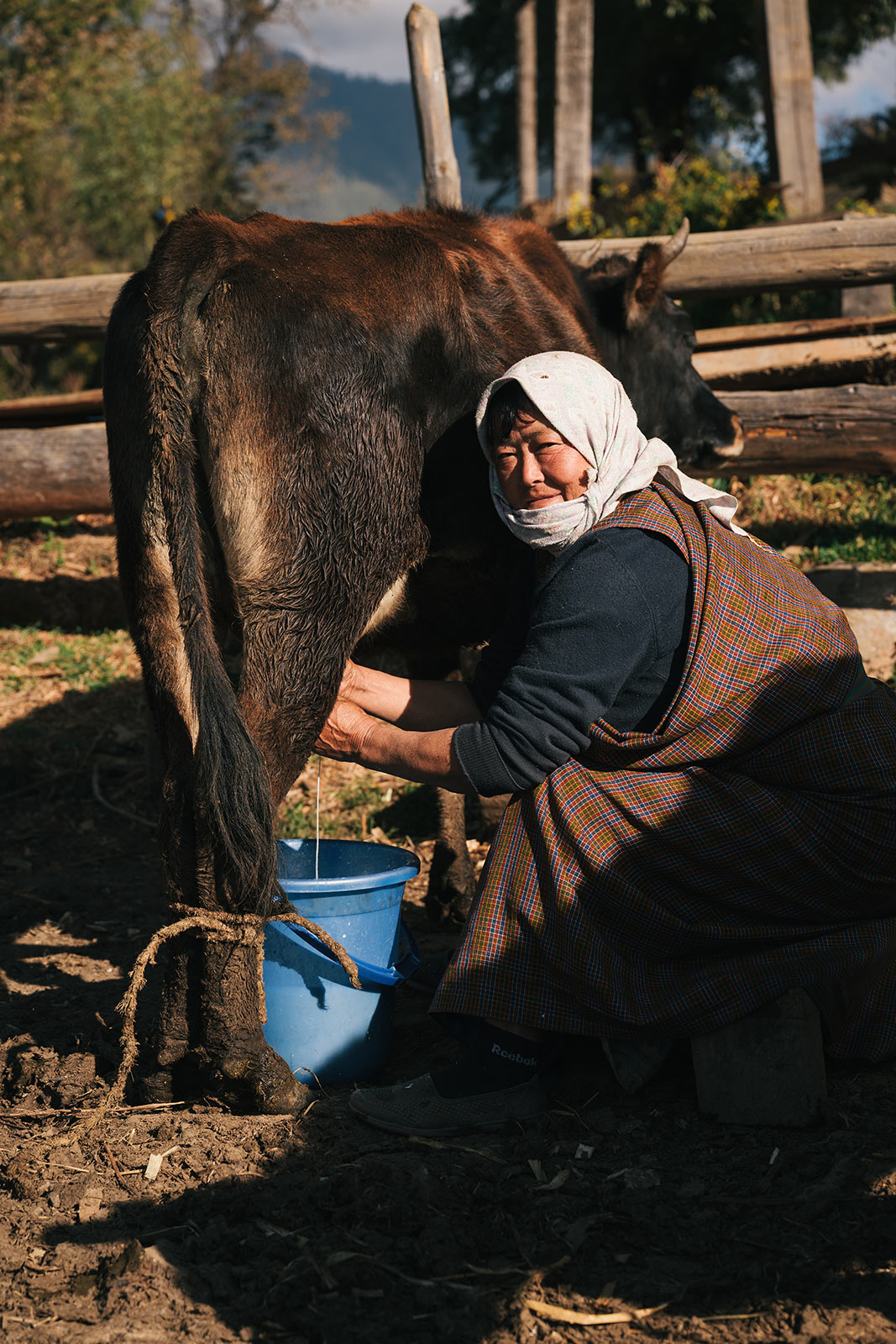
Farm visits
Meet the growers and discover where Bhutan’s food begins
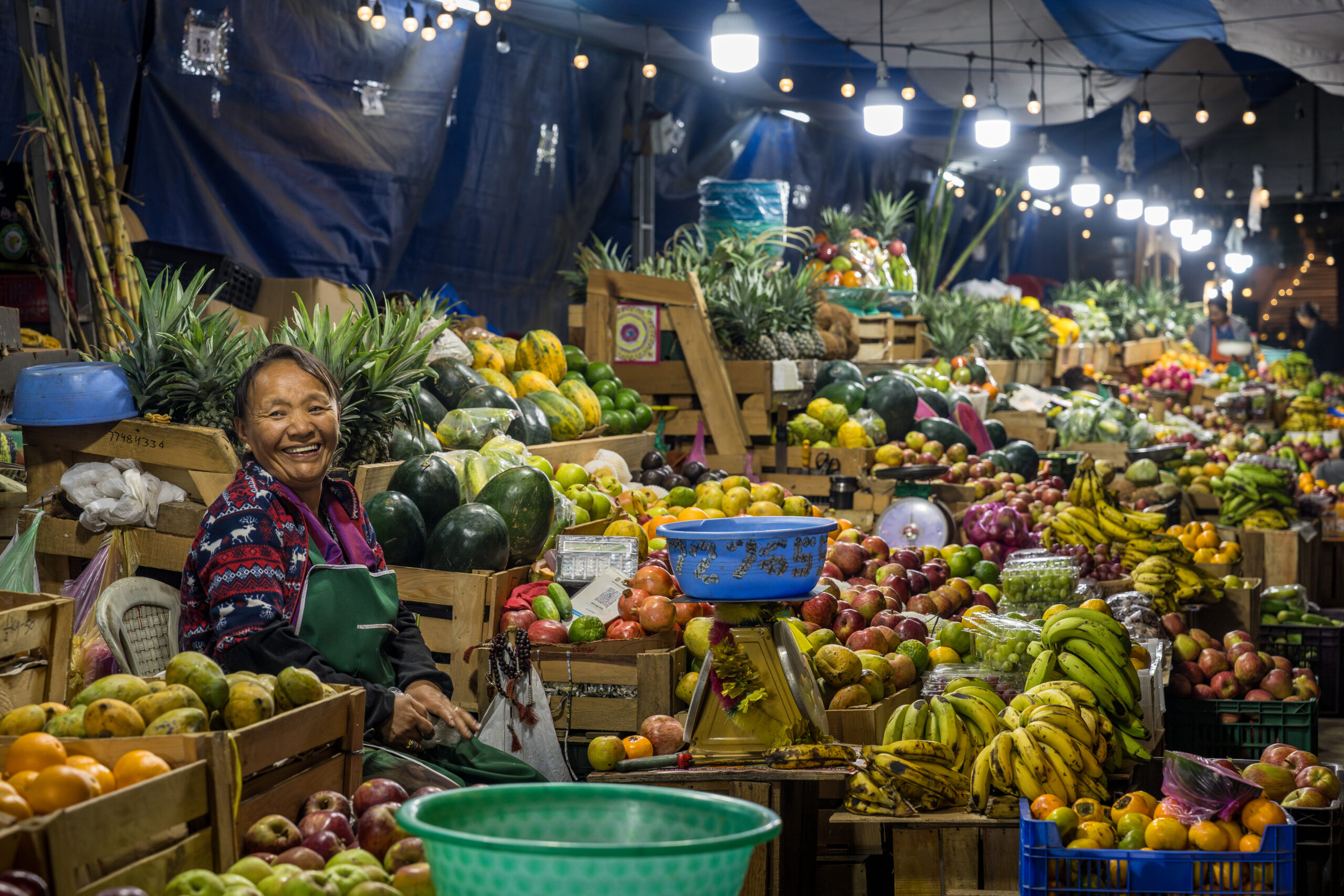
The local market
Wander among seasonal produce, mountain ingredients and everyday Bhutanese life
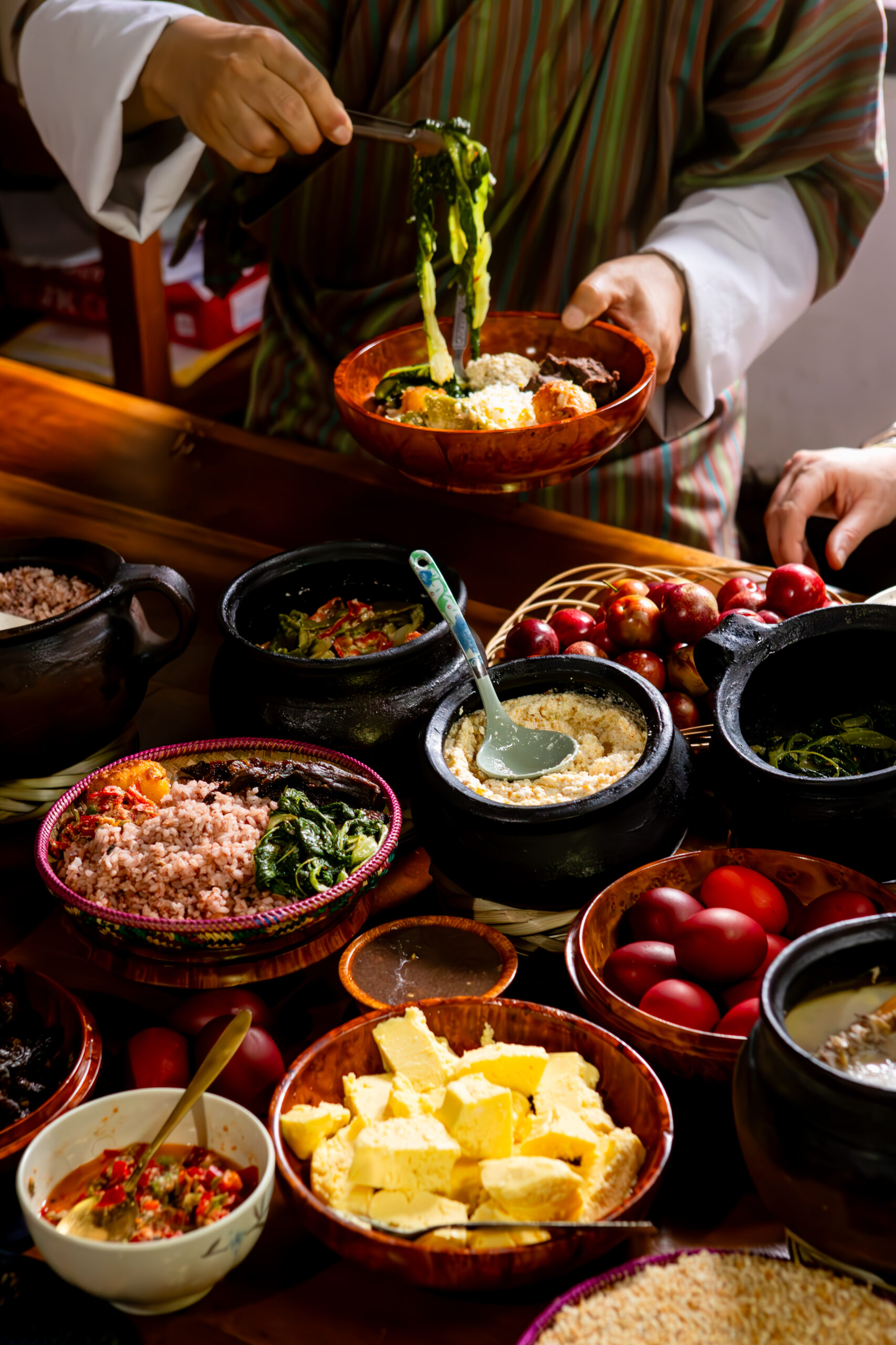
Vegetarian Bhutan
Seasonal vegetables, chillies and cheese at the heart of the table
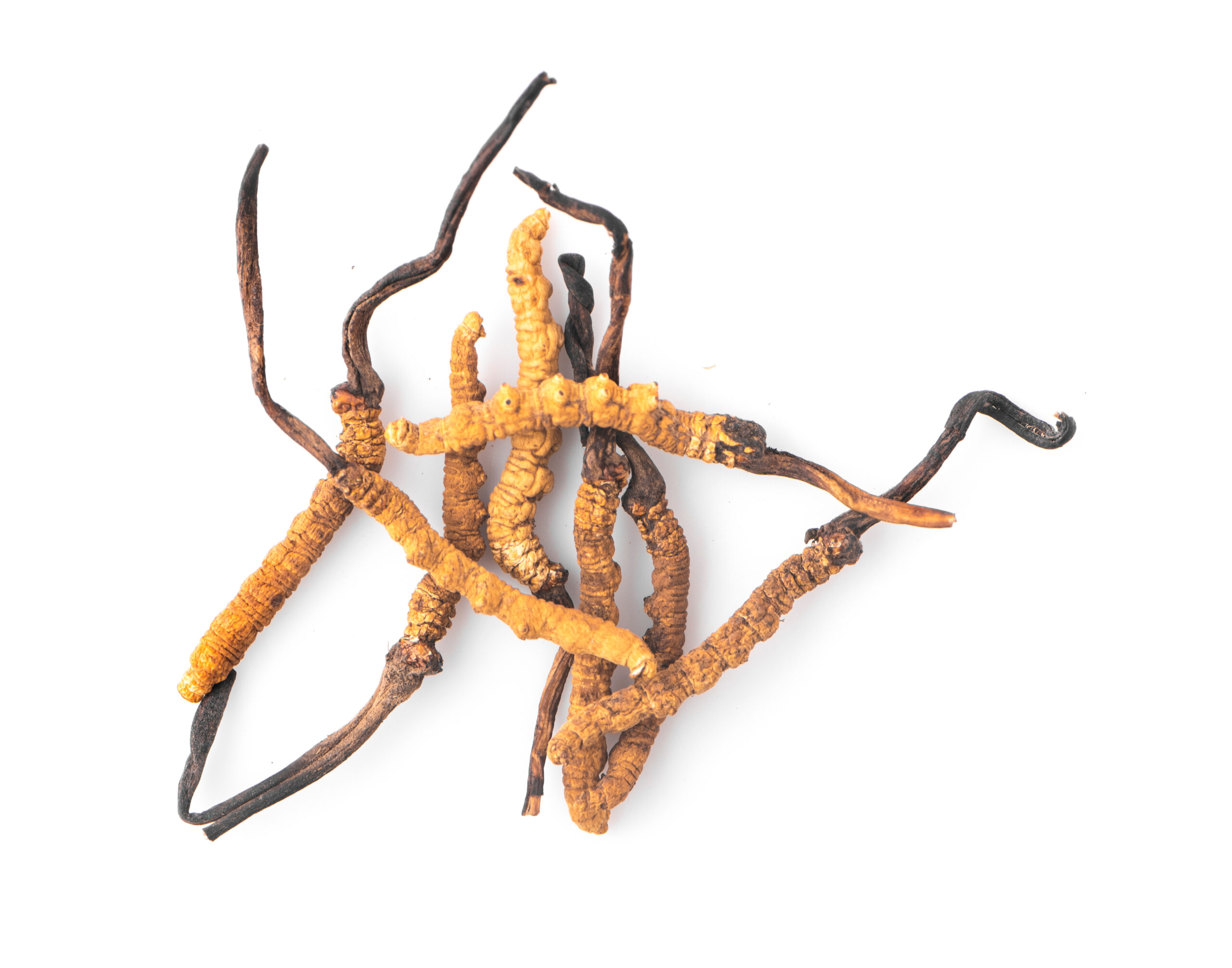
Cordyceps
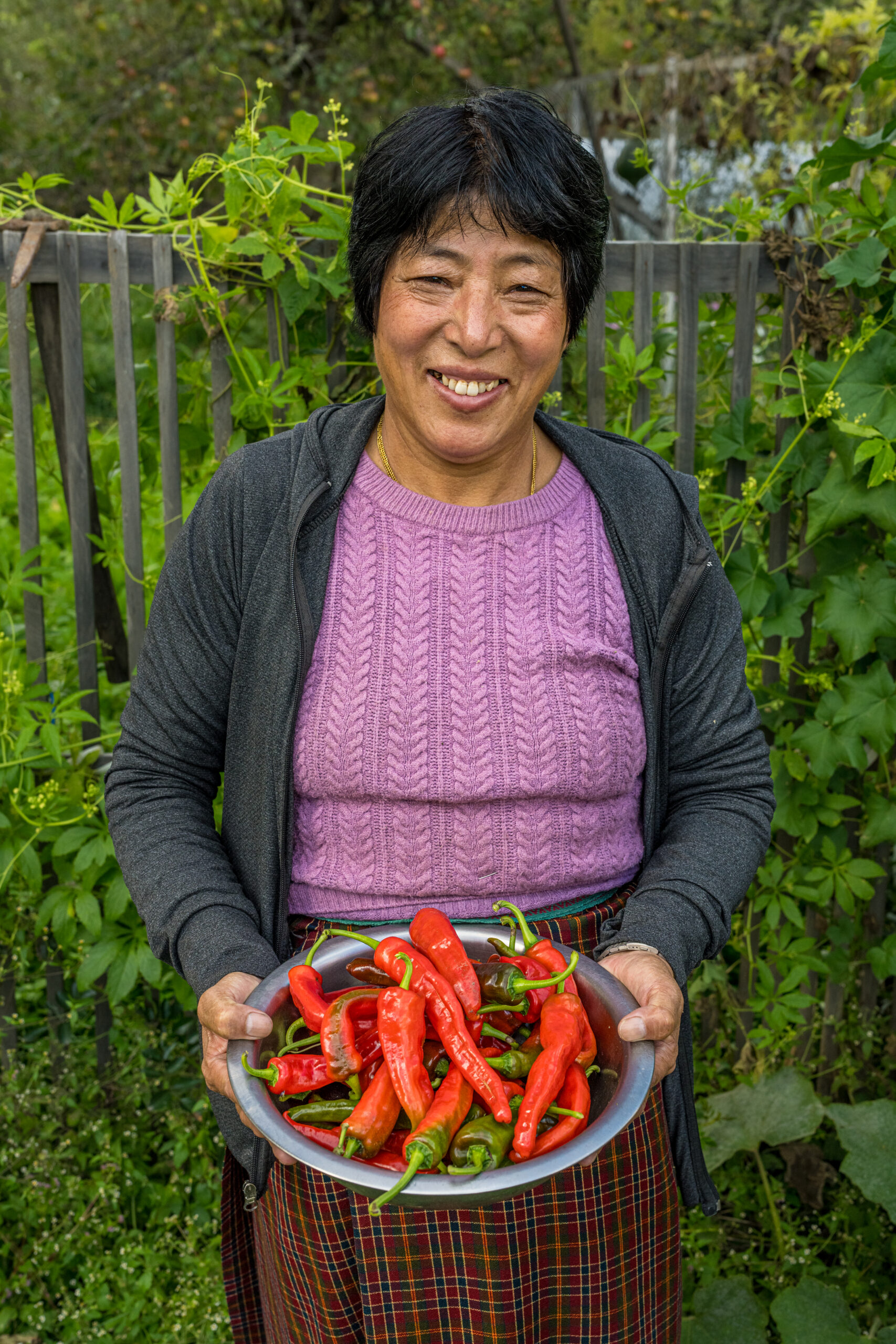
Chillies
Not simply a seasoning, but an essential part of Bhutanese cooking
Craft & Shopping
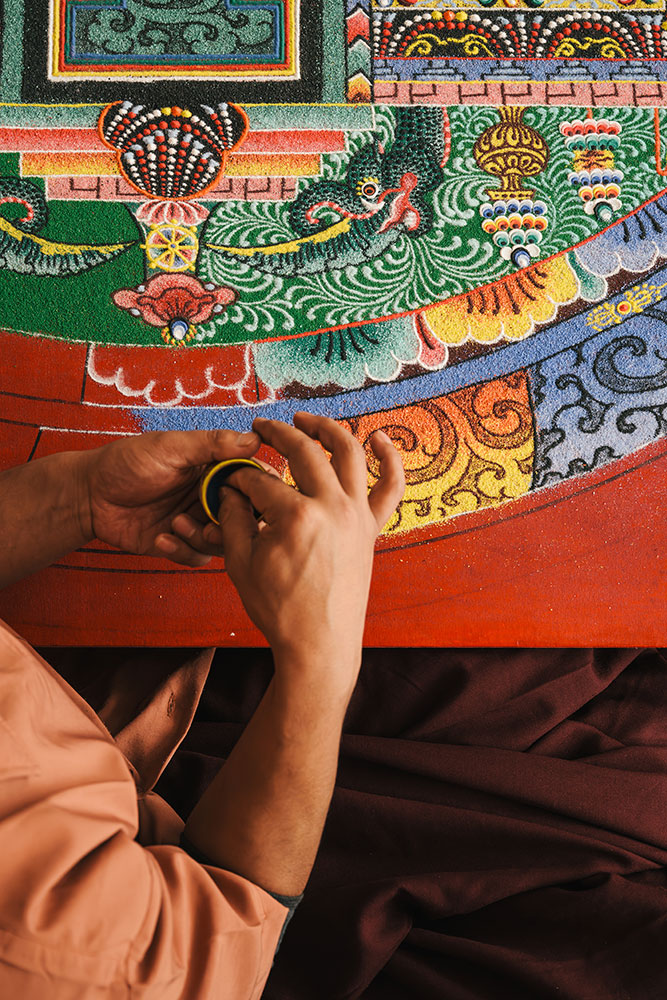
The thirteen arts
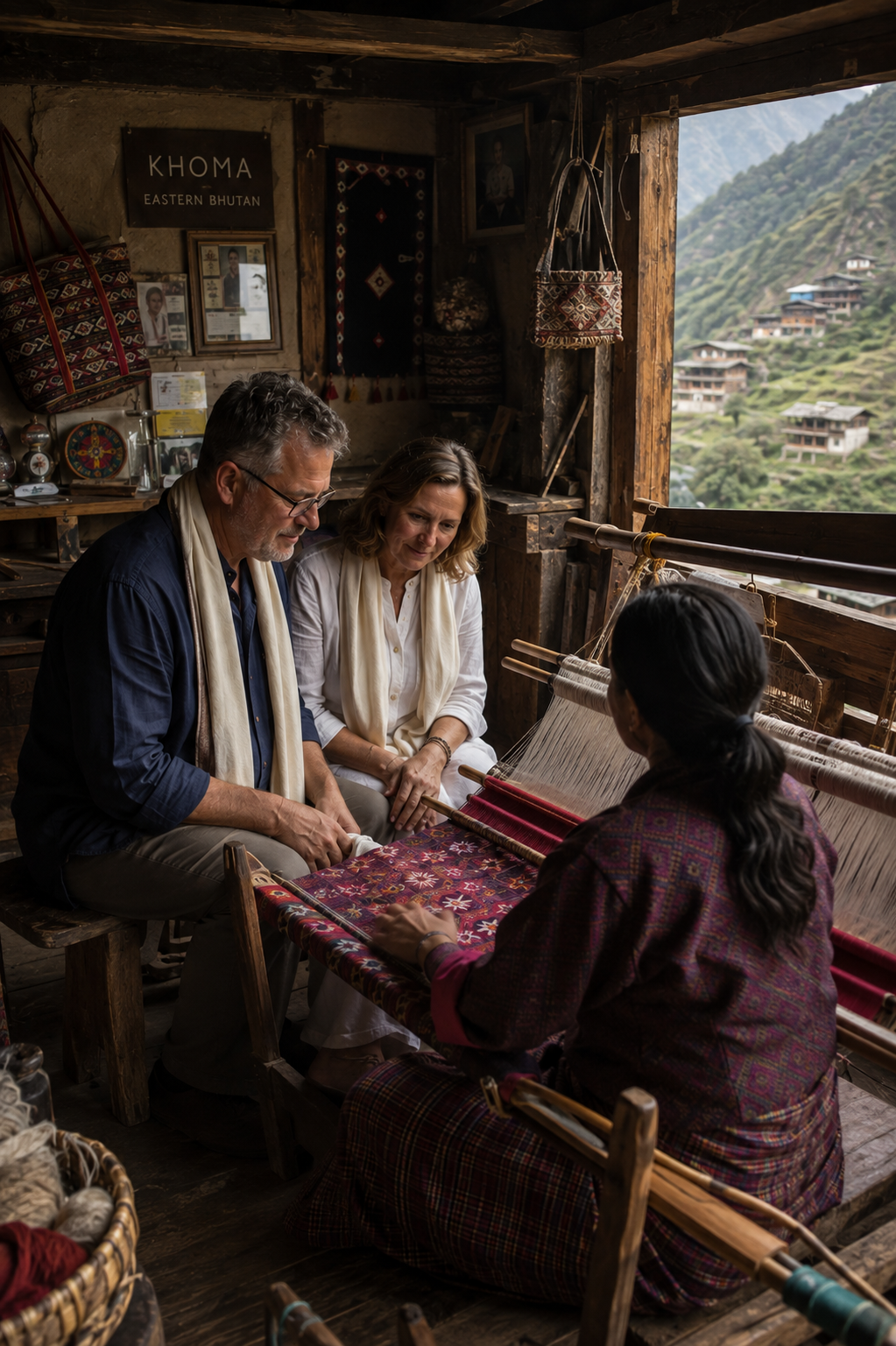
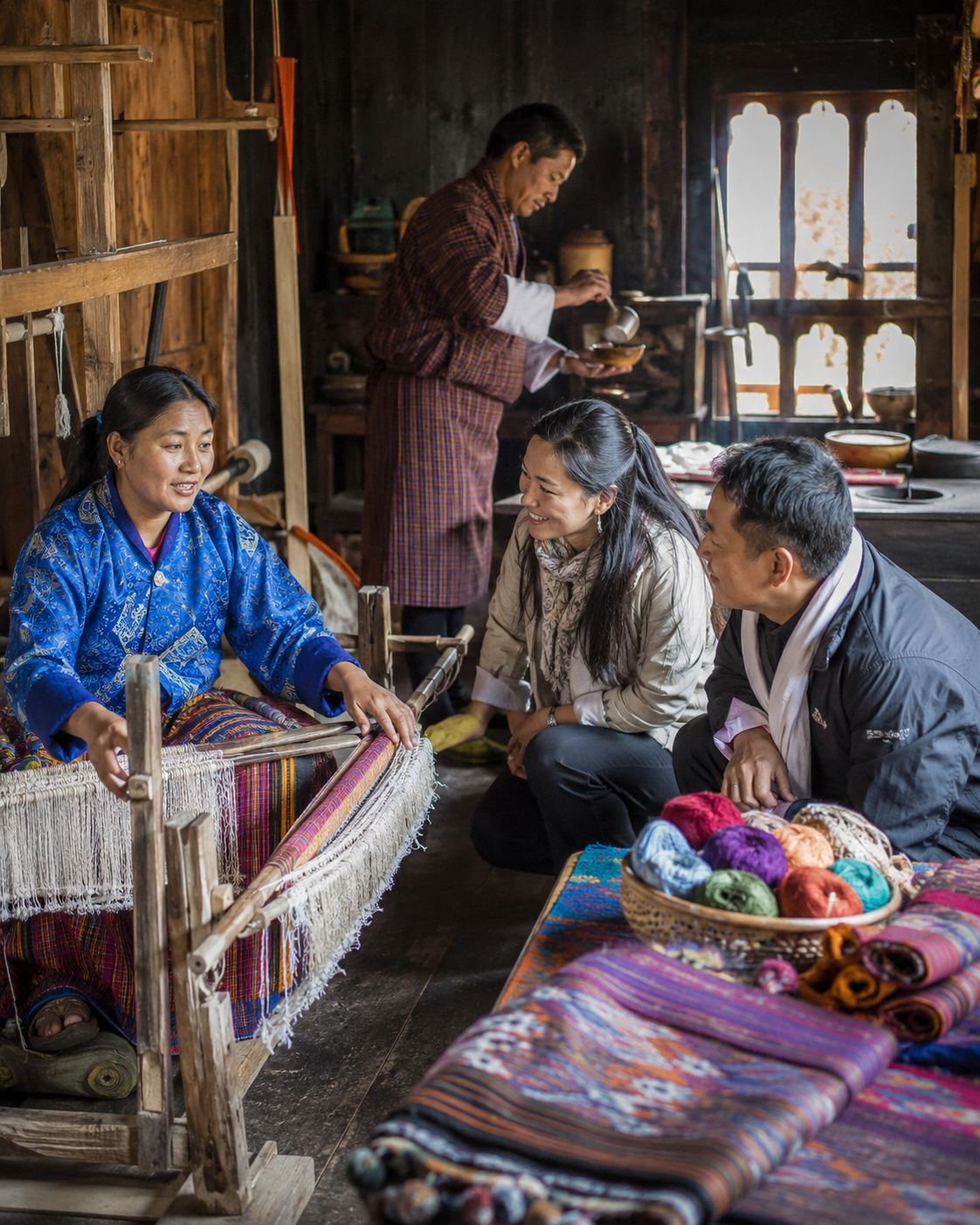
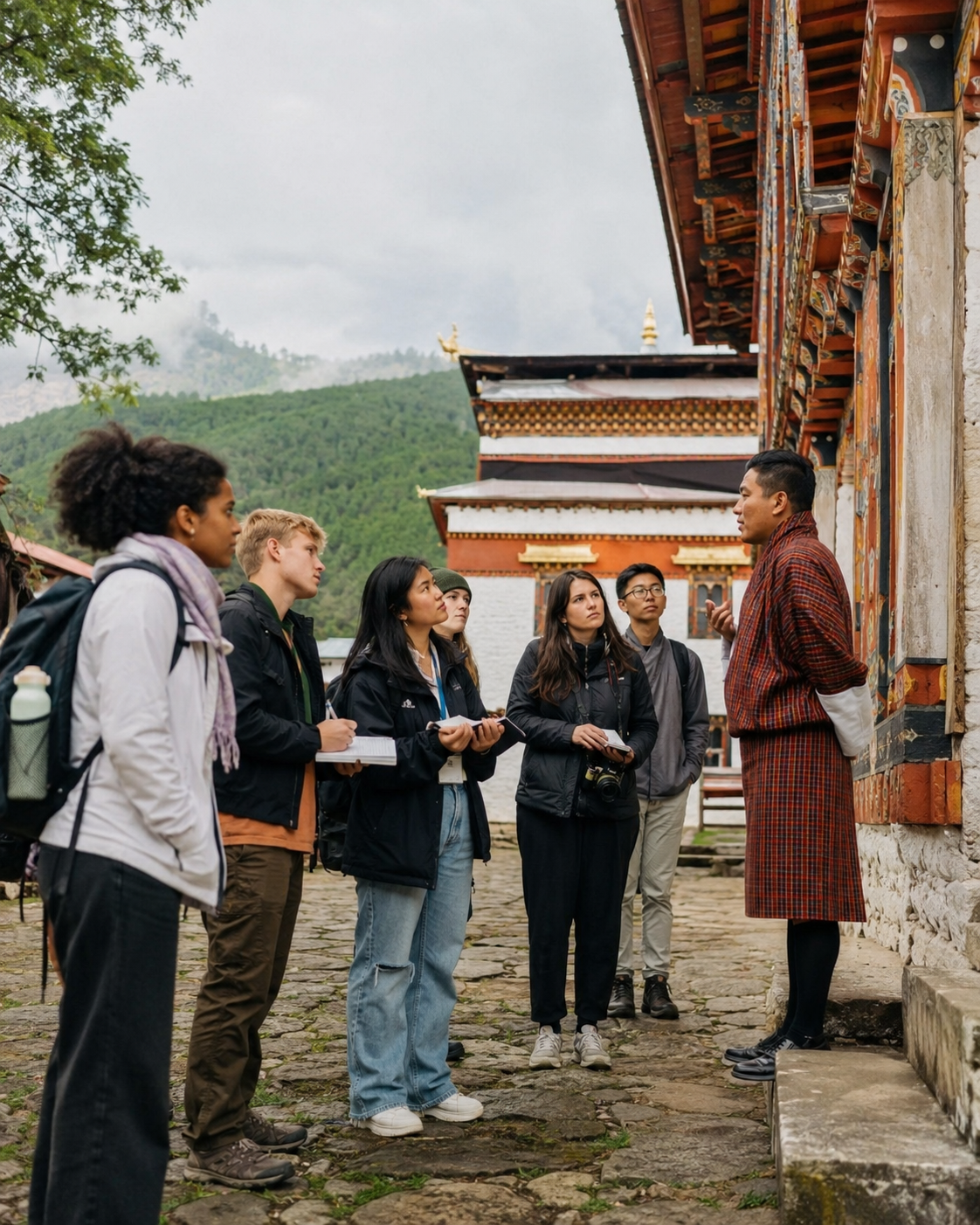
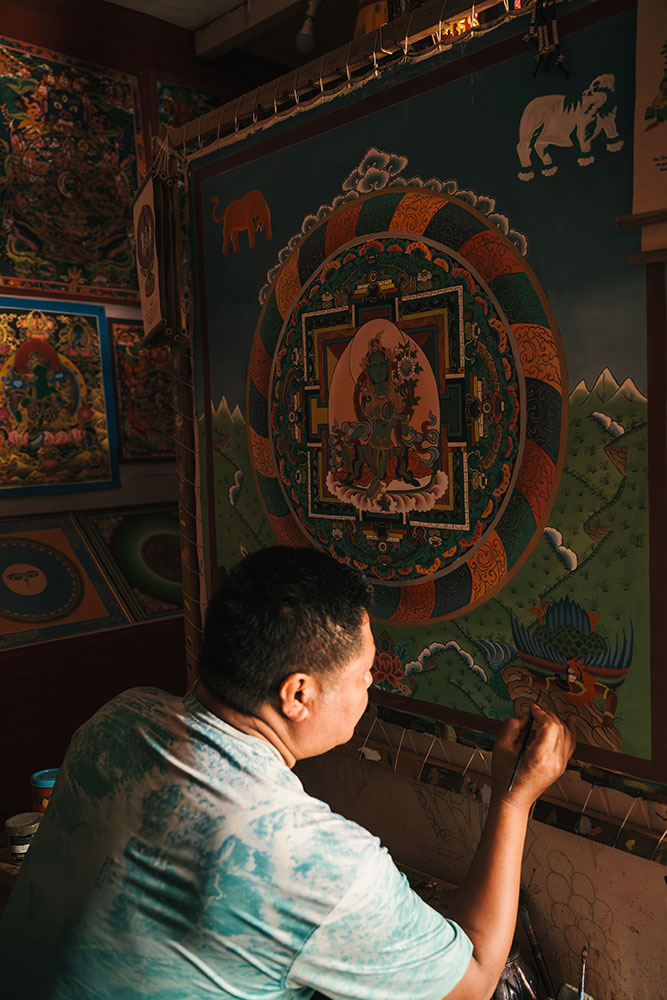
Bhutan’s thirteen traditional arts, the Zorig Chusum, are still practised by craftspeople across the country.We take you beyond the market stalls to meet the makers themselves, discover their craft and commission a piece made especially for you.
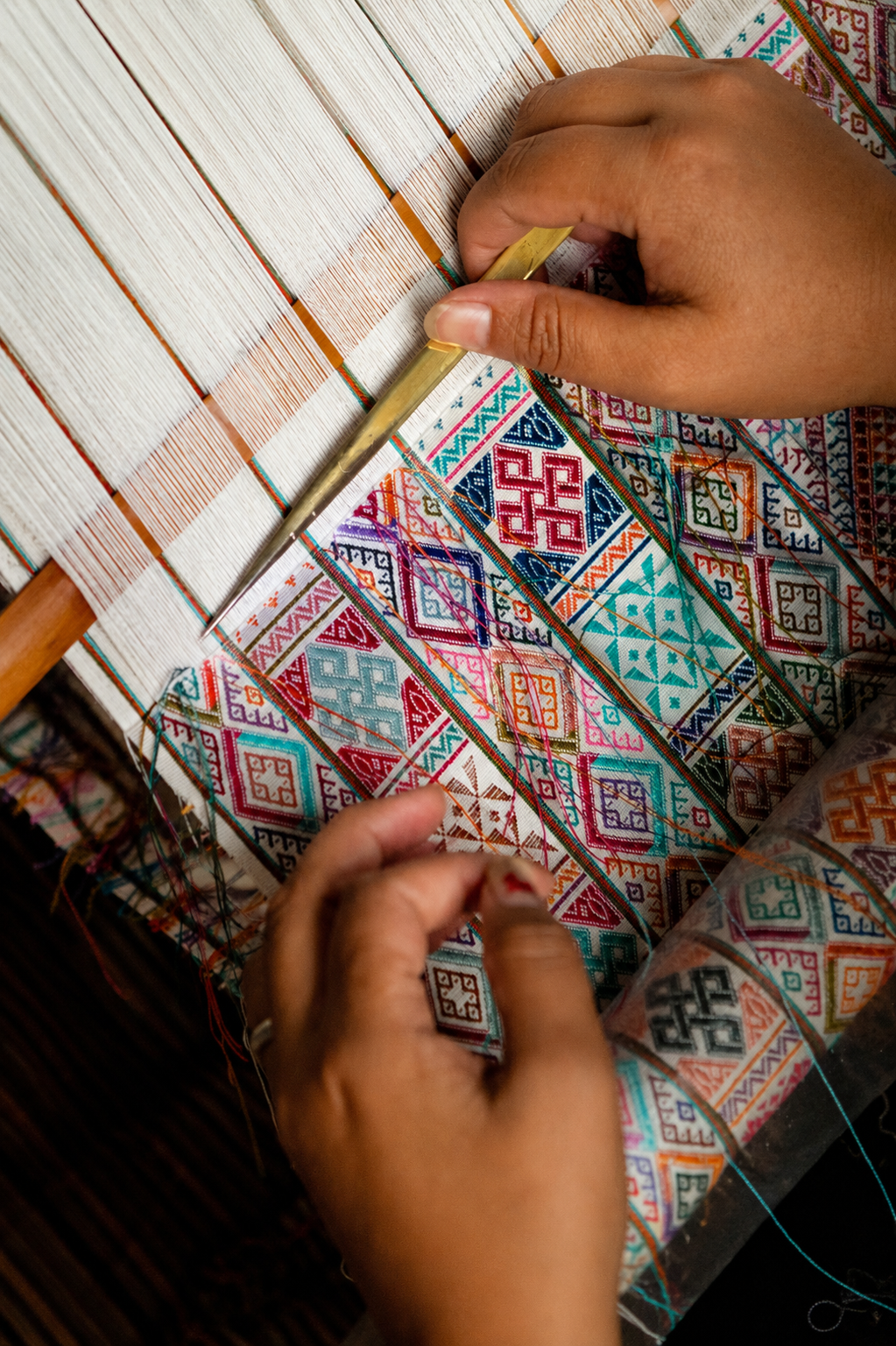
Weaving
Intricate textiles woven by hand on traditional looms.
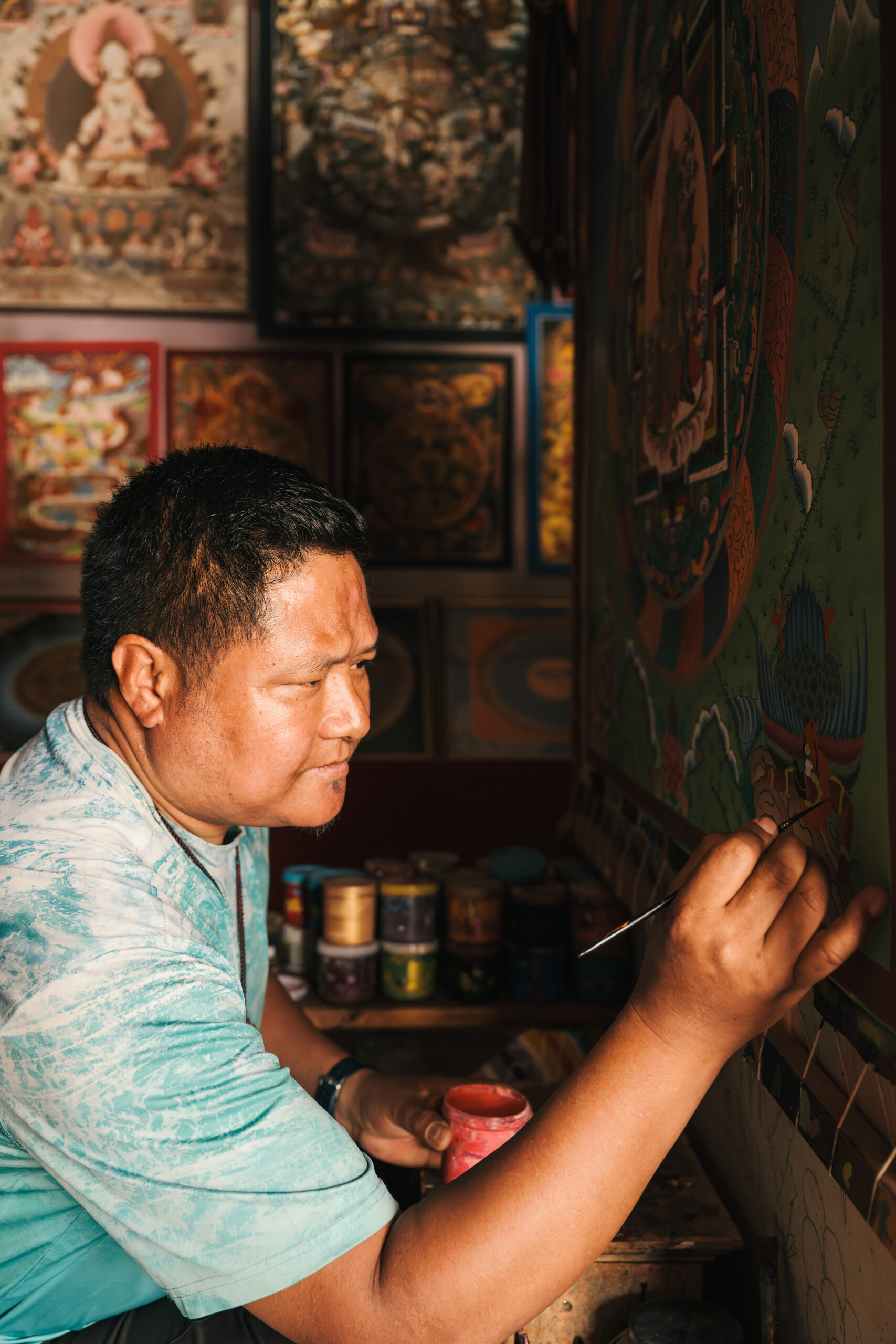
Painting
Sacred imagery and traditional motifs painted by hand.
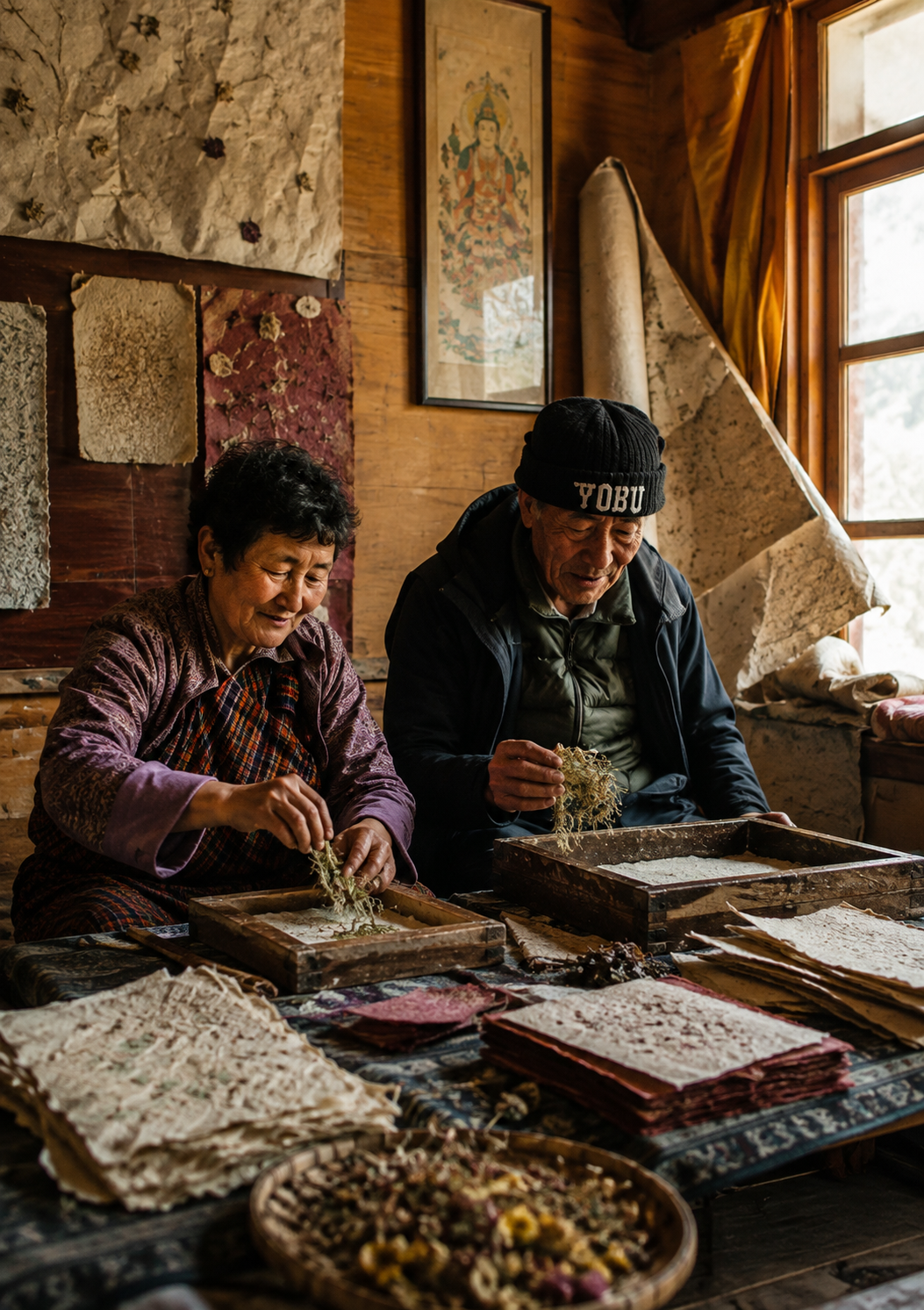
Papermaking
Handmade desho paper crafted from daphne bark.
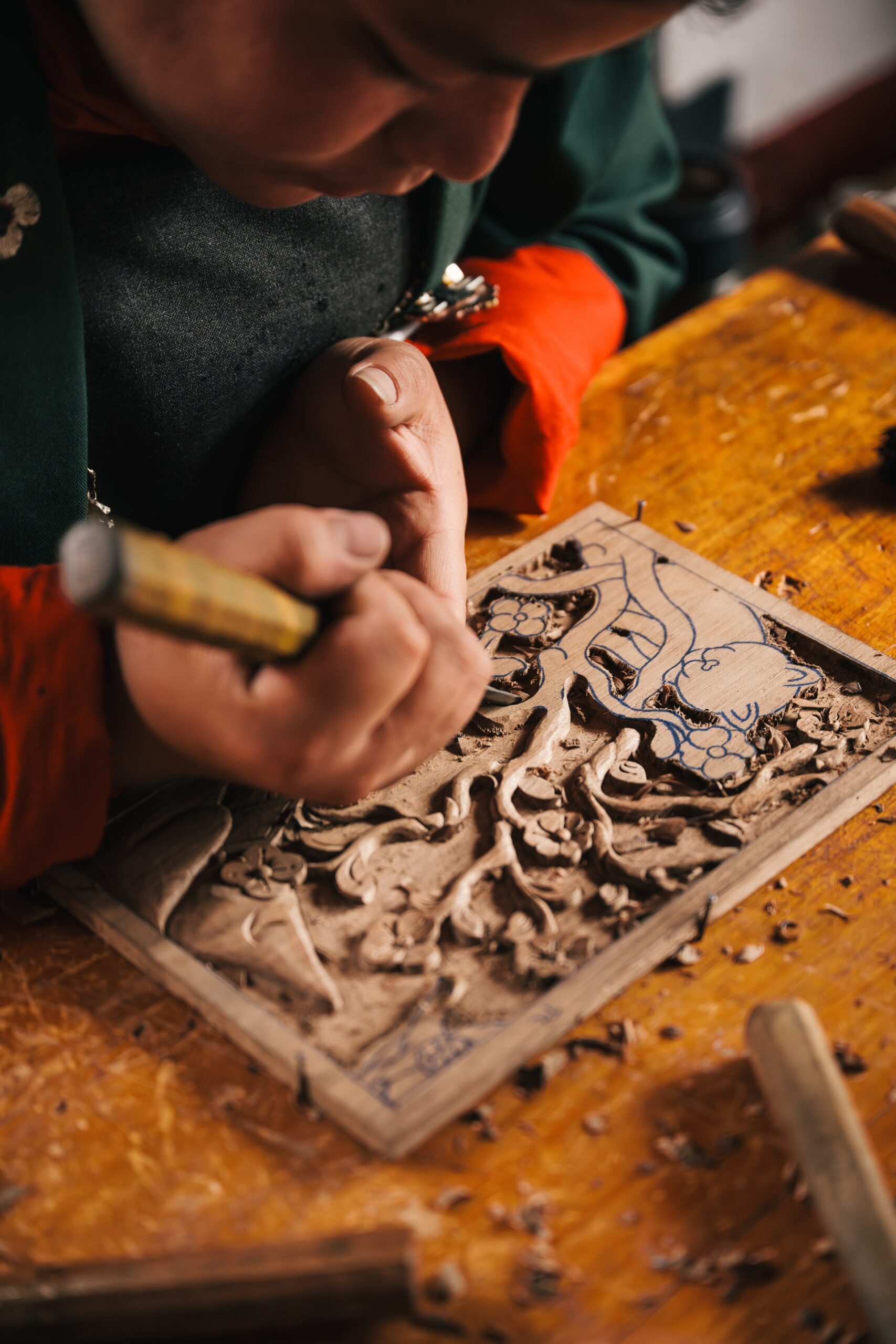
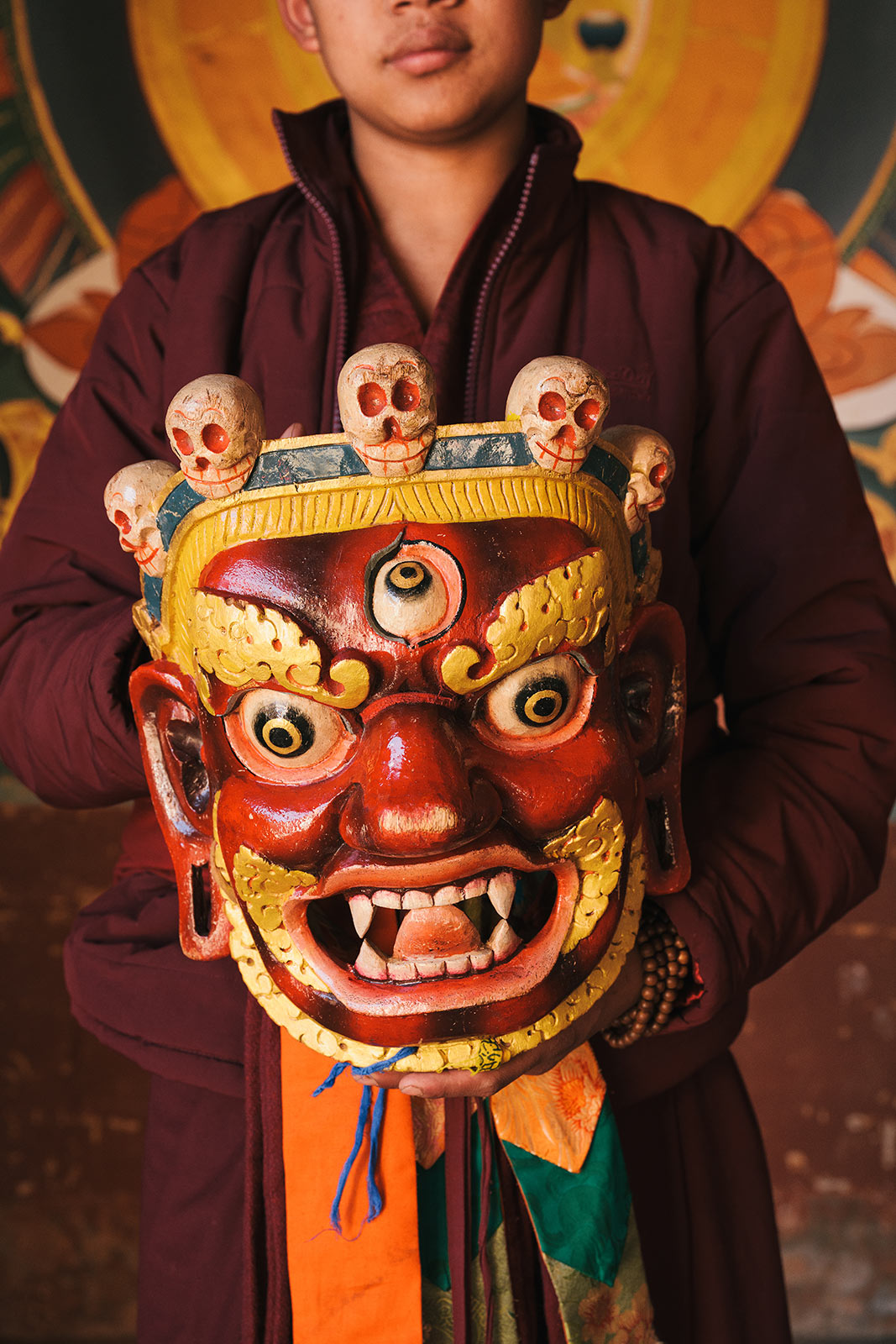
Woodcarving
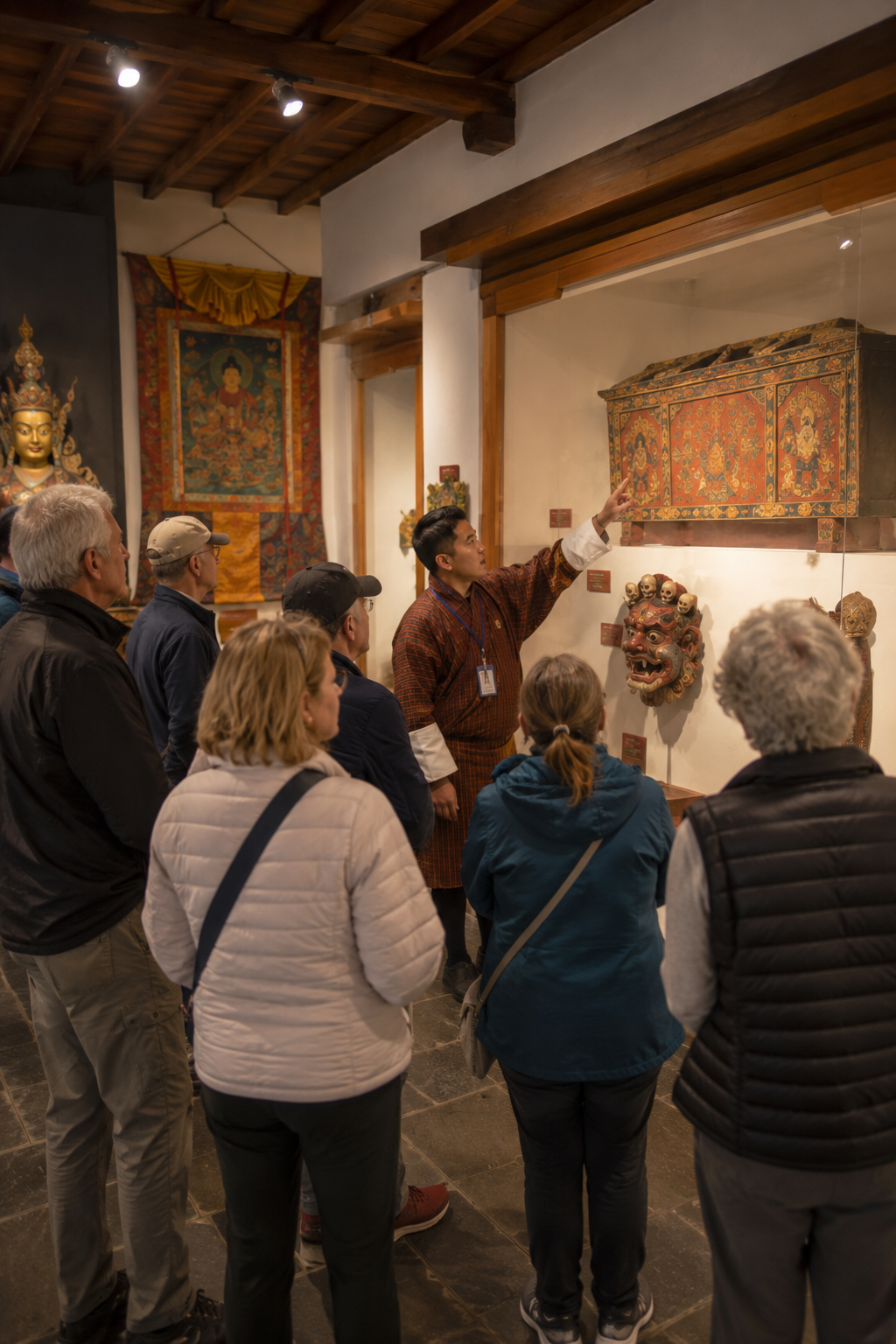
Masks, altars and architectural details carved by hand.
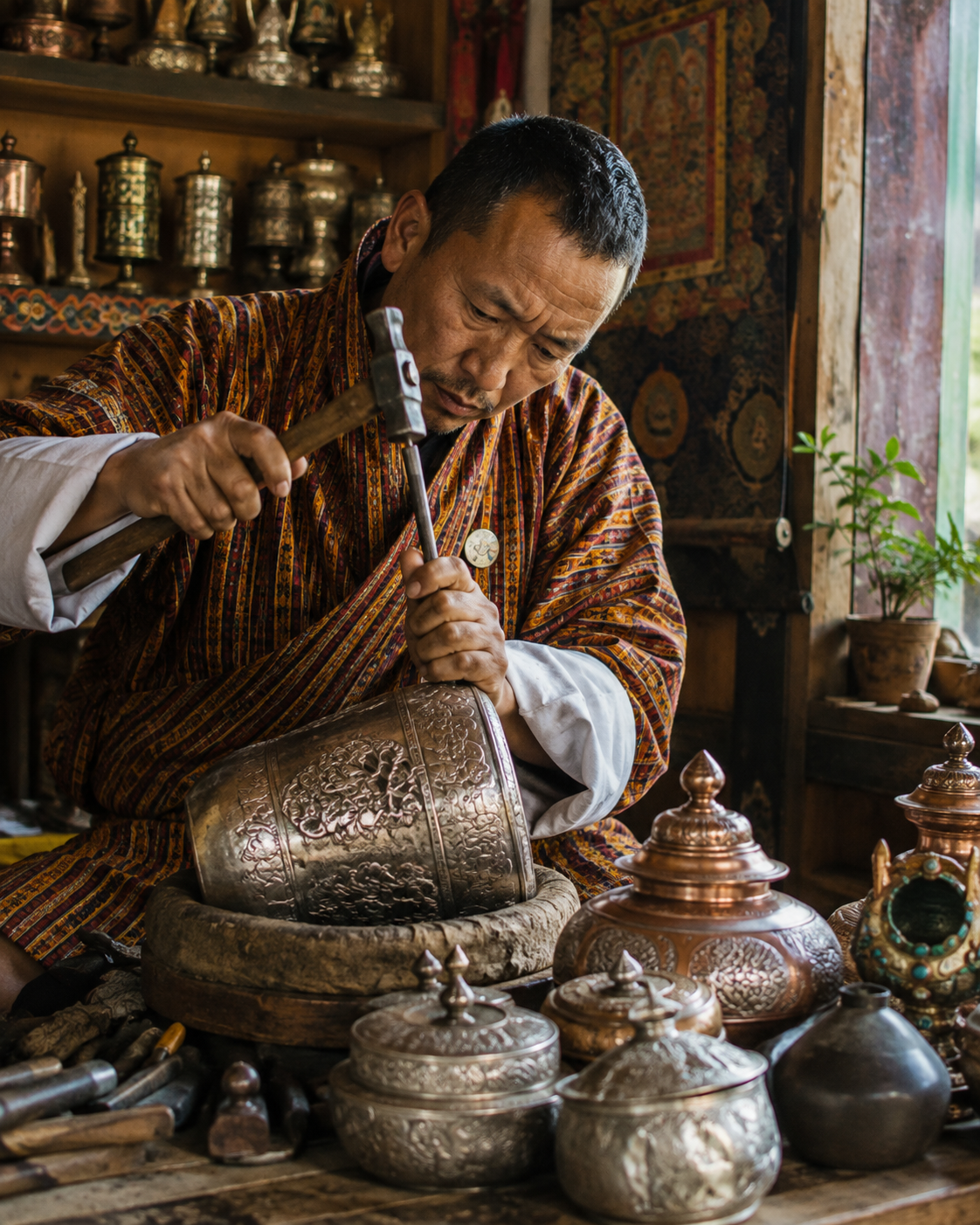
Metalwork
Hand-forged vessels, ornaments and sacred objects.
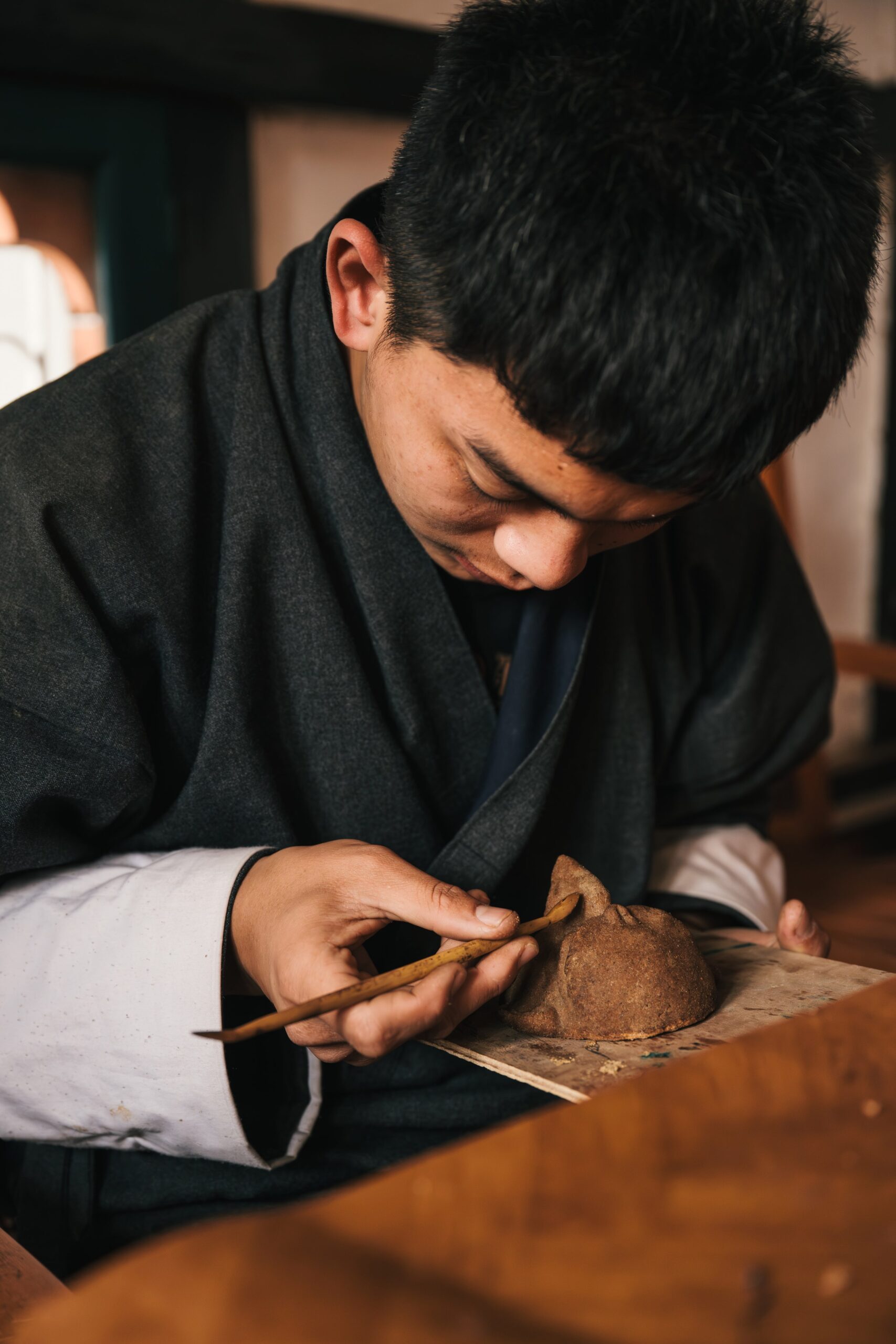
Sculpture
Sacred figures shaped by hand from clay and other materials.
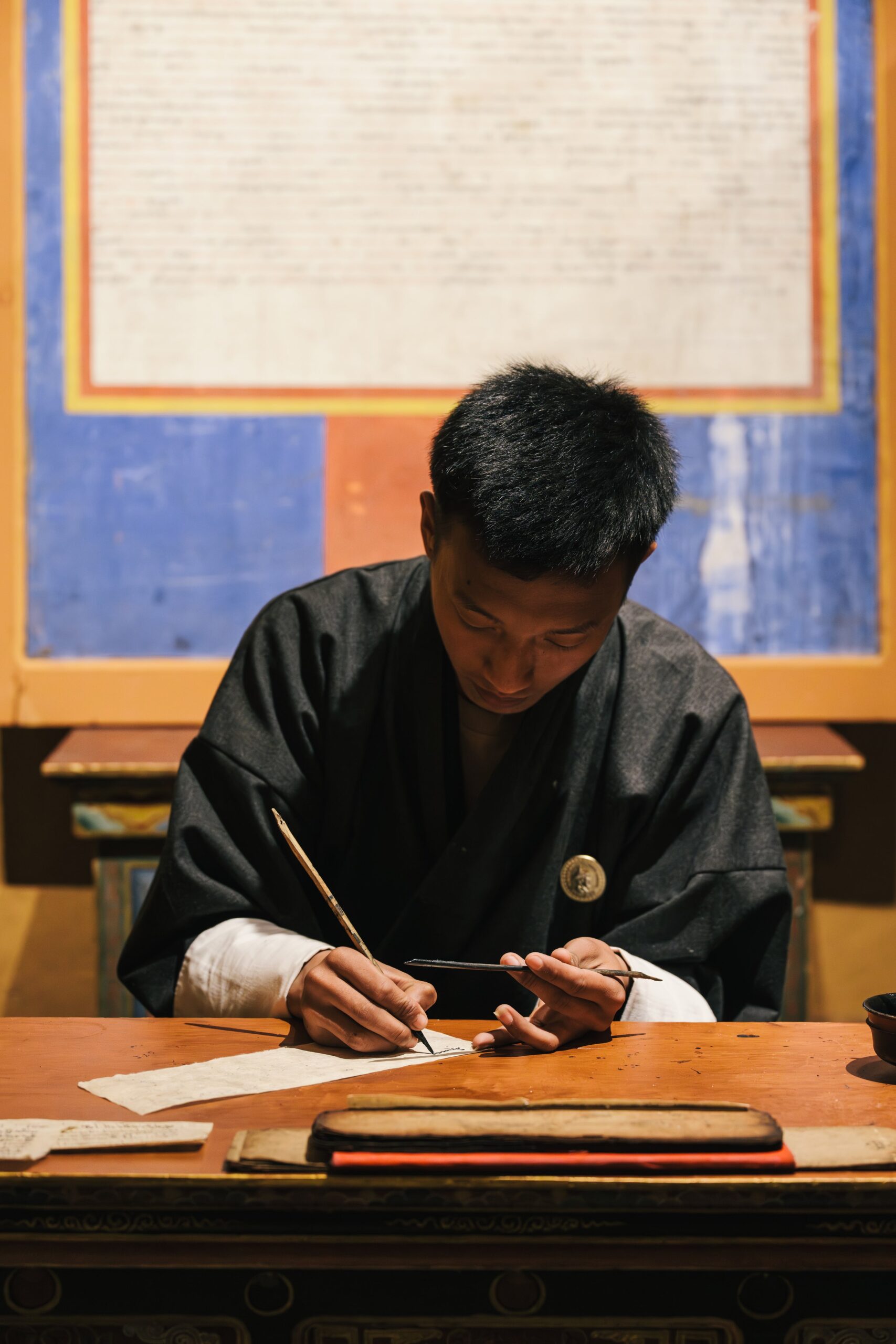
Calligraphy
Ancient scripts shaped by hand with ink and discipline.
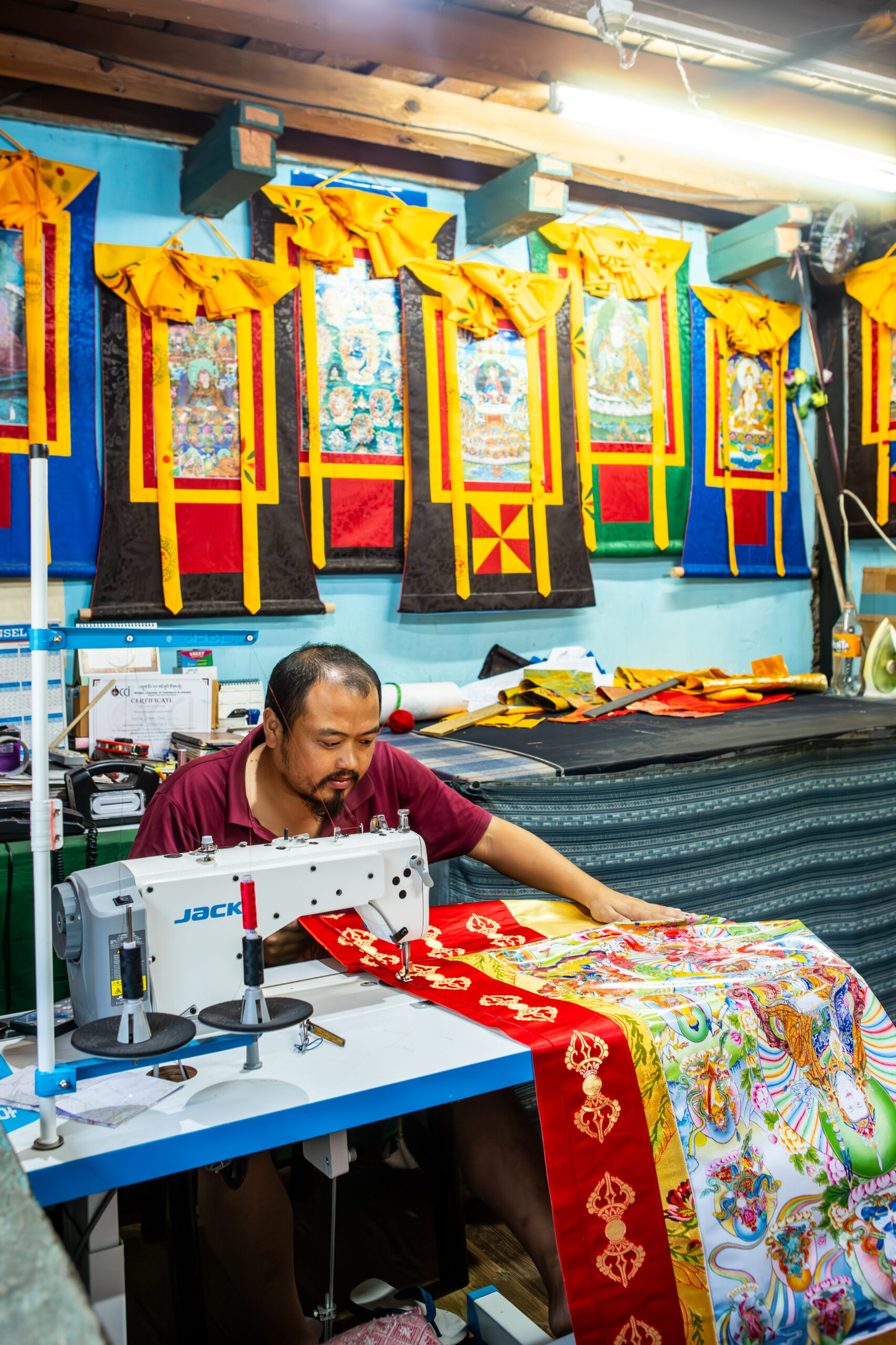
Embroidery
Intricate needlework for sacred textiles and ceremonial dress.
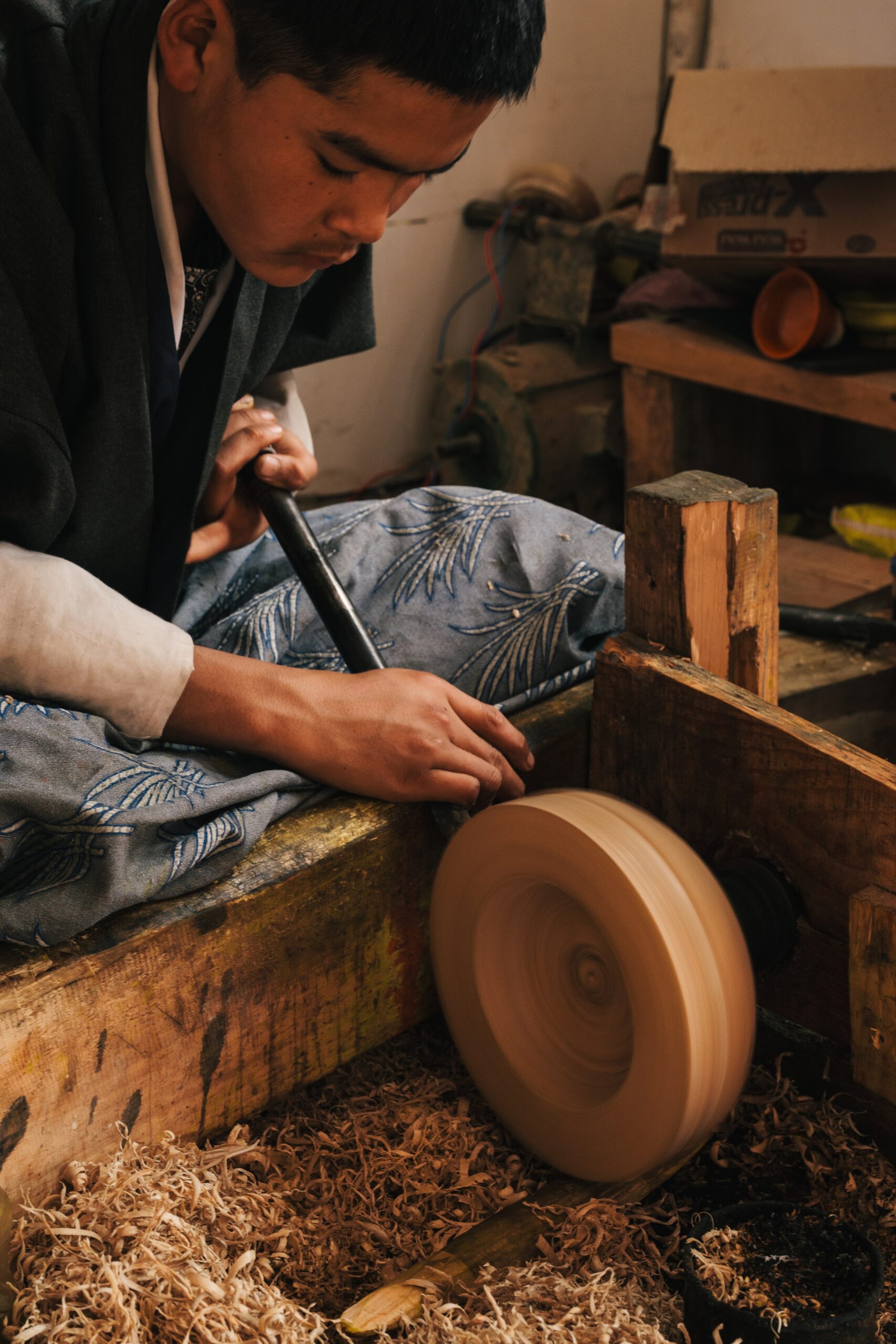
Woodturning
Wooden bowls and vessels shaped on traditional lathes.
Spirituality
A living Buddhist tradition
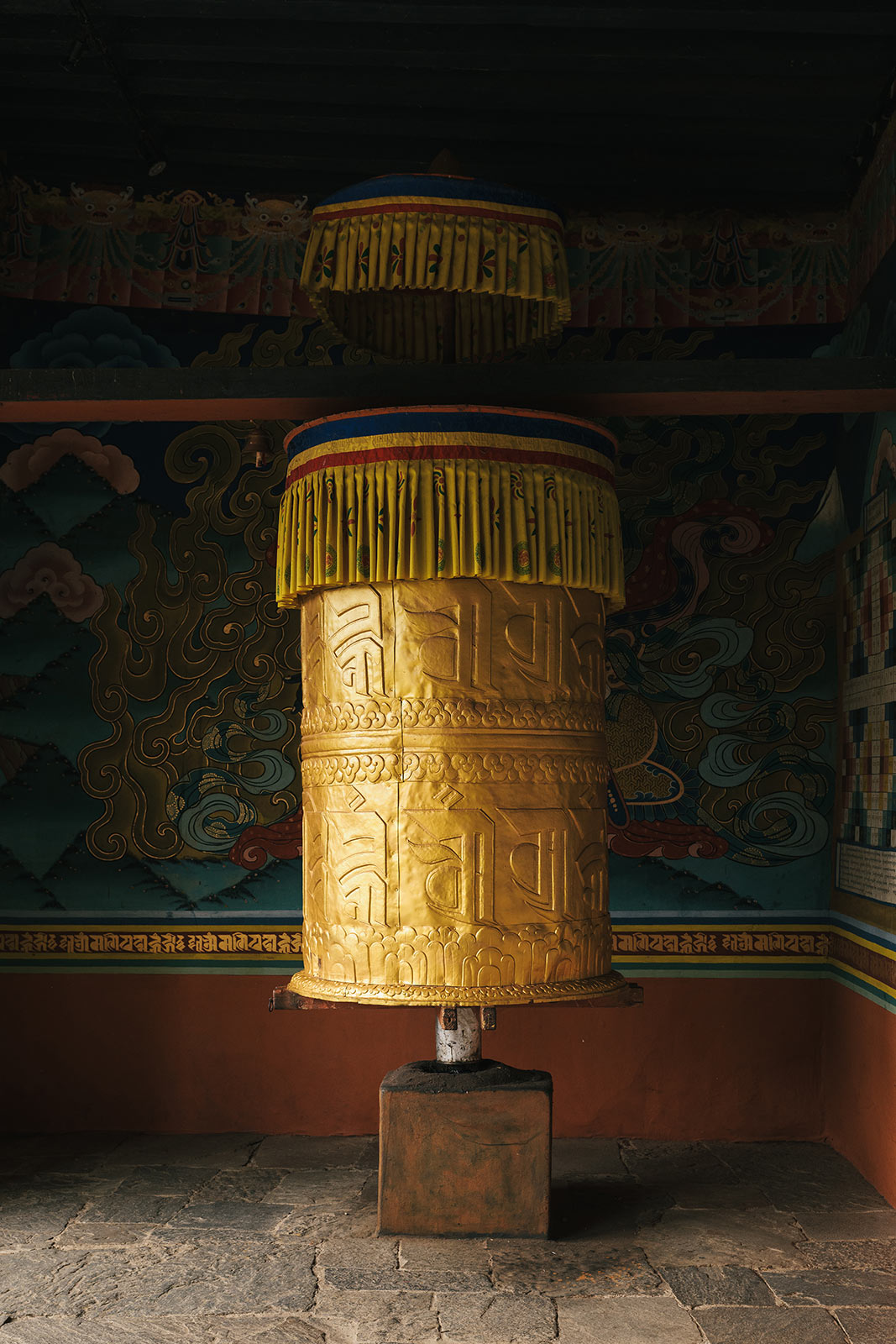
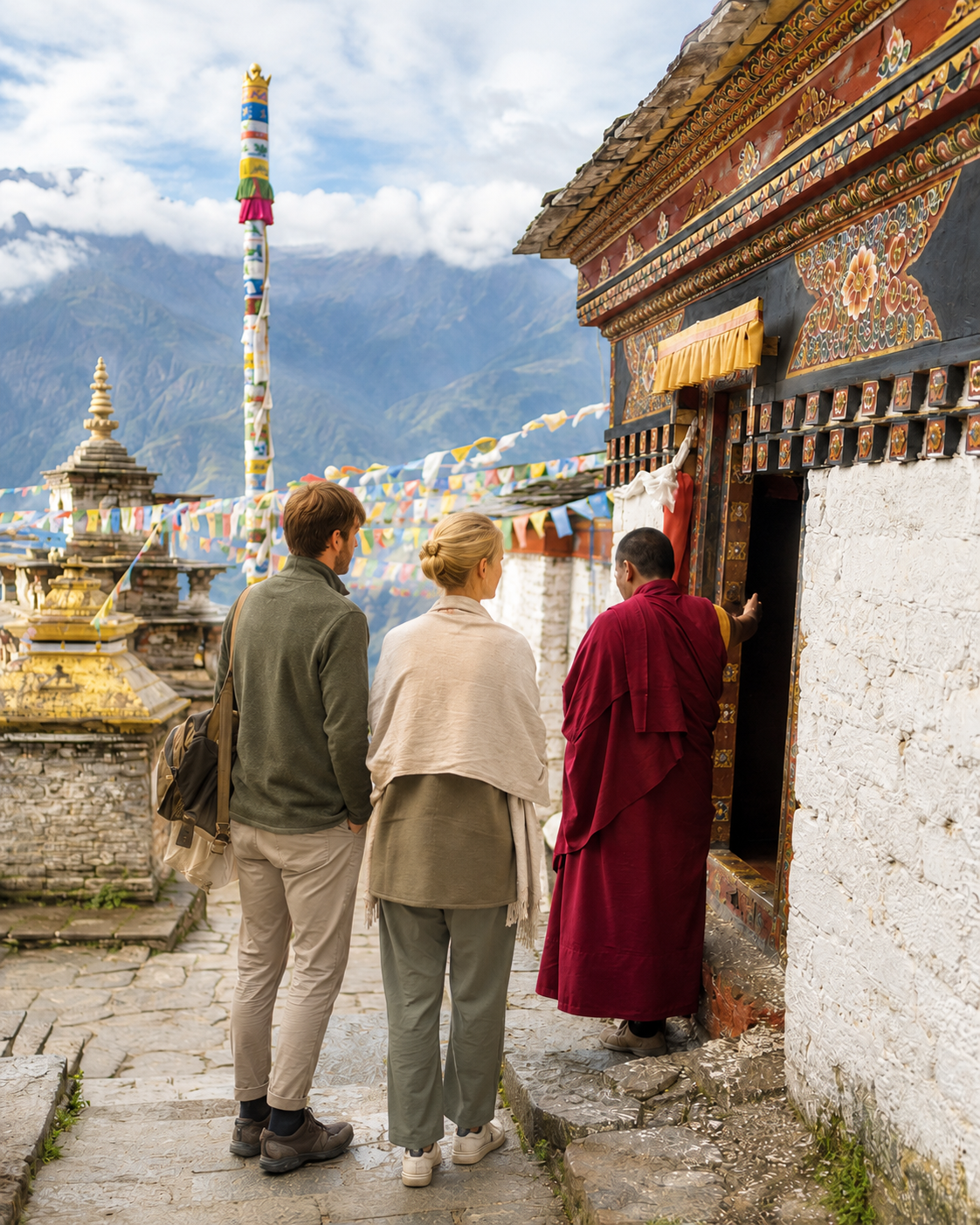
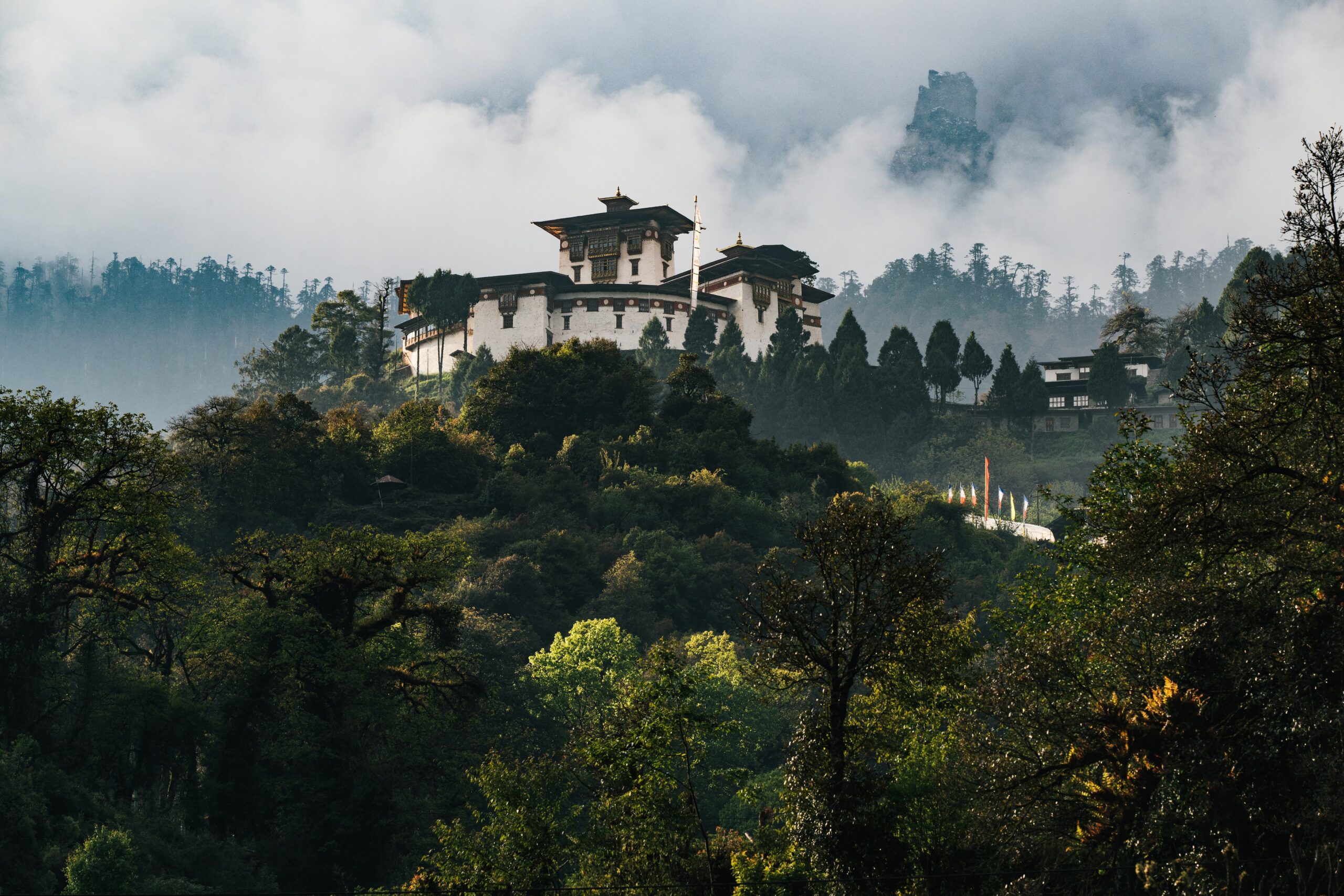
In Bhutan, Buddhism is not something confined to monasteries or history. It is part of everyday life, from butter lamps lit at dawn to prayer wheels turned on the walk home.
We take you beyond the places most visitors see: meet a high ranking monk in private, meditate with Buddhist nuns in a remote temple, or make the climb to Tiger’s Nest in the stillness of early morning, before the first visitors arrive.
A Short Film
The Himalayas.
Like never before.
Beyond the mountains are the people, rituals and stories that make this place extraordinary. Bhutan's brand film takes you deeper into the Himalayas we know and love.
Your questions answered
Bhutan travel FAQs
The practical things worth knowing before you go — fees, visas, seasons, guiding and access
Curious? Talk to us-
Bhutan is not a mass-tourism destination, so it can cost more than many other places in Asia. Visitors pay a Sustainable Development Fee, which supports healthcare, education, conservation, culture and infrastructure. With Himalayan Echoes, the focus is on making every day feel meaningful, seamless and deeply personal.
-
Most international travellers need a visa before entering Bhutan. Indian nationals require a permit rather than a visa. Himalayan Echoes can guide you through the process and arrange the necessary travel documentation for your journey.
-
Bhutan charges a one-off visa application fee of USD 40. This is paid alongside the Sustainable Development Fee during the visa application process.
-
The Sustainable Development Fee, or SDF, is a daily fee paid by visitors to support Bhutan's long-term development. It helps fund free healthcare, education, environmental protection, cultural preservation and tourism infrastructure.
-
The SDF is currently USD 100 per adult per night for most international visitors, with concessionary rates for children. Indian nationals pay a different SDF rate.
-
Yes. If you are travelling with Himalayan Echoes, we can manage the visa process on your behalf and make sure the required information is submitted correctly before you travel.
Let's chat
Your journey to Bhutan starts here
Tell us what you love, what you’re curious about and how you like to travel. We’ll take it from there, creating a journey through Bhutan that is entirely your own.
Begin a journey