Bhutan’s living heritage
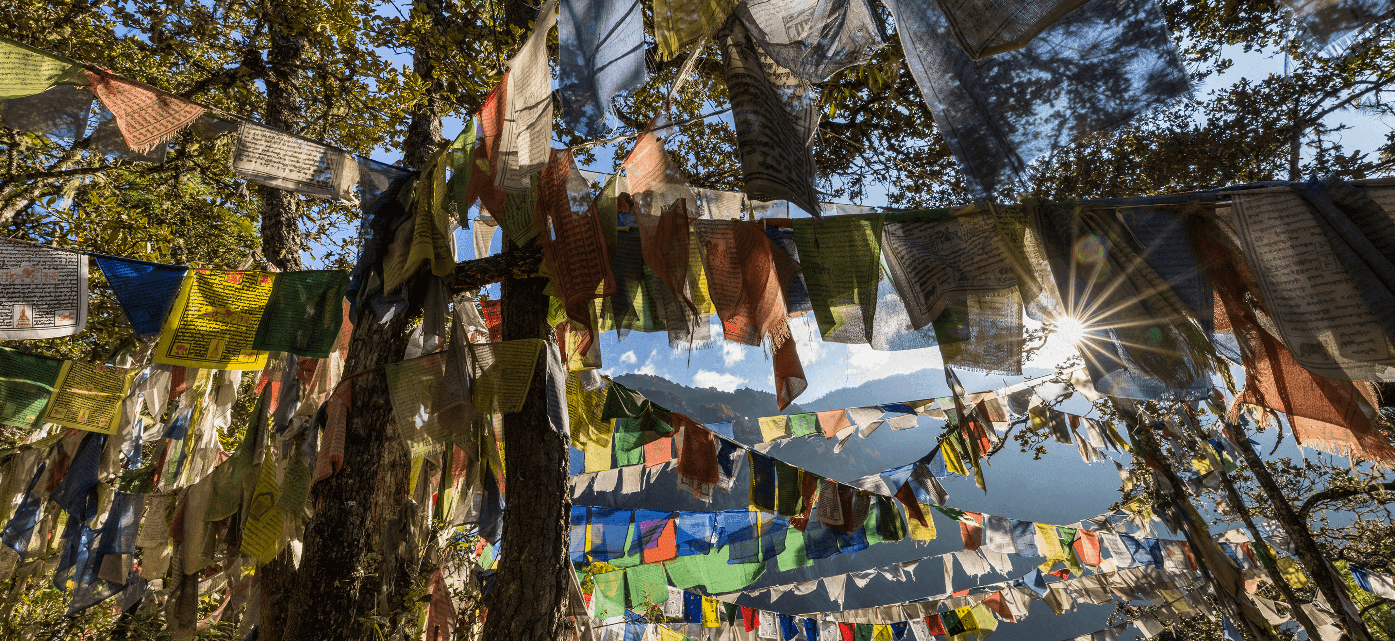
Nestled high in the Himalayas, Bhutan is one of the only countries in the world that has upheld its centuries-old traditions and preserved them intact to this day. Every town and village is a gallery of living heritage; homes and monasteries blaze with vivid murals, prayer flags flutter in the wind, and ancient rituals continue to be followed with unwavering devotion. Markets overflow with richly hand-woven kira and gho textiles, craftsmen still paint thangka scrolls in exacting detail and traditional music drifts through the valleys at dawn and dusk.
From high-altitude hikes to serene valley walks, fly-fishing in glacial rivers to private archery lessons, the outdoor experiences in Bhutan are immersive, transformative and often exclusive.
Bhutanese art and craft heritage
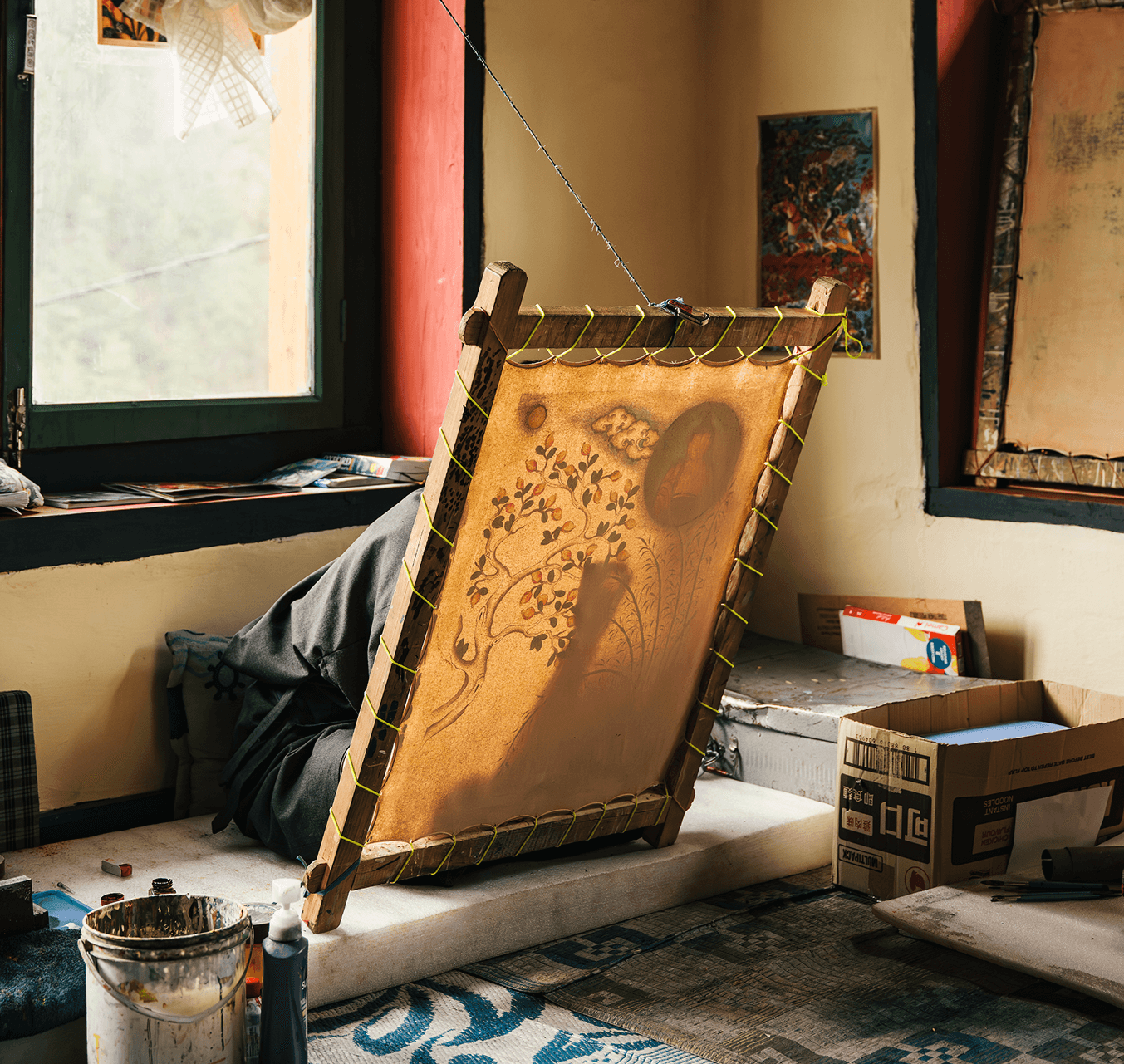
The most famous art here is its thangka painting. These are symbolic, and created on fabric, depicting deities and scenes from Buddhist teachings. They are portable scrolls and are an important part of Bhutanese culture and spirituality. Till date, monks and artisans paint temple murals and thangka images in mineral pigments, depicting deities in highly stylised, geometric form. Almost every Bhutanese home bears these motifs: carved animals on lintels, auspicious symbols on beams, or a little altar painting that is a reminder of the country’s devout, art-filled daily life. Even the giant thongdrels, composed of layers of silk, are handmade, and designed to be unrolled against a monastery wall for specific religious and auspicious occasions. Weaving is yet another revered household skill. Women sit at backstrap looms spinning yak and sheep-wool yarn into Yathra, a warm multicolored cloth unique to the central valley of Bhutan.
In the capital city of Thimphu these art and crafts are taught and likewise preserved for posterity. The National Institute for Zorig Chusum (Zorig Chusum, which translates as the Thirteen Traditional Arts & Crafts) is in line with the preservation and promotion of the cultural heritage of the region, which is one of the four main pillars of the philosophy of Gross National Happiness.
Private lessons in archery—the national sport of Bhutan
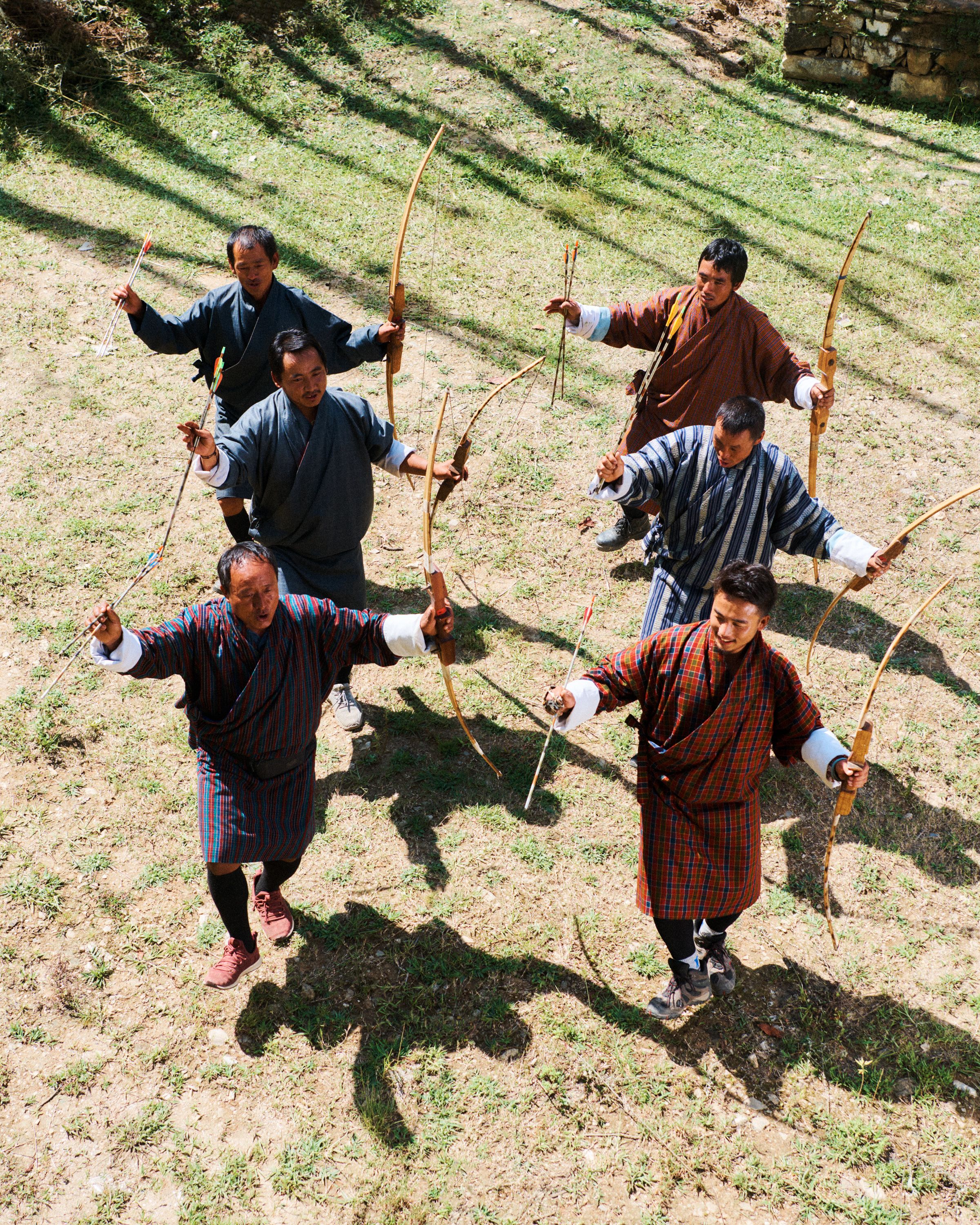
Archery in Bhutan isn’t just a sport, it’s a social celebration. At many luxury lodges, you can take a private archery lesson with a local expert using traditional bamboo bows. While modern equipment is also available, using the handcrafted version adds authenticity and charm. Expect laughter, local music and traditional snacks like roasted rice and butter tea as part of the experience.
A country in celebration
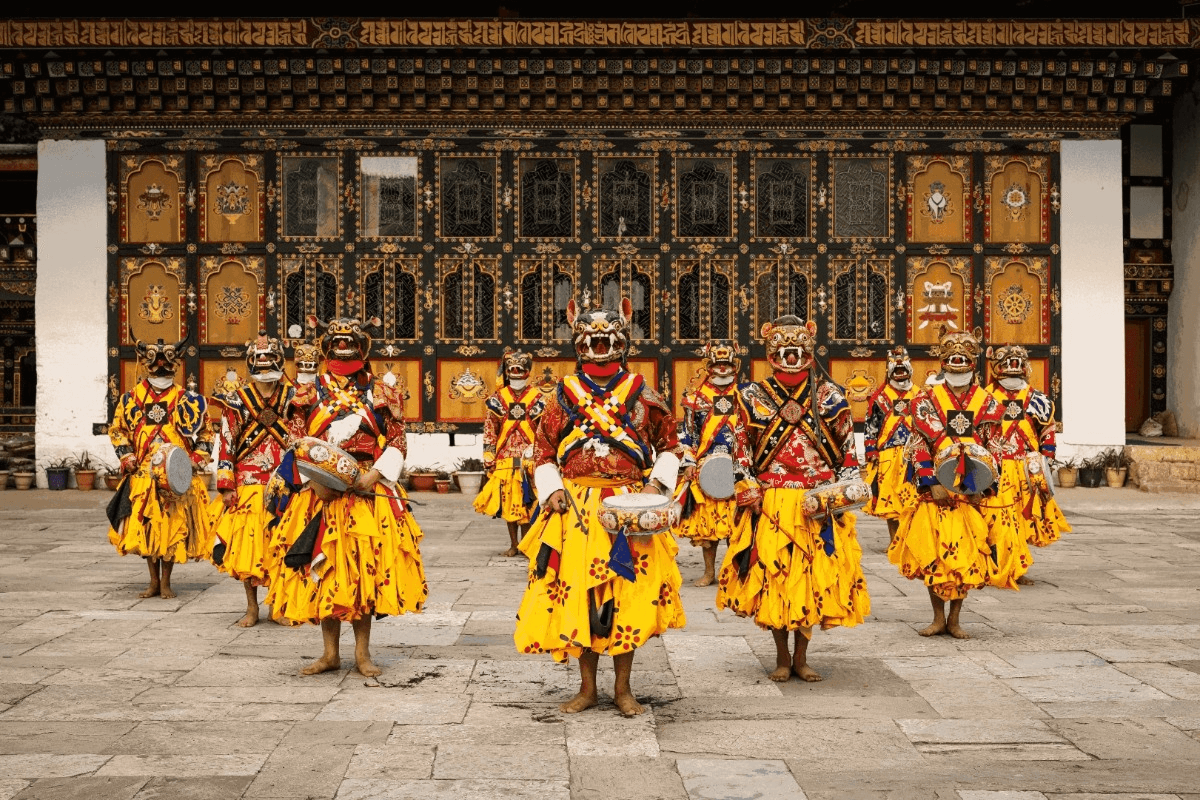
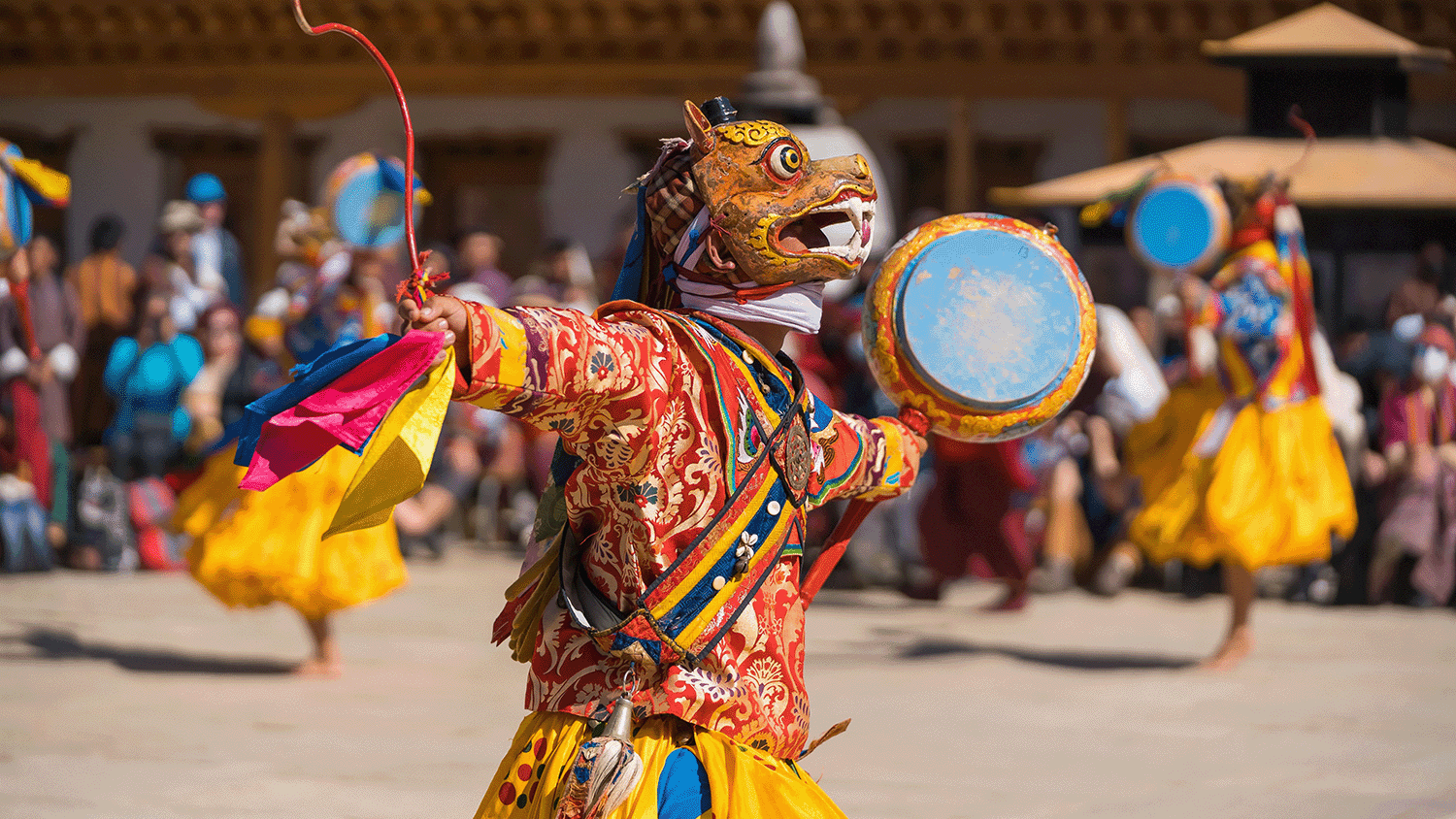
Bhutan’s festivals are spectacular expressions of living art. There are a host of festivals to celebrate every season. The tshechu festivals unfolds across the country, with dancers dressed in elaborate silk costumes and intricately carved masks.
The most famous is the Paro Tshechu in spring: for five days, monks and lay dancers re-enact stories of Guru Rinpoche (Padmasambhava) through trance-like cham dances. Brass cymbals, horns and flutes pierce the Himalayan air as devout locals, dressed in their finest kira and gho, gather at the monastery. These masked dramas have remained largely unchanged for centuries. In Thimphu, the autumn tshechu at Tashichho Dzong is the kingdom’s largest festival. Here too, drumbeats and chanting echo off the fortress walls as monks perform cham dances, while locals, dressed in colourful layers, reveal the fine embroidery of their national attire.
Even non-religious festivals highlight Bhutan’s deep connection to nature and culture. In November, the Black-Necked Crane festival at Gangtey Gompa in Phobjikha Valley celebrates the gentle cranes that migrate to Bhutan. Each of its seasonal festivals weave together spirituality, community, and artistry, creating an unforgettable experience for any visitor.
The mystic cultural heart of the kingdom
In Bhutan, travel is a holistic journey. Beyond art and culture, every path leads to something soulful—whether it’s climbing the 3,120-metre cliff to the Tiger’s Nest, drifting down the Mo Chhu past Punakha Dzong at sunset or lighting butter lamps at a temple, each experience reveals nature entwined with human creativity. For both the luxury traveller and the intrepid pilgrim, Bhutan offers a wide gamut of experiences in a single journey. You can begin your trip in Thimphu or Paro, trek along the Jomolhari trail, or motorbike up the sharp bends of Chele La, with prayer flags dancing above you. In every dzong courtyard and every mountain village, the traditions of Bhutan await; alive, vibrant and never confined to a museum.